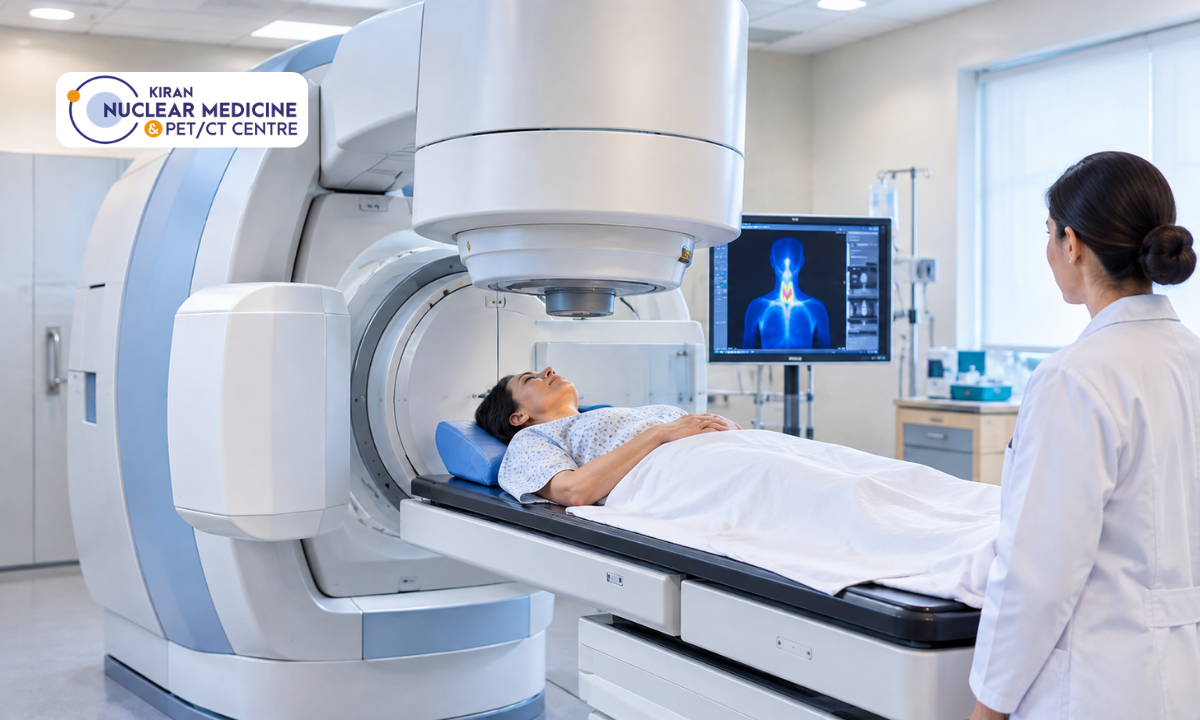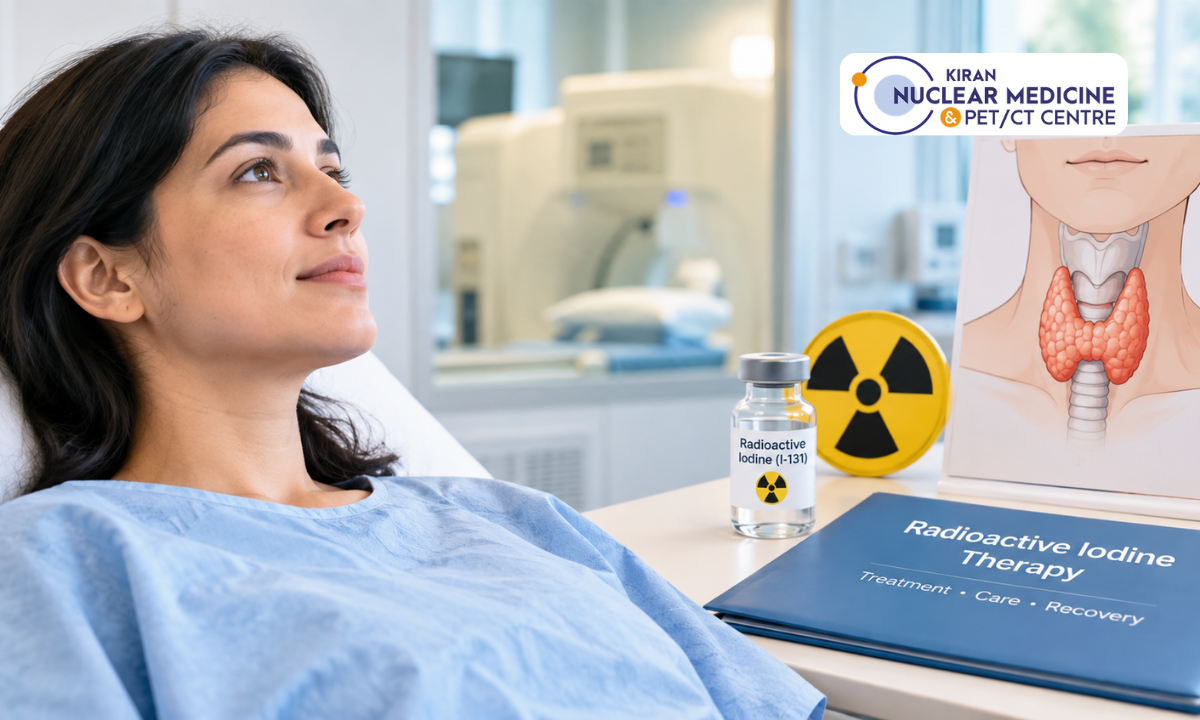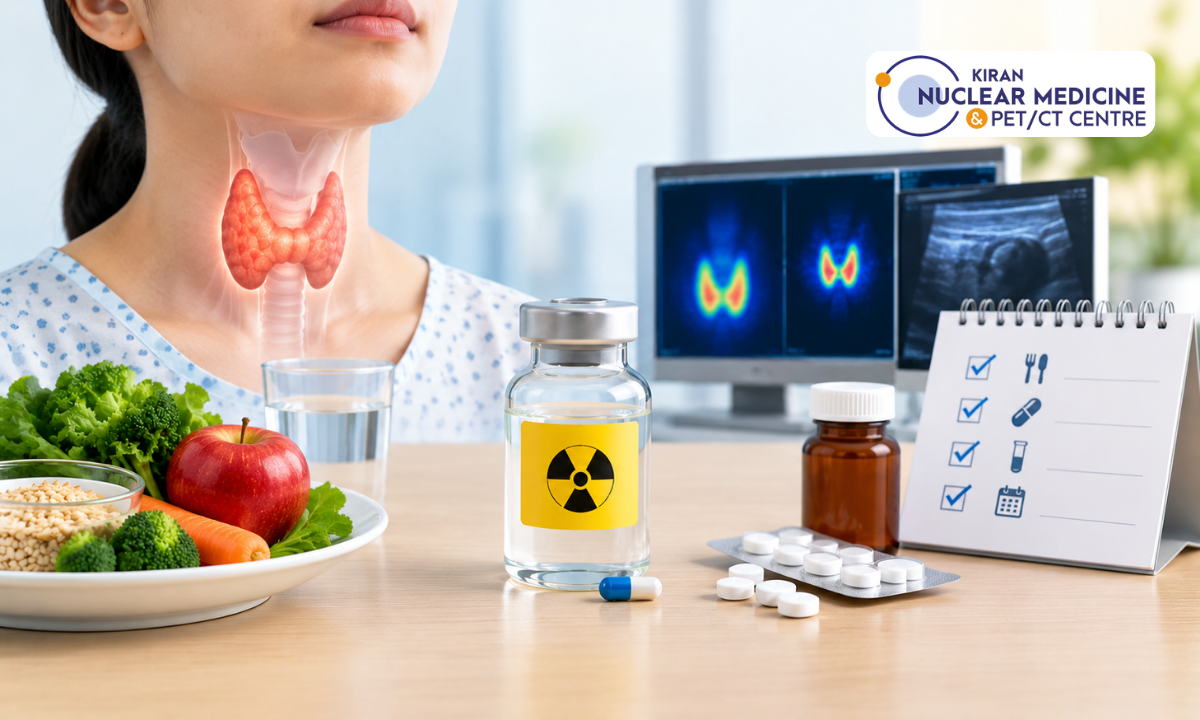
Preparing for radioactive iodine therapy involves more than arriving at the centre on the day of treatment. Depending on the reason for treatment and your individual treatment plan, preparation may involve a low-iodine diet, medication review, thyroid-related investigations, TSH preparation and specific instructions before and after the radioactive iodine dose.
Radioactive iodine therapy, also called RAI therapy, uses radioactive iodine-131 (I-131). Kiran PET CT provides radioactive iodine therapy for thyroid cancer and hyperthyroidism, including differentiated thyroid cancers such as papillary and follicular thyroid cancer.
The exact preparation is not the same for every patient. Your nuclear medicine specialist will determine the appropriate preparation based on your diagnosis, previous treatment, thyroid status and planned radioactive iodine dose.
If you have already been advised to undergo treatment, understanding the preparation process can help you plan your diet, medicines, investigations and treatment-day arrangements.
Learn more about Radioactive Iodine Therapy at Kiran PET CT.
Why Is Preparation Important Before Radioactive Iodine Therapy?
Thyroid cells naturally take up iodine. Radioactive iodine uses this property to deliver radiation to thyroid tissue.
Preparation may be required to create the conditions needed for radioactive iodine to be taken up effectively. Depending on the treatment plan, your doctor may ask you to reduce dietary iodine, review certain medicines or prepare your thyroid-stimulating hormone levels before treatment.
Patients undergoing RAI therapy may need specific dietary restrictions and temporary discontinuation of certain medications that could interfere with radioactive iodine uptake.
Your preparation may therefore include:
- Following a low-iodine diet
- Reviewing thyroid medicines
- Reviewing vitamins and supplements
- Completing blood tests or other investigations
- Preparing TSH levels when required
- Reviewing previous thyroid treatment
- Discussing pregnancy or breastfeeding
- Following treatment-day instructions
- Planning for post-treatment radiation precautions
Not every patient will require every step. Your treatment team will provide instructions specific to your treatment.
TSH Preparation Before Radioactive Iodine Therapy
For some patients, particularly those receiving radioactive iodine after treatment for differentiated thyroid cancer, TSH preparation can be an important part of the treatment process.
TSH can stimulate remaining thyroid tissue and help it take up radioactive iodine. The method used to achieve the required TSH level depends on the patient’s clinical situation.
Thyrotropin Alfa or Thyrogen
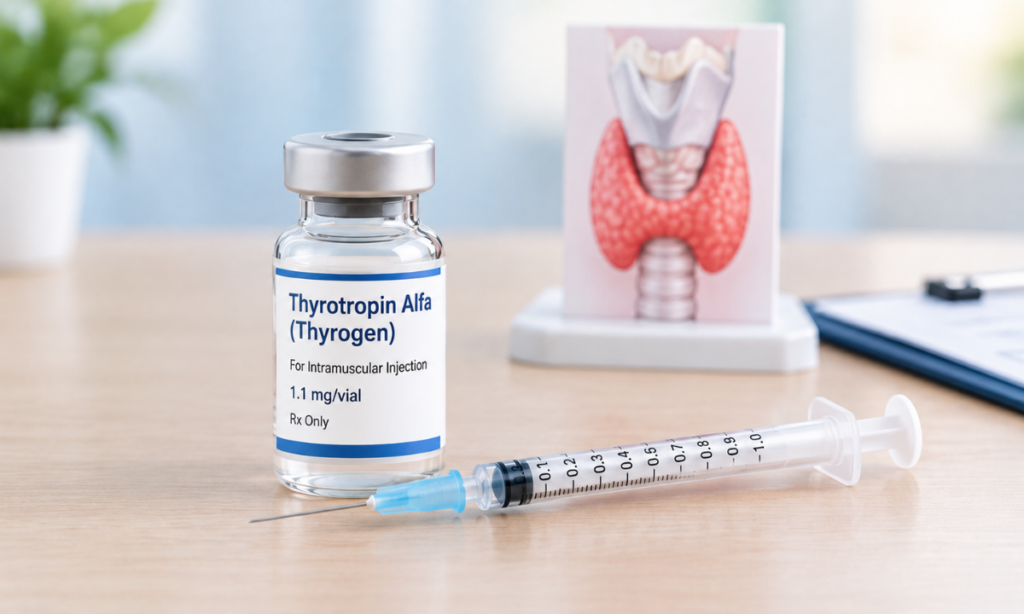
Recombinant human TSH, commonly known as thyrotropin alfa or Thyrogen, may be used for appropriate patients.
Some treatment protocols use TSH injections so that radioactive iodine treatment can be performed without prolonged thyroid hormone withdrawal.
Thyroid Hormone Withdrawal
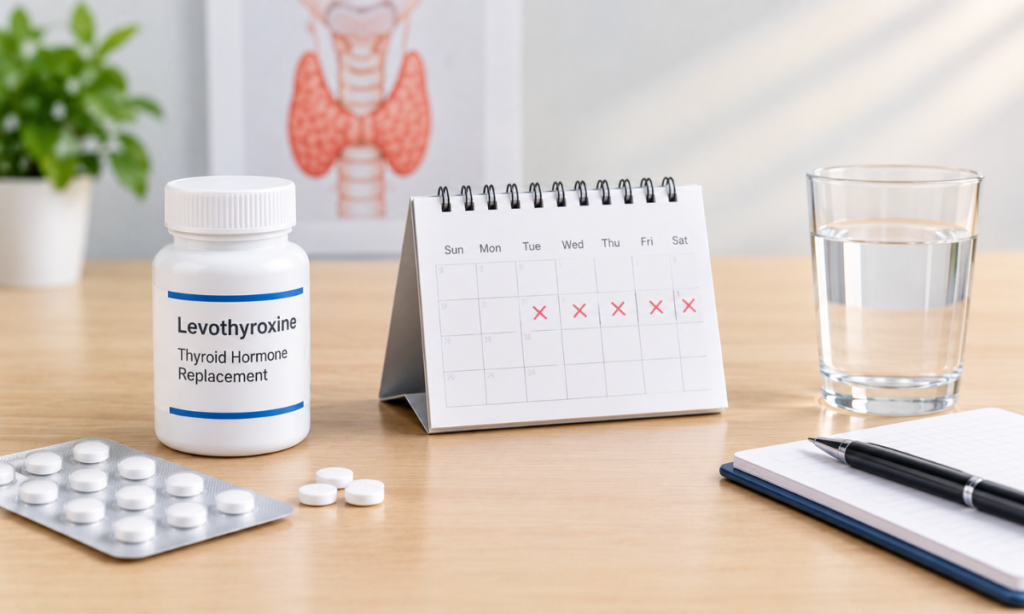
Another preparation approach may involve temporarily stopping thyroid hormone replacement under medical supervision.
Whether this is required depends on the patient’s diagnosis, previous thyroid surgery, treatment objective and clinical protocol.
Do not stop thyroid hormone medication on your own. Your treating doctor should tell you whether medication needs to be stopped, when to stop it and when it should be restarted.
Low-Iodine Diet Before Radioactive Iodine Therapy
A low-iodine diet may be recommended before radioactive iodine therapy.
The aim is to reduce the amount of stable iodine available to the body before treatment, which may help thyroid tissue take up the radioactive iodine as intended.
Kiran’s iodine-scan preparation guidance recommends a low-iodine diet before iodine-based scanning and identifies foods such as dairy products, seafood, iodised salt and soy products as foods that may need to be avoided.
The exact diet and duration for RAI therapy should be confirmed with your treating team.
What Can You Eat on a Low-Iodine Diet?
Your treatment centre may provide a specific food list. Depending on the instructions, a low-iodine diet may include naturally low-iodine foods such as:
- Fresh fruits
- Fresh vegetables
- Rice
- Pasta
- Fresh meats prepared without restricted ingredients
- Suitable oils
- Foods prepared without iodised salt
Packaged foods should be checked carefully because ingredients and iodine content can vary.
Which Foods May Need to Be Avoided?
Depending on your doctor’s instructions, you may need to avoid or restrict:
- Iodised salt
- Seafood
- Seaweed and kelp
- Dairy products
- Certain processed foods
- Iodine-containing supplements
- Products containing restricted iodine-containing ingredients
Can You Eat Dairy Products?
Dairy products may need to be restricted during a low-iodine preparation period because they can contribute dietary iodine.
Follow the food list provided by your treatment centre rather than assuming that every dairy product is suitable.
Can You Eat Seafood or Seaweed?
Seafood and seaweed can contain significant amounts of iodine and are commonly restricted during low-iodine preparation.
What About Iodised Salt?
Iodised salt is an important source of dietary iodine. If your doctor has prescribed a low-iodine diet, ask which salt and packaged-food products are appropriate.
What About Vitamins and Supplements?
Tell your doctor about every vitamin, mineral, herbal product and nutritional supplement you take.
Iodine-containing or kelp-containing supplements may need to be stopped depending on your treatment plan.
How Long Should You Follow a Low-Iodine Diet?
There is no single preparation period that applies to every patient.
The duration of the low-iodine diet can differ depending on whether it is being used for diagnostic imaging or therapeutic radioactive iodine treatment.
Your nuclear medicine team should tell you exactly when to begin and end your low-iodine diet.
Medicines and Supplements Before RAI Therapy
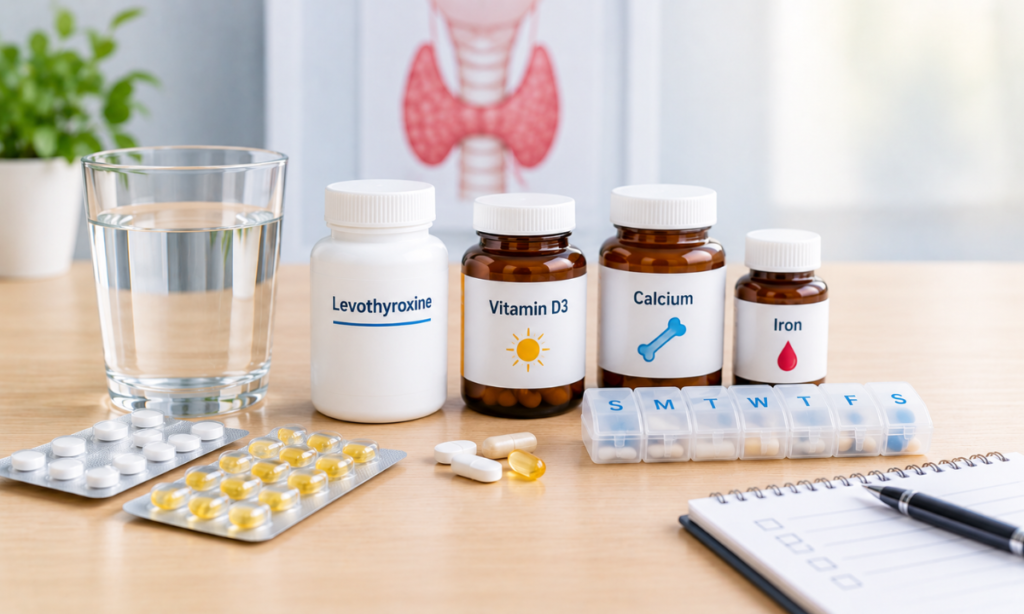
Medication preparation is another important part of radioactive iodine treatment.
Tell your nuclear medicine team about:
- Thyroid hormone medicines
- Prescription medicines
- Vitamins
- Herbal supplements
- Iodine-containing supplements
- Kelp-containing products
- Recent iodine-containing treatments or medicines
Some medications may need to be temporarily discontinued if they can interfere with radioactive iodine uptake.
Should You Stop Thyroid Medicine?
Not every patient needs to stop thyroid medication.
Depending on the treatment plan, TSH may be prepared through thyroid hormone withdrawal or recombinant TSH.
Never stop prescribed medication without medical advice.
Your doctor should explain:
- Which medicine needs to be changed
- When it should be stopped
- Whether an alternative preparation is required
- When it should be restarted
Tests and Medical Records Before Radioactive Iodine Therapy
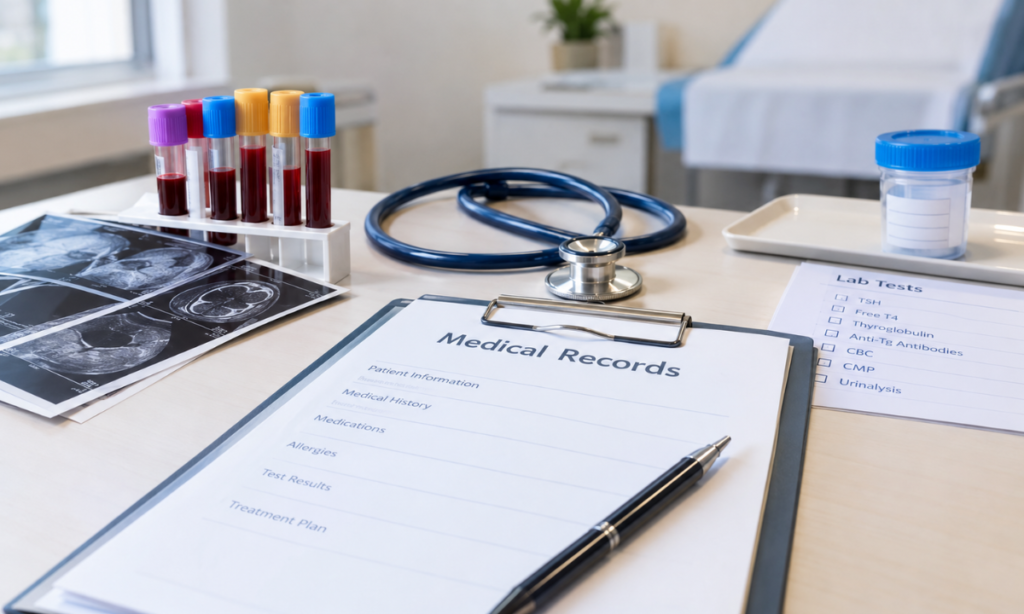
Before treatment, your doctor may review previous investigations and treatment records to determine the appropriate treatment approach.
You may be asked to provide:
- Thyroid blood-test reports
- Previous imaging reports
- Thyroid surgery records
- Biopsy or pathology reports
- Previous radioactive iodine treatment details
- Current medication list
- Relevant cancer-treatment records
Kiran PET CT provides thyroid-related nuclear medicine imaging, including Thyroid Scan and Whole Body Iodine Scan services.
Learn more about the Thyroid Scan Procedure.
A Whole Body Iodine Scan can be used after thyroid surgery or radioactive iodine therapy to evaluate remaining thyroid tissue, thyroid cancer and possible disease spread.
Read more about the Whole Body Iodine Scan Procedure.
Pregnancy, Breastfeeding and Family Planning
Tell your nuclear medicine specialist if you:
- Are pregnant
- Could be pregnant
- Are breastfeeding
- Are planning a pregnancy
- Have questions about fertility or family planning
Radioactive iodine treatment requires specific consideration around pregnancy and breastfeeding.
Can Radioactive Iodine Therapy Be Given During Pregnancy?
Radioactive iodine therapy is not used during pregnancy. If there is any possibility that you could be pregnant, inform your treatment team before receiving radioactive iodine.
What About Breastfeeding?
Tell your treatment team if you are breastfeeding.
The requirements for therapeutic radioactive iodine may differ from those for diagnostic iodine scans, so follow your treating specialist’s instructions.
Planning a Pregnancy After RAI
Discuss pregnancy plans with your doctor before treatment. Your specialist can advise you about the appropriate interval after radioactive iodine therapy based on your individual treatment.
Radioactive Iodine Therapy Preparation Timeline
The preparation schedule varies according to the treatment plan, but it may include several stages.
Before Treatment
Your medical team may arrange:
- Low-iodine diet
- Medication review
- Blood tests
- TSH preparation
- Review of previous thyroid treatment
- Pregnancy or breastfeeding assessment
During the Preparation Period
You may need to continue the low-iodine diet and follow instructions concerning thyroid medicines or TSH stimulation.
Some treatment protocols use recombinant TSH, while others use thyroid hormone withdrawal.
Before the Treatment Dose
Additional blood tests or imaging may be required depending on your condition and treatment plan.
The sequence and timing can vary between patients, so the schedule given by your nuclear medicine specialist should be followed rather than a general online timeline.
What Should You Do on the Day of Radioactive Iodine Therapy?
Your treatment centre will provide specific instructions for the treatment day.
These may include guidance about:
- Food and drinks
- Medicines
- Arrival time
- Personal belongings
- Pre-treatment imaging
- Radiation-safety procedures
Can You Take Your Medicines?
Only take or stop medicines according to your doctor’s instructions.
This is particularly important if you take thyroid hormone replacement or medicines containing iodine.
Should You Fast Before RAI Therapy?
Fasting requirements can vary according to the treatment protocol.
Do not assume that prolonged fasting is required. Ask your treatment centre exactly when you should stop eating and whether water or other liquids are permitted.
What Should You Bring?
It is useful to carry:
- Previous medical reports
- Thyroid investigation reports
- Previous scan reports
- Current prescriptions
- Medication list
- Doctor’s referral or treatment documents
- Previous radioactive iodine treatment records
What Happens Just Before Radioactive Iodine Is Given?
The exact steps depend on the treatment protocol.
Before the treatment dose, the medical team may:
- Review blood-test results
- Review previous investigations
- Perform nuclear medicine imaging where required
- Confirm the treatment plan
- Review radiation-safety instructions
- Confirm the radioactive iodine dose
Kiran PET CT administers radioactive iodine orally as a capsule or liquid dose. The iodine travels through the bloodstream and is taken up by thyroid cells, where the radiation targets abnormal thyroid tissue.
Explore Radioactive Iodine Therapy at Kiran PET CT.
How Should You Plan Transportation After RAI Therapy?

Transportation should be discussed with your treatment centre before receiving radioactive iodine.
Because radioactive iodine remains temporarily active in the body, patients may receive instructions designed to minimise radiation exposure to others.
Depending on the dose and treatment plan, your team may advise you about:
- Private transportation
- Public transportation
- Travelling with family members
- Long-distance travel
- Contact with children
- Contact with pregnant people
Do not apply another hospital’s specific travel distances or time limits to your own treatment. Follow the written radiation-safety instructions provided by your nuclear medicine team.
What Happens After Radioactive Iodine Therapy?
After treatment, some radioactive iodine remains in the body temporarily.
Your treatment team will explain the precautions you need to follow. These may include guidance about:
- Contact with other people
- Sleeping arrangements
- Contact with children
- Contact with pregnant people
- Travel
- Work
- Personal hygiene
- Fluids and urination
- Follow-up appointments
Follow-Up After Radioactive Iodine Therapy
Follow-up depends on the condition being treated and the treatment plan.
Your doctor may recommend:
- Blood tests
- Thyroid hormone monitoring
- Follow-up imaging
- Whole Body Iodine Scan
- Medication adjustments
- Further consultation
Kiran’s Whole Body Iodine Scan Procedure can be used after thyroid surgery or radioactive iodine therapy to assess treatment response and detect remaining or recurrent thyroid cancer.
Radioactive Iodine Therapy Side Effects
Radioactive iodine therapy can have side effects, although the experience varies between patients.
Potential effects can include:
- Nausea
- Salivary-gland discomfort or swelling
- Dry mouth
- Taste changes
- Neck discomfort
These issues should be discussed with your treating team if they occur. A dedicated Radioactive Iodine Therapy Side Effects & Precautions page can provide more detailed information.
Why Choose Kiran PET CT for Radioactive Iodine Therapy?
Kiran Nuclear Medicine and PET-CT Centre presents its Radioiodine Therapy service around a theranostics approach, combining advanced diagnostics with targeted treatment planning.
Pioneering Theranostics
Kiran describes its approach as integrating advanced diagnostics with personalised treatment plans.
Imaging Alongside Therapy
The centre combines imaging and therapy as part of its nuclear medicine services.
Personalised Medicine
Treatment planning considers the patient’s medical history, preferences and treatment goals.
Dedicated Isolation Facilities
Kiran provides dedicated isolation rooms designed for patients receiving radioactive iodine therapy, along with radiation-safety measures.
Patients can also explore Kiran’s wider nuclear medicine and imaging services, including PET/CT Scan in Bangalore.
Radioactive Iodine Therapy in Bangalore
Kiran Nuclear Medicine and PET-CT Centre provides radioactive iodine therapy and nuclear medicine services in Bangalore.
The centre has locations in Banashankari and Indiranagar.
Banashankari Centre
Kiran Nuclear Medicine and PET-CT Centre
2227, 9th Main Road, Karesandra, Banashankari Stage II, Banashankari, Bengaluru, Karnataka 560070
Phone: +91 70902 70904
Indiranagar Centre
Kiran Nuclear Medicine and PET-CT Centre
221, 13th Cross Road, Indiranagar 1st Stage, Hoysala Nagar, Indiranagar, Bengaluru, Karnataka 560038
Phone: +91 70902 70905
Email: kiranpetct@gmail.com
For appointments and treatment-related enquiries, contact Kiran PET CT.
Frequently Asked Questions About Radioactive Iodine Therapy Preparation
What should I do before radioactive iodine therapy?
Preparation may include a low-iodine diet, medication review, blood tests, TSH preparation and other investigations depending on your treatment plan.
Do I need a low-iodine diet before RAI therapy?
A low-iodine diet may be recommended before treatment to reduce iodine intake and support radioactive iodine uptake. Follow the exact diet and duration prescribed by your treatment team.
How long should I follow a low-iodine diet?
The duration varies according to the treatment protocol. Your nuclear medicine specialist should provide the exact start and end dates.
Should I stop thyroid medicine before radioactive iodine therapy?
Some patients may need thyroid hormone withdrawal, while others may receive recombinant TSH. Do not stop thyroid medication without instructions from your treating doctor.
What is Thyrogen?
Thyrogen is recombinant human TSH that may be used to stimulate thyroid tissue before radioactive iodine treatment in appropriate patients.
Can I eat dairy products before RAI therapy?
Dairy products may be restricted during a low-iodine diet. Follow the food list provided by your treatment centre.
Can I eat seafood before radioactive iodine therapy?
Seafood and seaweed are commonly restricted during low-iodine preparation because they can contain significant amounts of iodine.
What tests are needed before radioactive iodine therapy?
Depending on your treatment plan, your doctor may review blood tests, previous imaging, surgery records, pathology reports and previous radioactive iodine treatment details.
Can radioactive iodine therapy be given during pregnancy?
Radioactive iodine therapy is not used during pregnancy. Inform your doctor if you are pregnant or could be pregnant before treatment.
Can I undergo RAI therapy while breastfeeding?
Breastfeeding requires specific planning before radioactive iodine therapy. Discuss it with your nuclear medicine specialist before treatment.
Can I travel after radioactive iodine therapy?
You may receive temporary travel restrictions depending on the radioactive iodine dose and radiation-safety requirements. Follow the instructions provided by your treatment centre.
What should I bring on the treatment day?
Bring relevant medical reports, previous scans, prescriptions, medication details and treatment documents.
Preparing for Radioactive Iodine Therapy?
If your doctor has recommended radioactive iodine therapy, proper preparation can help you understand the treatment process and organise your diet, medicines, investigations and treatment-day arrangements.
Kiran PET CT provides radioactive iodine therapy for thyroid cancer and hyperthyroidism, with a theranostics-focused approach, personalised treatment planning and dedicated isolation facilities.
Banashankari: +91 70902 70904
Indiranagar: +91 70902 70905
Email: kiranpetct@gmail.com