Managing differentiated thyroid carcinoma frequently requires specialized molecular interventions to ensure comprehensive disease control. As the Best PET Scan Centre in Bangalore, Kiran PET CT provides advanced diagnostic and therapeutic oncology services.
Following surgical excision, Radioactive iodine therapy serves as a critical protocol for systematic cellular eradication. Understanding the precise Benefits of targeted radionuclide therapy is essential for patients navigating complex oncological care pathways.
This advanced nuclear medicine modality transcends standard anatomical interventions by providing highly specific cytocidal action directly at the cellular level. By exploiting the inherent biological mechanisms of the thyroid gland, clinical specialists can isolate and ablate microscopic malignant remnants with profound accuracy.
The integration of this therapy into standard care pathways significantly reduces the probability of disease recurrence and optimizes overall patient survival metrics. This guide details the biophysical efficacy of this treatment and its fundamental role in achieving long-term clinical remission.
Medical Disclaimer
The information provided in this clinical guide is strictly for educational purposes and does not constitute professional medical advice, diagnosis, or treatment. Always seek the direct guidance of a qualified nuclear medicine physician, oncologist, or endocrinologist regarding specific medical conditions and treatment protocols. Never disregard professional medical advice or delay seeking clinical evaluation based on the contents of this publication.
Key Clinical Points at a Glance
- Targeted Eradication: The precise biological mechanism for isolating malignant thyroid tissue while preserving surrounding anatomical structures.
- Adjuvant Necessity: The established clinical requirement for molecular therapies following standard surgical interventions.
- Survival Outcomes: The statistical data supporting long-term remission and disease-free survival.
- Systemic Preservation: The advantage of minimizing collateral tissue damage through localized ionizing radiation compared to traditional systemic treatments.
Highly effective in treating thyroid cells
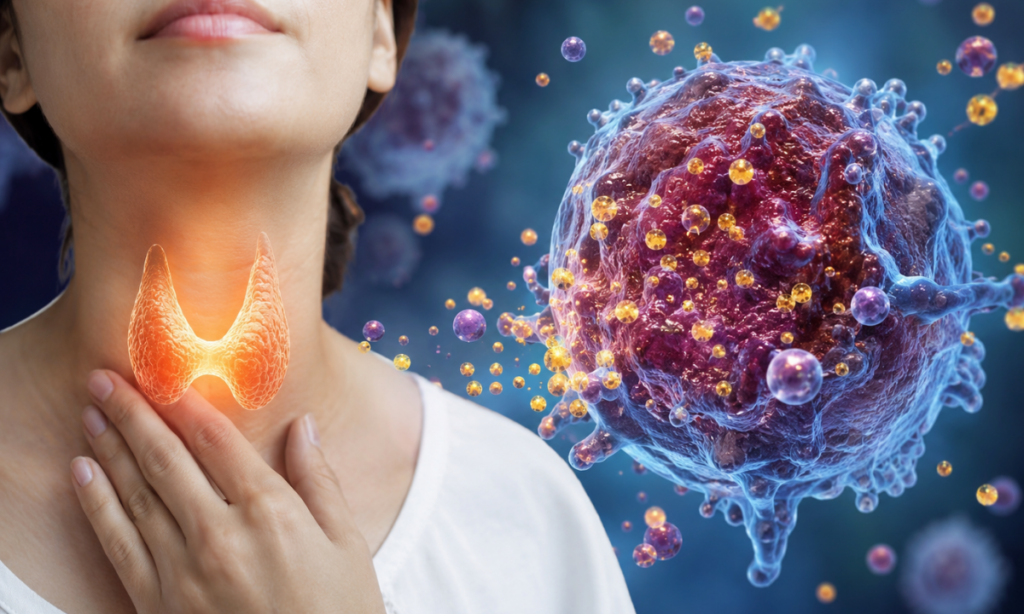
The fundamental clinical success of radioactive iodine therapy relies entirely on a unique physiological characteristic inherent to thyroid tissue. The human thyroid gland expresses a specific transmembrane glycoprotein known as the sodium-iodide symporter (NIS).
This biological pump actively transports circulating iodine from the bloodstream directly into the intracellular environment of the thyroid follicular cells. As stable iodine is an absolute biological requirement for the synthesis of essential thyroid hormones, this cellular transport mechanism operates with extreme efficiency.
Crucially, well-differentiated thyroid carcinoma cells, including papillary and follicular variants, retain this functional NIS expression. When nuclear medicine physicians administer the radioactive isotope Iodine-131, the malignant cells cannot biologically distinguish the radiopharmaceutical from standard dietary iodine.
Consequently, the malignant tissue actively absorbs and concentrates the radioactive element directly within its cellular matrix. This precise biological targeting provides a mechanism that is remarkably effective in treating thyroid cells at the microscopic level.
The Sequence of Cytocidal Action
Once the radioactive isotope is localized within the malignant tissue, it initiates a definitive sequence of cellular eradication:
- Isotope Internalization: The sodium-iodide symporter actively concentrates the Iodine-131 exclusively within the targeted carcinoma cells, isolating the therapeutic agent from systemic circulation.
- Beta Particle Emission: The internalized isotope undergoes spontaneous radioactive decay. This process emits high-energy beta particles that travel a strictly confined physical distance of approximately 1 to 2 millimeters within the surrounding tissue.
- Genetic Degradation: The localized ionizing radiation generated by the beta particles induces severe, irreparable double-strand breaks within the DNA architecture of the malignant cell.
- Cellular Apoptosis: The catastrophic structural genetic damage completely halts malignant replication. This failure triggers apoptosis, which is programmed cell death, resulting in the permanent and systematic eradication of the targeted tumor volume.
Targeted radionuclide therapy achieves localized tumor destruction without relying on the systemic cytotoxicity associated with traditional chemotherapeutic agents.
The standard for post-surgery cancer treatment
The primary clinical intervention for differentiated thyroid carcinoma is a total or near-total thyroidectomy. While surgical excision successfully removes the macroscopic tumor volume, anatomical constraints often prevent the absolute extraction of all thyroid tissue.
Surgeons intentionally preserve microscopic margins of thyroid cells to protect critical adjacent structures, specifically the recurrent laryngeal nerve and the parathyroid glands. Because differentiated thyroid cancer frequently exhibits microscopic multifocality, these preserved anatomical margins present a significant clinical risk for harboring residual malignant cells.
To mitigate this risk of locoregional recurrence, clinical protocols mandate radioactive iodine therapy as the definitive post-surgery cancer treatment.
This adjuvant intervention, formally known as remnant ablation, systematically targets and destroys any remaining functional thyroid tissue or microscopic metastatic deposits located within the cervical bed.
Clinical Comparison of Surgical Excision versus Adjuvant Ablation
The following table outlines the distinct clinical objectives of both modalities, illustrating why a combined therapeutic approach is an absolute medical requirement for comprehensive disease management.
| Clinical Parameter | Total Thyroidectomy (Surgical) | Targeted Radionuclide Therapy (Adjuvant) |
|---|---|---|
| Primary Objective | The physical extraction of the primary macroscopic tumor mass and involved regional lymph nodes. | The complete physiological eradication of microscopic, residual malignant cells and benign thyroid remnants. |
| Anatomical Target Volume | Macroscopic tissue visible to the naked eye or identified via preoperative ultrasound imaging. | Microscopic cellular clusters undetectable by standard intraoperative visual inspection. |
| Clinical Limitations | Anatomically restricted by the necessity to preserve the recurrent laryngeal nerve and parathyroid function. | Requires the residual cells to maintain functional sodium-iodide symporter expression for isotopic uptake. |
| Diagnostic Value3 | Provides definitive histological staging through the pathological examination of the excised tissue. | Destroys residual benign tissue, which facilitates accurate long-term monitoring by ensuring the thyroglobulin tumor marker drops to an undetectable baseline. |
Deploying targeted radionuclide therapy following surgical extraction, which oncologists ensure the complete cellular eradication within the thyroid bed. This two-stage protocol represents the global standard in thyroid oncology, finalizing the anatomical excision through permanent molecular ablation.
Achieving a High cure rate after treatment
In the field of oncology, the efficacy of a therapeutic intervention is evaluated through two primary clinical metrics: overall survival and disease-free survival. For patients diagnosed with differentiated thyroid carcinoma, the integration of targeted radionuclide therapy following surgical extraction yields exceptional clinical outcomes.
When deployed according to established oncological guidelines, this molecular intervention consistently demonstrates a High cure rate after treatment, effectively neutralizing the primary biological threat of disease progression and locoregional recurrence.
The clinical success of this specific modality is extensively documented within global oncological registries. By systematically eradicating both benign remnants and microscopic malignant deposits, the therapy provides a definitive pathway to long-term clinical remission.
Documented Oncological Outcomes
To comprehend the statistical and physiological impact of this intervention, clinical specialists evaluate its success across several distinct parameters:
| Clinical Metric | Impact of Targeted Radionuclide Therapy |
|---|---|
| Locoregional Control | Drastically reduces the statistical incidence of cellular recurrence within the cervical lymph nodes and the immediate surgical thyroid bed. |
| Overall Survival Rates | Ten-year survival rates for patients with well-differentiated thyroid carcinoma frequently exceed ninety percent when this adjuvant therapy is successfully integrated into the treatment pathway. |
| Metastasis Management | Proves highly effective in localizing and actively ablating iodine-avid microscopic metastases in distant anatomical structures, specifically including pulmonary and osseous tissues. |
| Biomarker Sensitivity | By destroying all residual healthy thyroid tissue, the therapy allows oncologists to rely entirely on serum thyroglobulin levels as a highly sensitive, definitive biomarker for future disease monitoring. |
The profound efficacy of this targeted treatment relies entirely on its unique ability to address microscopic multifocality. While standard diagnostic imaging modalities successfully identify macroscopic tumors, they frequently lack the resolution required to detect sub-millimeter malignant cellular clusters.
Targeted radionuclide therapy directly bridges this critical diagnostic gap. By utilizing the inherent biological properties of the malignant cells to facilitate their own destruction, the therapy ensures a comprehensive, systemic oncological clearance that physical surgical intervention alone is biologically incapable of guaranteeing.
The primary Benefits of targeted radionuclide therapy
Traditional oncological treatments frequently rely on systemic cytotoxicity, affecting both malignant and healthy tissues indiscriminately.
The fundamental paradigm shift offered by advanced nuclear medicine is the absolute preservation of systemic physiological integrity. Evaluating the overarching Benefits of targeted radionuclide therapy requires a direct clinical comparison against the profound biological toll associated with conventional systemic interventions.
To provide a comprehensive understanding of these physiological advantages, clinical specialists categorize the systemic benefits into four primary areas of patient preservation:
1. Mitigation of Collateral Tissue Toxicity
Unlike intravenous chemotherapy, which circulates aggressively and affects all rapidly dividing cells, radioactive iodine remains biologically inert to the vast majority of human anatomy. The ionizing radiation is strictly confined to the thyroid bed and iodine-avid metastases.
This precise localization explicitly spares critical adjacent organs, specifically protecting the hepatic, cardiovascular, and pulmonary systems from unintended structural degradation.
2. Preservation of the Immunological Baseline
Standard systemic oncological treatments frequently induce severe myelosuppression, compromising the bone marrow and leaving patients highly vulnerable to opportunistic clinical infections. Targeted radionuclide therapy bypasses the bone marrow compartment in standard dosing protocols. This physiological avoidance allows the patient to maintain a robust, functional white blood cell count and an active immune response throughout the entire treatment and recovery phase.
3. Avoidance of Dermatological and Systemic Degradation
As the cytocidal action is localized entirely within the targeted follicular cells via the sodium-iodide symporter, the systemic side effects are vastly reduced. Patients undergoing this specific molecular intervention do not experience the profound dermatological and systemic complications standard in generalized oncology, avoiding clinical presentations such as total alopecia (hair loss) or severe, sustained gastrointestinal mucosal ulceration.
4. Diagnostic and Therapeutic Synergy (Theranostics)
A unique advantage of this modality is the dual-emission profile of the utilized isotopes. While the beta particles physically eradicate the malignant cells, the simultaneously emitted gamma photons exit the body. This allows the nuclear medicine team to utilize advanced imaging to actively treat the malignancy while concurrently acquiring high-resolution spatial data.
This Theranostics approach ensures absolute verification of the treatment’s targeting accuracy and identifies any previously undetected microscopic metastases.
Strictly limiting the destructive physiological impact to the targeted malignant cells, this intervention maximizes the curative potential while preserving the patient’s biological baseline and long-term quality of life.
Why Choose Kiran PET CT for Molecular Interventions
Selecting a specialized institution for targeted radionuclide therapy directly impacts clinical outcomes and physiological safety. Kiran PET CT operates as a premier center for advanced molecular imaging and Theranostics in Bangalore, providing unparalleled precision in the field of thyroid oncology.
The institution distinguishes itself through several highly specific clinical and technological advantages:
- Advanced Clinical Infrastructure: The facility is equipped with the state-of-the-art GE-DISCOVERY IQ GEN 2 PET/CT system. This highly advanced machinery provides exceptional spatial resolution and metabolic mapping, ensuring absolute accuracy in both diagnostic staging and therapeutic dosimetry.
- Comprehensive Theranostics Protocols: The institution seamlessly integrates diagnostic imaging with targeted nuclear therapies. This end-to-end clinical capability allows for the precise calculation of radioactive iodine dosages tailored specifically to the unique metabolic profile of the individual patient.
- Expert Clinical Leadership: The nuclear medicine department is directed by highly credentialed specialists who strictly adhere to the rigorous guidelines established by global oncological societies. Their expertise ensures the safe and precise administration of all molecular interventions.
To facilitate immediate medical decision-making for referring surgical oncologists and endocrinologists, the center utilizes an optimized workflow. This system delivers accurate, reconstructed 3D diagnostic reports rapidly, preventing unnecessary delays in the adjuvant treatment timeline.
Conclusion
The application of targeted radionuclide therapy represents a cornerstone in the definitive management of differentiated thyroid carcinoma. By exploiting the inherent biological mechanisms of the sodium-iodide symporter, this molecular intervention systematically eradicates microscopic malignant remnants while strictly preserving systemic physiological integrity. The resulting clinical data demonstrate exceptional long-term survival rates and a profound reduction in the probability of locoregional recurrence.
Patients requiring adjuvant treatment following a total thyroidectomy must prioritize facilities equipped with advanced nuclear medicine capabilities. By consulting with the specialists at Kiran PET CT, individuals gain access to precision-engineered therapeutic pathways designed to maximize clinical remission and optimize long term quality of life.