Radioactive iodine therapy, also called RAI therapy or I-131 treatment, is used for selected thyroid conditions, including certain thyroid cancers and hyperthyroidism. After receiving radioactive iodine, following the correct aftercare instructions is important because radioactive iodine leaves the body gradually, mainly through urine. Smaller amounts may also be present in sweat and saliva.
The precautions after treatment are intended to reduce unnecessary radiation exposure to family members, children, pregnant women and other people around you.
The exact aftercare instructions and duration of precautions depend on the radioactive iodine dose, your condition and your individual treatment plan. Always follow the instructions provided by your nuclear medicine specialist.
Kiran PET CT provides Radioactive Iodine Therapy with personalised treatment planning and dedicated facilities for radioactive iodine therapy.
What Happens After Radioactive Iodine Therapy?
After receiving the radioactive iodine dose, your body gradually eliminates radioactive iodine that has not been taken up by thyroid tissue.
During the initial recovery period, your treatment team may provide instructions about:
- Drinking fluids
- Regular urination
- Bathroom hygiene
- Personal hygiene
- Sleeping arrangements
- Contact with family members
- Contact with children
- Contact with pregnant women
- Sexual activity
- Food preparation
- Dishes and utensils
- Laundry
- Travel
- Work
- Follow-up appointments
The exact duration of each precaution varies between patients. Follow the instructions given specifically for your treatment.
The First Few Hours After Radioactive Iodine Therapy

The initial period after treatment is particularly important because radioactive iodine is being eliminated from the body.
Your treatment team may advise you to:
- Drink fluids regularly
- Empty your bladder frequently
- Follow careful bathroom hygiene
- Wash your hands thoroughly
- Maintain appropriate distance from other people
- Avoid unnecessary close contact
If you have been advised to restrict fluids because of another medical condition, follow your doctor’s instructions rather than increasing your fluid intake yourself.
Drink Fluids After RAI Therapy
Adequate fluid intake can help your body eliminate radioactive iodine through urine.
Your doctor may recommend drinking water and other permitted fluids regularly after treatment.
There is no single fluid requirement suitable for every patient. If you have a medical condition requiring fluid restriction, discuss your fluid intake with your doctor.
Urinate Regularly
Radioactive iodine is primarily eliminated through urine.
Regularly emptying your bladder can help reduce the amount of radioactive iodine remaining in the body.
Do not deliberately hold urine for long periods during the initial aftercare period.
Bathroom Precautions After Radioactive Iodine Therapy

Careful bathroom hygiene is an important part of radioactive iodine aftercare.
You may be instructed to:
- Keep the toilet clean
- Sit while urinating to reduce splashing
- Flush the toilet as instructed
- Wash your hands thoroughly with soap and water
- Rinse the bathroom sink after use
- Rinse the bathtub or shower area when instructed
- Clean up urine splashes promptly
Men may be specifically advised to sit while urinating to reduce splashing.
Follow the exact bathroom instructions provided by your treatment centre.
Personal Hygiene After RAI Therapy
Radioactive iodine can temporarily be present in sweat and saliva, so maintaining good personal hygiene is important.
During the precaution period, you may need to:
- Shower regularly
- Wash your hands frequently
- Use separate towels
- Use a separate face cloth
- Keep personal clothing separate
- Follow instructions for washing bedding
- Avoid sharing personal hygiene items
The treatment team will tell you how long these precautions need to continue.
Sleeping Arrangements After Radioactive Iodine Therapy
You may need to sleep separately from your partner or other family members for a specified period.
Your doctor may recommend:
- Sleeping in a separate bed
- Sleeping in a separate room
- Maintaining appropriate distance from other people
- Avoiding prolonged physical contact
- Avoiding sexual contact during the precaution period
Do not assume that the same sleeping period applies to every patient. The required duration depends on the treatment dose and your individual radiation-safety instructions.
Avoid Close Physical Contact
After radioactive iodine therapy, you may need to temporarily avoid prolonged close contact with other people.
This can include:
- Kissing
- Sexual activity
- Prolonged physical contact
- Sitting very close to someone for extended periods
- Sharing a bed
The purpose is to reduce unnecessary radiation exposure while radioactive iodine is still being eliminated from your body.
Precautions Around Children
Young children require particular consideration after radioactive iodine treatment.
You may be advised to temporarily limit close and prolonged contact with:
- Infants
- Toddlers
- Young children
If you normally provide childcare, arrange for another adult to help during the restriction period recommended by your doctor.
Your nuclear medicine team will tell you when normal contact can safely resume.
Precautions Around Pregnant Women
Pregnant women should not be unnecessarily exposed to radiation.
If someone in your household is pregnant, inform your treatment team before leaving the centre.
You may need to maintain additional distance and limit prolonged contact for a specified period.
Follow the individual instructions given by your nuclear medicine specialist.
Food Preparation After RAI Therapy
During the precaution period, you may be advised not to prepare food for other people.
If you must prepare food, your treatment team may provide additional hygiene instructions, such as using disposable gloves and disposing of them appropriately.
Do not share food, cups, plates or utensils during the period specified by your treatment centre.
Plates, Cups and Utensils
Depending on your treatment instructions, you may need to use separate:
- Cups
- Glasses
- Plates
- Spoons
- Forks
- Other eating utensils
Wash reusable dishes thoroughly after use.
If disposable dishes are used, follow the disposal instructions provided by your treatment centre.
Towels, Clothing and Bedding
During the initial precaution period, keep certain personal items separate from those used by other household members.
This may include:
- Towels
- Face cloths
- Bed sheets
- Personal clothing
- Underwear
Wash these items separately from other people’s laundry when instructed.
Clothing or other items contaminated with urine, sweat or other bodily fluids may require special handling.
Waste Disposal After RAI Therapy
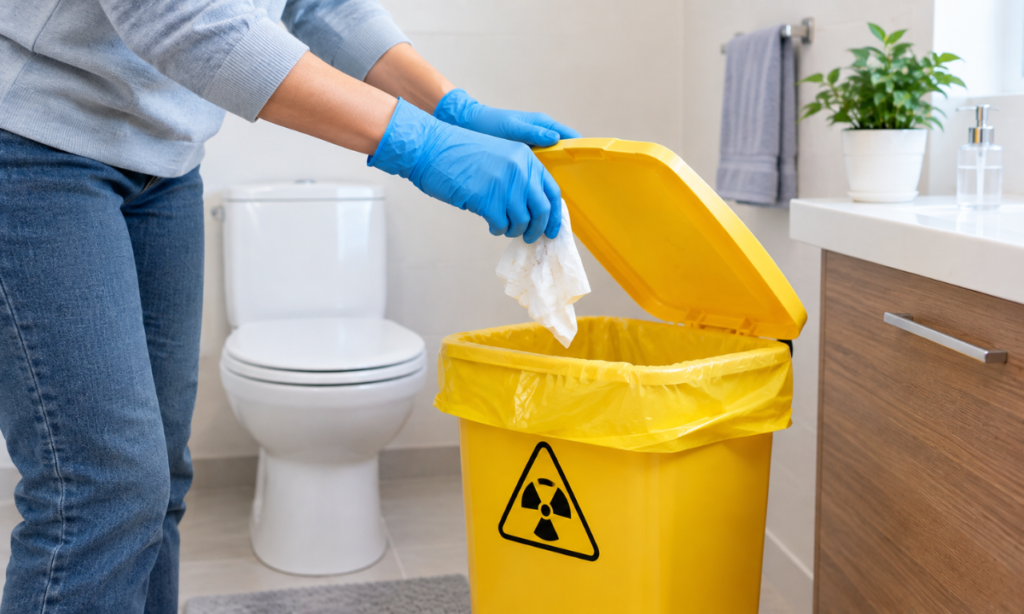
Some disposable items may contain small amounts of radioactive material.
Depending on your treatment centre’s instructions, this may include:
- Tissues
- Paper towels
- Bandages
- Disposable dishes
- Menstrual products
- Other items contaminated with bodily fluids
Do not assume that all radioactive-iodine waste should be handled in the same way. Ask your treatment centre about disposal instructions for your particular treatment.
Travel After Radioactive Iodine Therapy
Travel may need to be restricted temporarily after treatment.
Your treatment team may advise you to avoid:
- Crowded places
- Public transportation
- Long journeys with other people
- Prolonged close contact during travel
If you need to travel by car, discuss the arrangements with your treatment team.
The safest transportation option and timing of travel depend on your radioactive iodine dose and individual circumstances.
Radiation Detectors and Travel Documentation
Recent radioactive iodine treatment can sometimes be detected by radiation-monitoring equipment.
Detection may occur at:
- Airports
- Border crossings
- Hospitals
- Government facilities
- Other locations using radiation detectors
If you expect to travel soon after treatment, ask your treatment centre whether you should carry documentation confirming your radioactive iodine treatment.
This documentation can help explain why a radiation detector may register radiation after a medical treatment.
Can You Go to Work After RAI Therapy?
Whether you can return to work depends on:
- Radioactive iodine dose
- Type of work
- Workplace environment
- Contact with other people
- Contact with children
- Contact with pregnant women
Your doctor will tell you when it is appropriate to return to work and whether temporary modifications are required.
People who work from home may have different requirements from those who work in environments involving frequent close contact.
What If You Need Medical Treatment After RAI?
Tell healthcare professionals that you recently received radioactive iodine therapy if you need medical attention during the precaution period.
This is particularly important if you require:
- Emergency treatment
- Hospitalisation
- Surgery
- Diagnostic testing
- Dental treatment
- Other medical procedures
Keep your radioactive iodine treatment information available if your treatment team recommends carrying documentation.
How Long Does Radioactive Iodine Stay in the Body?
Radioactive iodine is gradually eliminated from the body, primarily through urine.
Small amounts may also be present in:
- Sweat
- Saliva
- Other bodily fluids
The amount of time radioactive iodine remains relevant for radiation precautions varies from patient to patient.
The treatment dose and individual clearance affect how long precautions are necessary.
Your nuclear medicine team should provide the specific duration for your treatment.
Follow-Up After Radioactive Iodine Therapy
Follow-up is an important part of radioactive iodine treatment.
Your doctor may recommend:
- Thyroid blood tests
- TSH monitoring
- Free T4 testing
- Thyroglobulin testing when appropriate
- Thyroglobulin antibody testing when appropriate
- Follow-up imaging
- Whole Body Iodine Scan
- Additional radioactive iodine treatment when clinically indicated
Kiran PET CT provides the Whole Body Iodine Scan Procedure as part of its nuclear medicine services.
Whole Body Iodine Scan After RAI
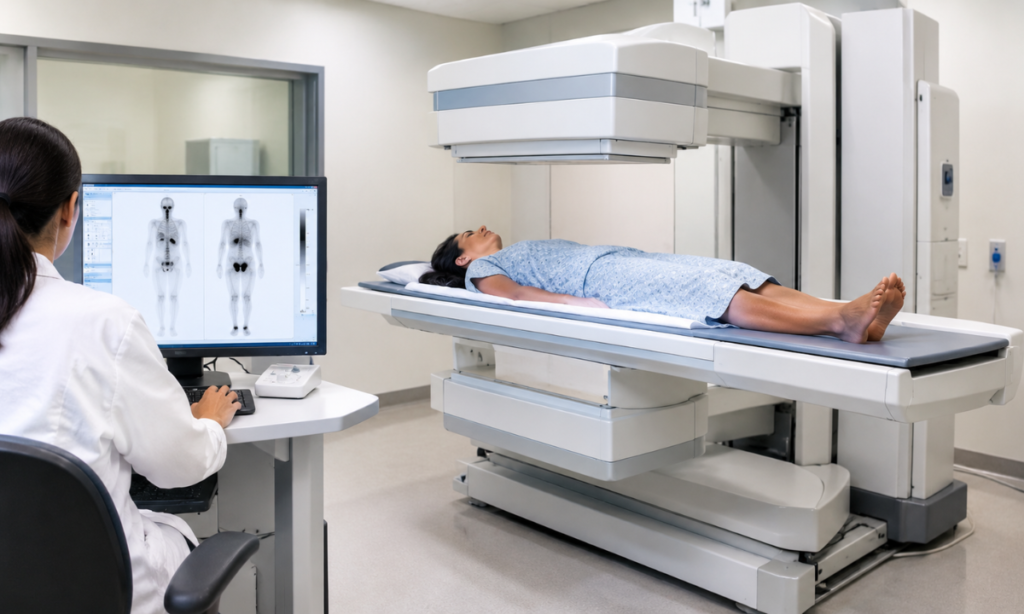
A Whole Body Iodine Scan may be recommended after thyroid surgery or radioactive iodine treatment when clinically appropriate.
It can help the treating team evaluate iodine-avid thyroid tissue and assess the response to treatment.
Learn more about the Whole Body Iodine Scan Procedure.
Thyroid Function Monitoring
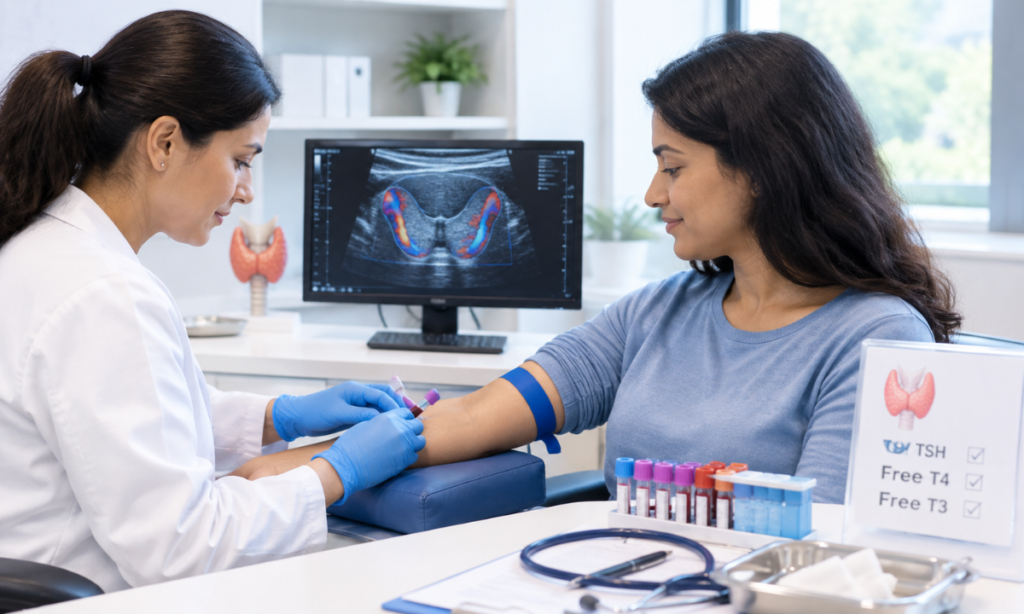
Thyroid function may change after radioactive iodine therapy.
Your doctor may monitor:
- TSH
- Free T4
- Other thyroid-related blood tests when required
Patients treated for hyperthyroidism may eventually develop hypothyroidism and require thyroid hormone replacement.
Patients treated for thyroid cancer may also require thyroid hormone replacement depending on their surgery and treatment plan.
Do not change your thyroid medication without medical advice.
Long-Term Follow-Up After RAI Therapy
Follow-up does not necessarily end after the initial recovery period.
Depending on your condition, long-term monitoring may include:
- Thyroid hormone testing
- Thyroglobulin monitoring
- Thyroglobulin antibody monitoring
- Clinical examination
- Ultrasound
- Whole Body Iodine Scan
- Other imaging
- Additional treatment when required
Patients treated for thyroid cancer may require ongoing surveillance based on their diagnosis and treatment history.
Your treating specialist will determine the appropriate follow-up schedule.
Can Radioactive Iodine Therapy Be Repeated?
Some patients may require additional radioactive iodine treatment.
The decision may depend on:
- Type of thyroid disease
- Response to previous treatment
- Remaining thyroid tissue
- Recurrent disease
- Previous radioactive iodine dose
- Follow-up test results
Additional treatment should only be undertaken when recommended by the treating medical team.
Pregnancy and Family Planning After RAI
Discuss pregnancy and family planning with your doctor.
Radioactive iodine should not be given during pregnancy because it can affect the fetal thyroid gland.
If you are planning a pregnancy after treatment, your doctor will advise you about the appropriate waiting period based on your treatment and individual circumstances.
Men and women with fertility concerns should discuss family planning with their treating specialist.
Breastfeeding After Radioactive Iodine Therapy
Breastfeeding requires special consideration.
Tell your nuclear medicine specialist if you are breastfeeding before receiving radioactive iodine.
After therapeutic radioactive iodine treatment, breastfeeding the current baby should not be resumed unless specifically advised by the treating medical team.
Ask your doctor about future breastfeeding plans and when it is safe to resume or whether breastfeeding should be permanently stopped for the current child.
When Should You Contact Your Doctor?
Contact your doctor or treatment centre if you develop:
- Sore throat
- Vomiting
- Diarrhea
- Persistent or worsening symptoms
- Difficulty following your radiation-safety instructions
- Concerns about your medicines
- Questions about your follow-up care
Seek urgent medical attention for severe or rapidly worsening symptoms, particularly significant difficulty breathing or swallowing.
Radioactive Iodine Therapy Aftercare Checklist
After treatment, keep your written instructions available and follow them carefully.
Your aftercare checklist may include:
- Drink fluids as instructed
- Urinate regularly
- Keep the toilet clean
- Flush after each use as instructed
- Wash your hands thoroughly
- Rinse the sink after use
- Use separate towels
- Use separate bedding when instructed
- Wash personal clothing separately
- Avoid sharing cups and utensils
- Avoid preparing food for others when instructed
- Limit close contact
- Avoid close contact with children
- Avoid close contact with pregnant women
- Sleep separately when instructed
- Avoid sexual activity during the specified period
- Follow travel restrictions
- Carry treatment documentation when advised
- Attend all follow-up appointments
- Keep an updated list of your medicines and test results
Radioactive Iodine Therapy Aftercare at Kiran PET CT
Kiran Nuclear Medicine and PET-CT Centre provides Radioactive Iodine Therapy for appropriate thyroid conditions.
The centre follows a theranostics-focused approach that combines diagnostic imaging with targeted treatment planning and provides dedicated facilities for radioactive iodine therapy.
For related thyroid imaging, patients can explore the Thyroid Scan Procedure.
Patients can also explore PET/CT Scan in Bangalore as part of Kiran’s broader nuclear medicine and imaging services.
Radioactive Iodine Therapy in Bangalore
Kiran Nuclear Medicine and PET-CT Centre has centres in Banashankari and Indiranagar, Bengaluru.
Banashankari Centre
Kiran Nuclear Medicine and PET-CT Centre
2227, 9th Main Road, Karesandra, Banashankari Stage II, Banashankari, Bengaluru, Karnataka 560070
Phone: +91 70902 70904
Indiranagar Centre
Kiran Nuclear Medicine and PET-CT Centre
221, 13th Cross Road, Indiranagar 1st Stage, Hoysala Nagar, Indiranagar, Bengaluru, Karnataka 560038
Phone: +91 70902 70905
Email: kiranpetct@gmail.com
For appointments and treatment-related enquiries, contact Kiran PET CT.
Frequently Asked Questions About Radioactive Iodine Therapy Aftercare
How long should I follow precautions after radioactive iodine therapy?
The duration varies depending on the treatment dose and your individual circumstances. Follow the exact instructions provided by your nuclear medicine specialist.
Why should I drink fluids after RAI therapy?
Fluids can help the body eliminate radioactive iodine through urine. Your doctor will advise you about appropriate fluid intake.
Why should I urinate frequently after RAI?
Radioactive iodine is primarily eliminated through urine. Regularly emptying the bladder can help remove radioactive iodine from the body.
Should men sit while urinating after RAI therapy?
Your treatment team may recommend sitting while urinating to reduce splashing and contamination of bathroom surfaces.
Can I sleep with my spouse after radioactive iodine therapy?
You may need to sleep separately for a specified period. Follow the instructions provided by your treatment centre.
Can I be around my children after RAI therapy?
Close and prolonged contact with young children may need to be restricted temporarily.
Can I be around pregnant women after RAI therapy?
You may need to maintain additional distance from pregnant women for a specified period. Follow your doctor’s instructions.
Can I share plates and utensils after RAI therapy?
You may be instructed to use separate cups, plates and utensils temporarily. Follow your treatment centre’s hygiene instructions.
Can I cook for my family after RAI therapy?
You may be advised not to prepare food for others during the initial precaution period. Ask your treatment team when normal food preparation can resume.
Can I travel after radioactive iodine therapy?
Travel may need to be delayed temporarily. Discuss public transportation, air travel and long-distance journeys with your treatment team.
Why should I carry a treatment letter when travelling?
Recent radioactive iodine treatment can sometimes trigger radiation detectors. Treatment documentation can help explain the medical reason for detected radiation.
Can I go to work after RAI therapy?
The timing depends on your treatment dose, occupation and contact with other people. Your doctor will advise you when you can safely return.
Can I breastfeed after radioactive iodine therapy?
Therapeutic radioactive iodine requires special breastfeeding precautions. Ask your nuclear medicine specialist whether breastfeeding can resume. For the current child, it generally should not be resumed unless specifically advised by your medical team.
When can I become pregnant after radioactive iodine therapy?
Your doctor will advise you when it is appropriate to plan pregnancy based on your treatment and individual circumstances.
Do I need follow-up after radioactive iodine therapy?
Yes. Follow-up may include thyroid blood tests, hormone monitoring, imaging and other investigations depending on your condition.
Do I need a Whole Body Iodine Scan after RAI therapy?
Some patients may need a Whole Body Iodine Scan after treatment. Your doctor will determine whether follow-up imaging is appropriate.
Can radioactive iodine treatment be repeated?
Additional radioactive iodine treatment may be considered in selected patients based on the diagnosis, previous treatment and follow-up results.
Final Takeaway
After radioactive iodine therapy, careful aftercare helps reduce unnecessary radiation exposure while your body eliminates radioactive iodine.
Follow your treatment team’s instructions about hydration, urination, bathroom hygiene, personal items, sleeping arrangements, close contact, children, pregnancy, food preparation, travel and work.
Follow-up is equally important. Depending on your condition, your doctor may monitor thyroid hormone levels, perform blood tests, recommend a Whole Body Iodine Scan or consider additional treatment.
Most importantly, do not use another patient’s restriction period as your own medical instruction. The exact precautions and duration should come from the nuclear medicine team that administered your treatment.
If you have undergone or are planning radioactive iodine therapy in Bangalore , contact Kiran PET CT for treatment-related guidance and follow-up information.