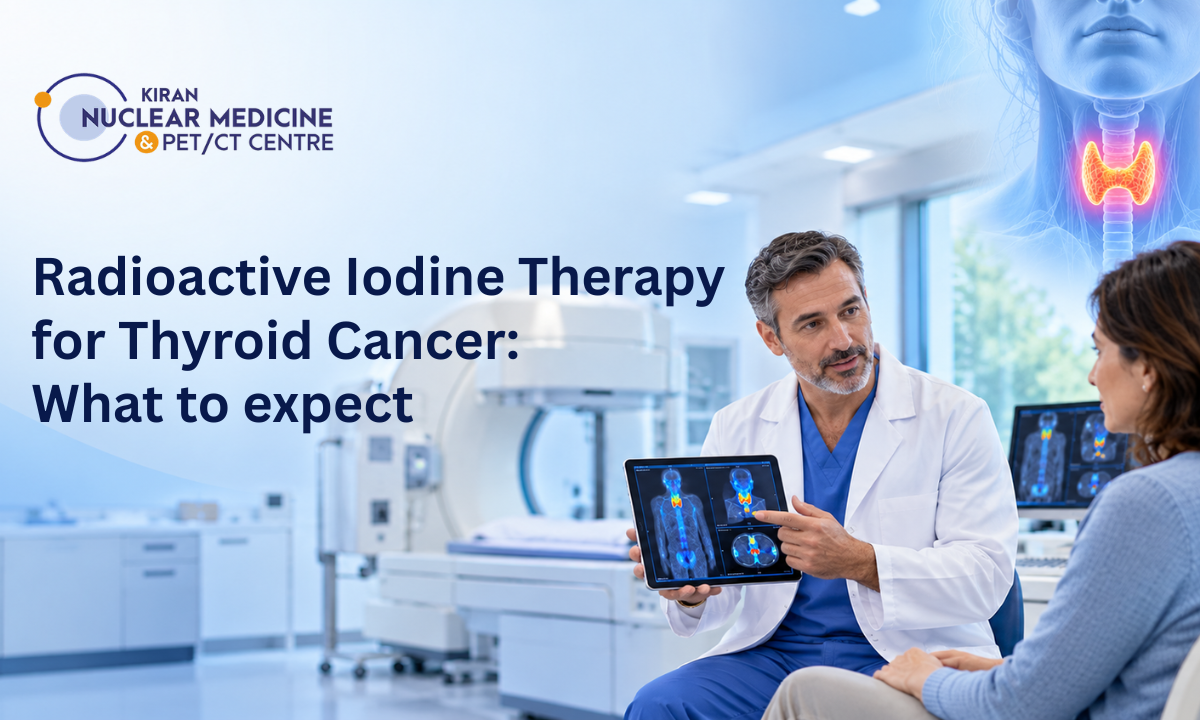
After thyroid cancer surgery, some patients are advised to have radioactive iodine after thyroid surgery and others are told they do not need it. Knowing why can make the decision far less stressful. Radioactive iodine, also called I-131 or RAI, is a targeted treatment for differentiated thyroid cancers such as papillary and follicular cancer. It is not a routine step for everyone.
Your treating team bases the recommendation on your pathology report, blood tests and overall risk of the cancer returning. This guide explains how that decision is made, what the isolation stay involves and how doctors check whether treatment has worked. If you are reading about an overactive thyroid instead, see our guide to radioactive iodine treatment for hyperthyroidism.
Why Is Radioactive Iodine Used After Thyroid Surgery?
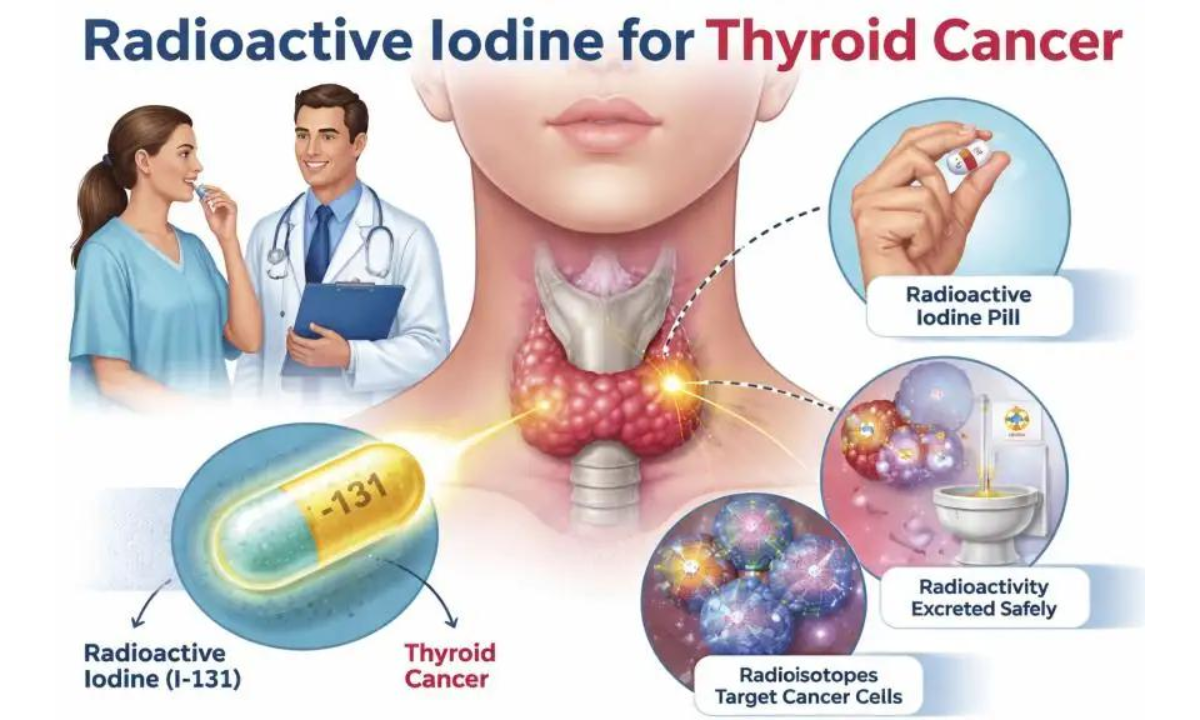
Thyroid cells absorb iodine far more than any other cells in the body. Radioactive iodine uses this to deliver radiation directly to thyroid tissue left after surgery, while largely sparing the rest of the body.
After a thyroidectomy, I-131 may be given for three reasons:
- Remnant ablation: to destroy small amounts of normal thyroid tissue left behind, which makes later blood tests and scans easier to interpret
- Adjuvant therapy: to treat microscopic cancer cells that may remain, lowering the risk of recurrence
- Treatment of known disease: to treat cancer that has spread to lymph nodes or other parts of the body
Our guide to targeted radionuclide therapy for thyroid cancer explains these benefits in more detail.
When Is Radioactive Iodine Recommended After Thyroid Surgery?
The decision usually depends on your risk of the cancer returning, which doctors group into three broad levels:
| Risk of recurrence | Typical features | Radioactive iodine |
|---|---|---|
| Low | Small cancer confined to the thyroid, no spread, favourable cell type | Often not needed, or a lower dose may be considered |
| Intermediate | Some spread to nearby lymph nodes or tissue, or less favourable features | Considered case by case |
| High | Growth beyond the thyroid, distant spread or incomplete removal | Usually recommended |
Not every thyroid cancer responds to RAI. Medullary and anaplastic thyroid cancers do not absorb iodine, so other treatments are used. Patients who had only half the thyroid removed (a lobectomy) usually do not receive RAI, because the remaining lobe would absorb most of the dose.
How Do Doctors Decide Whether You Need I-131?
Surgery and pathology report findings
The pathology report describes the cancer type, its size, whether it has grown beyond the thyroid, how many lymph nodes contained cancer and whether blood vessels were involved. These details carry the most weight in the decision.
Blood tests after surgery
Thyroglobulin is a protein made only by thyroid cells, so it acts as a marker for remaining thyroid tissue or cancer. Your doctor checks it alongside thyroglobulin antibodies, which can interfere with the result.
Imaging when needed
A neck ultrasound looks for remaining tissue or enlarged lymph nodes. Some patients also have thyroid nuclear scans to show how much iodine-absorbing tissue remains.
Your goals and overall health
Age, other medical conditions, pregnancy plans and your own preferences all form part of the discussion. The recommendation is best made jointly by your surgeon, endocrinologist and nuclear medicine specialist.
What Does Radioactive Iodine Treatment Involve?
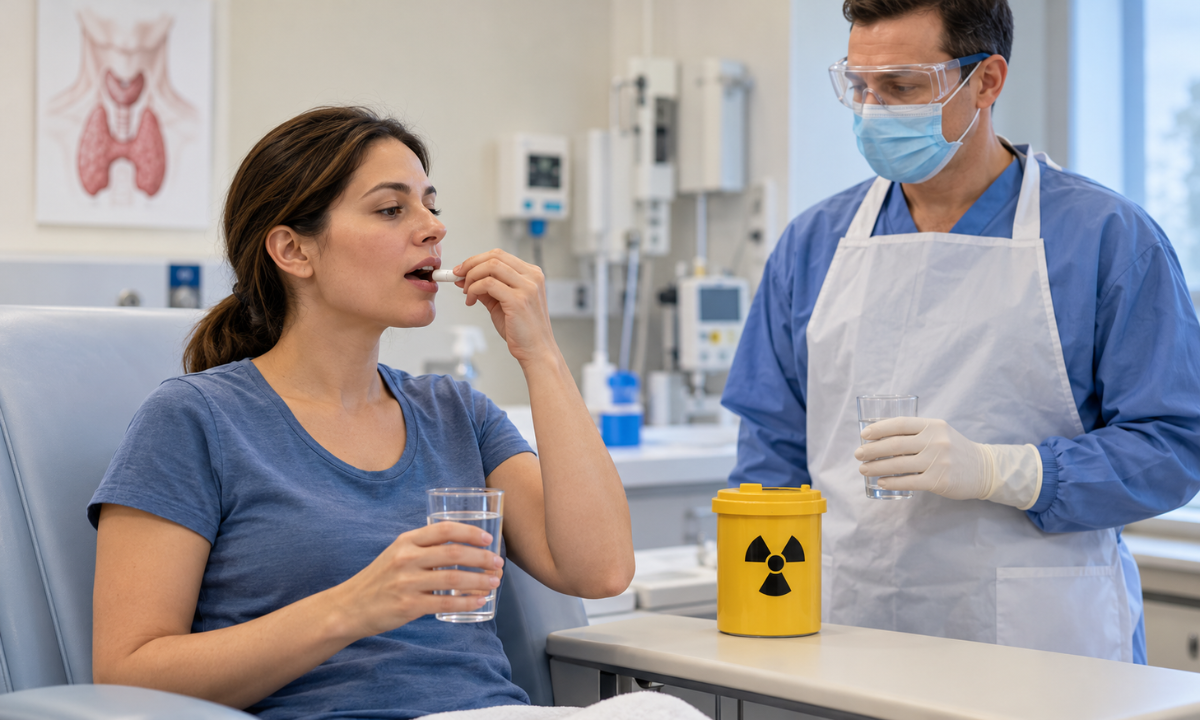
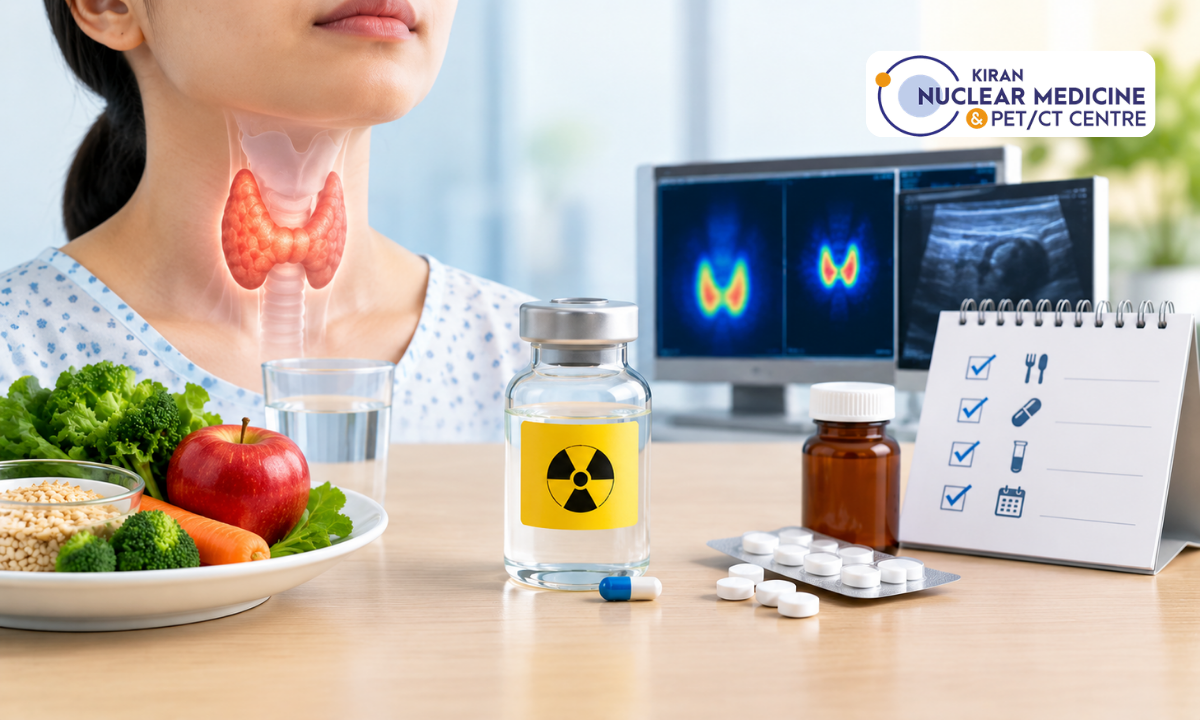
The treatment itself is simple: most patients swallow a single capsule or liquid dose of I-131. Preparation takes longer. You will usually follow a low-iodine diet for a short period beforehand, as advised by your team, and your TSH level is raised either by pausing thyroid hormone tablets or with injections of recombinant TSH (Thyrogen). Our guide to preparing for radioactive iodine therapy covers the diet, medicines and tests step by step.
After the dose, you will follow radiation-safety precautions for several days and may notice temporary effects such as neck tenderness, dry mouth or taste changes. These are covered in our guide to side effects and safety precautions.
What Is It Like to Stay in an Isolation Room?
Why isolation is needed
The higher doses used for thyroid cancer give off radiation for a few days, mainly through urine, sweat and saliva. A shielded room with its own bathroom protects other patients, staff and visitors until your radiation level falls to a safe limit.
What the room is like
Isolation rooms are private, with a bed, an attached toilet and shielded walls. [Confirm Kiran’s facilities: TV, Wi-Fi, phone or intercom, air conditioning.] Meals are usually left at the door, and staff talk to you by phone or intercom rather than staying in the room for long.
How long you stay
There is no fixed length of stay. It depends on the dose you receive, how much thyroid tissue absorbs it and local radiation-safety rules, and your nuclear medicine team will tell you what to expect in advance. Before you go home, staff measure your radiation level to confirm it is within safe limits for discharge. Many patients also have a post-therapy scan before or soon after discharge, which shows where the iodine has collected.
What to bring and ask
Bring books, a phone and charger, and comfortable clothes that can be washed separately. Leave valuables at home, as items used in the room may need to be checked before they leave. Ask about visitor rules, meals and your expected discharge time. For life after you leave, read our guide to travel, work and daily life after isolation.
How Do Doctors Check Whether Radioactive Iodine Has Worked?
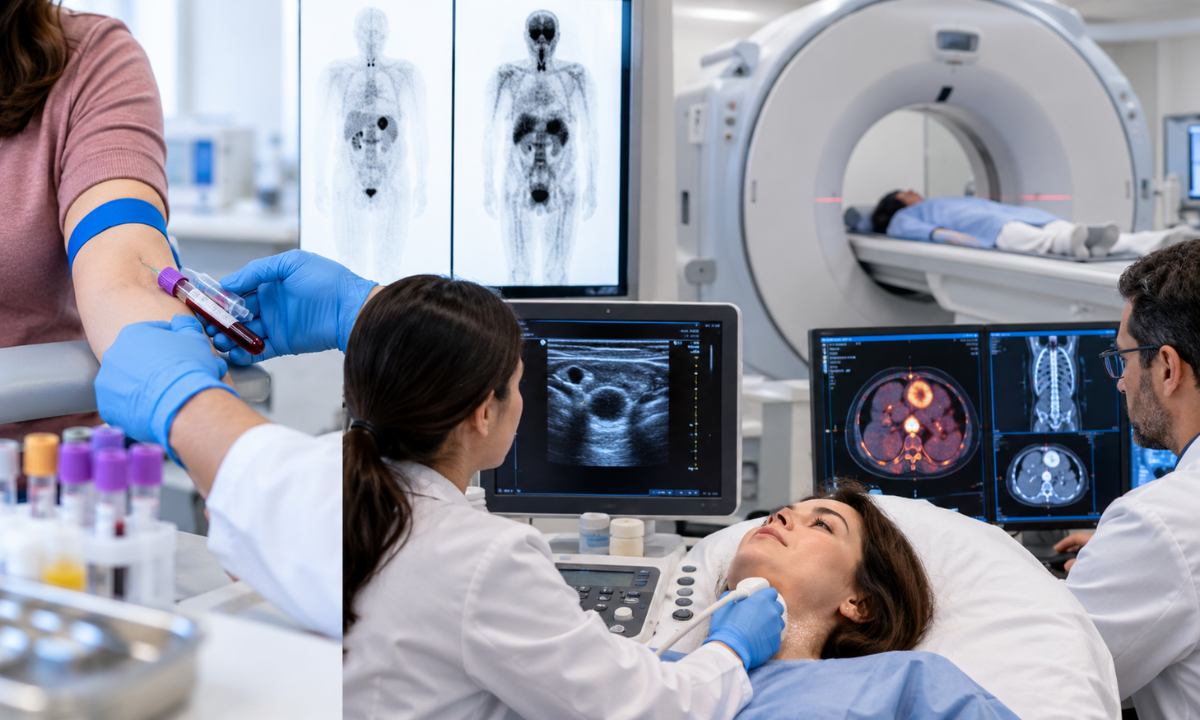
The first response check usually takes place within the first year after treatment, and follow-up continues for years, with timing based on your risk level. Doctors combine several results rather than relying on any one test or scan.
Thyroglobulin blood tests
After surgery and RAI, thyroglobulin should fall to very low or undetectable levels. A steady or rising level may mean thyroid tissue or cancer remains. Results are always read alongside thyroglobulin antibodies.
Neck ultrasound
Ultrasound checks the area where the thyroid was and the nearby lymph nodes for anything new.
Whole-body iodine scan, when needed
A diagnostic scan may be repeated if blood tests or ultrasound raise questions. If thyroglobulin rises but the iodine scan shows nothing, doctors may use PET scans for thyroid cancer to look for cancer that no longer absorbs iodine.
What your result means
Doctors usually describe your response as excellent (no evidence of disease), indeterminate (results that are not clear-cut), biochemical incomplete (raised thyroglobulin without visible disease) or structural incomplete (disease visible on imaging). This guides how often you need tests and whether more treatment is needed. Our guide to follow-up after radioactive iodine therapy explains the usual schedule.
Questions to Ask Your Nuclear Medicine Specialist
Take these questions to your appointment:
- Why is radioactive iodine being recommended, or not recommended, in my case?
- What is my risk of recurrence?
- Is the goal ablation, adjuvant therapy or treating known disease?
- Will I need to stay in an isolation room, and for how long?
- How will we know whether the treatment has worked?
- When will my first follow-up tests take place?
Where to Have Radioactive Iodine After Thyroid Surgery
Radioactive iodine must be given at a nuclear medicine centre licensed by the Atomic Energy Regulatory Board (AERB), with shielded isolation rooms and a radiation-safety team. Choose a centre that can also perform your follow-up scans, so results can be compared over time.
You can find out more about radioactive iodine therapy at Kiran PET CT, including its on-site imaging and isolation facilities [confirm branch: Banashankari, Indiranagar or both]. The nuclear medicine team reviews your reports, explains whether treatment suits you and plans your preparation and follow-up.
Conclusion: Is Radioactive Iodine Right for You?
Radioactive iodine after thyroid surgery is an effective treatment for many patients with differentiated thyroid cancer, but it is not automatic. The decision rests on your pathology, blood tests and risk of recurrence. The right answer may be no RAI, a lower dose or a higher treatment dose.
Ask your specialist to explain your risk level and the goal of treatment, and follow their instructions rather than comparing your plan with another patient’s. The American Thyroid Association also publishes clear patient information on radioactive iodine.
Book a consultation with the Kiran PET CT nuclear medicine team to discuss your reports.
Frequently Asked Questions
Does everyone with thyroid cancer need radioactive iodine?
No. Many patients with low-risk cancer do not need it, and medullary and anaplastic cancers do not respond to it. The decision depends on your individual risk.
Can radioactive iodine be given after removing half the thyroid?
Usually not. The remaining lobe would absorb most of the dose, so RAI is normally given only after the whole thyroid has been removed.
What is thyroglobulin?
A protein made only by thyroid cells. After treatment it acts as a tumour marker: very low levels are reassuring, while rising levels need investigation.
How long is the isolation stay for thyroid cancer treatment?
It varies. The length of stay depends on your dose and on how quickly your radiation level falls to a safe limit, so your nuclear medicine team will confirm it for your treatment plan.
When will I know if the treatment has worked?
The first assessment usually takes place within the first year, using blood tests, ultrasound and sometimes a scan. Your specialist will set the exact timing based on your risk level.
What happens if radioactive iodine does not work?
Options may include further RAI, surgery for affected lymph nodes or other targeted treatments, depending on where the disease is and whether it still absorbs iodine.