Navigating a cancer diagnosis requires a clear, reliable roadmap to monitor how your body responds to therapy.
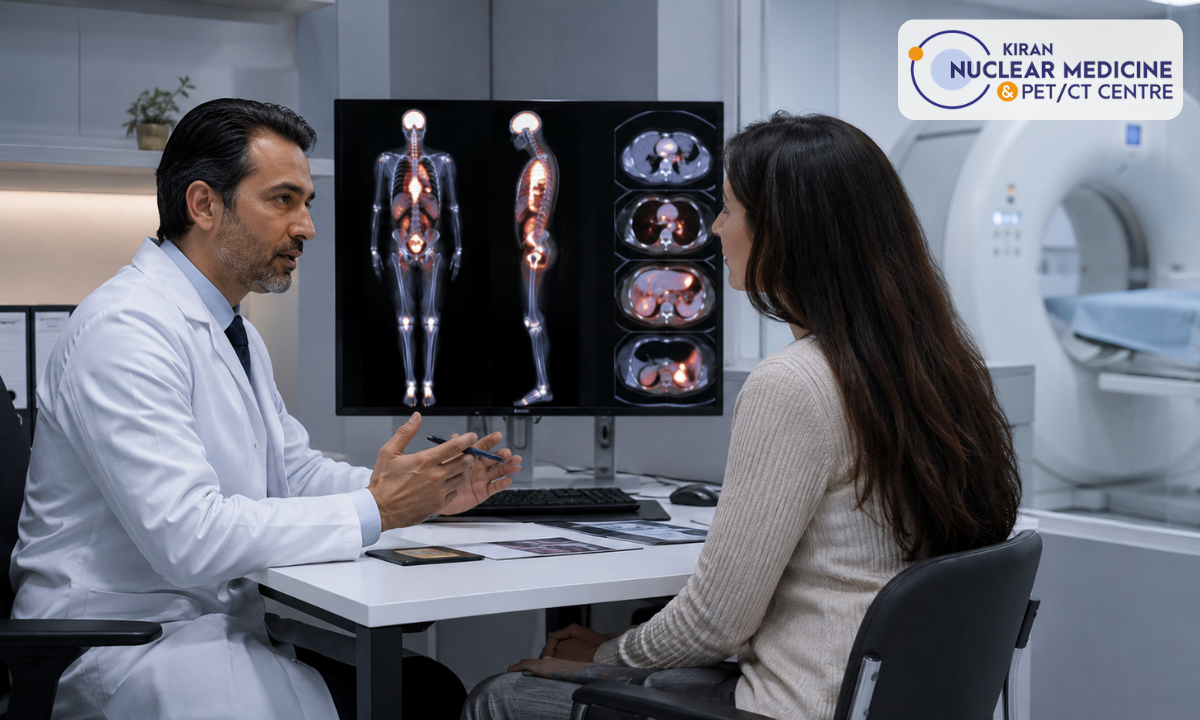
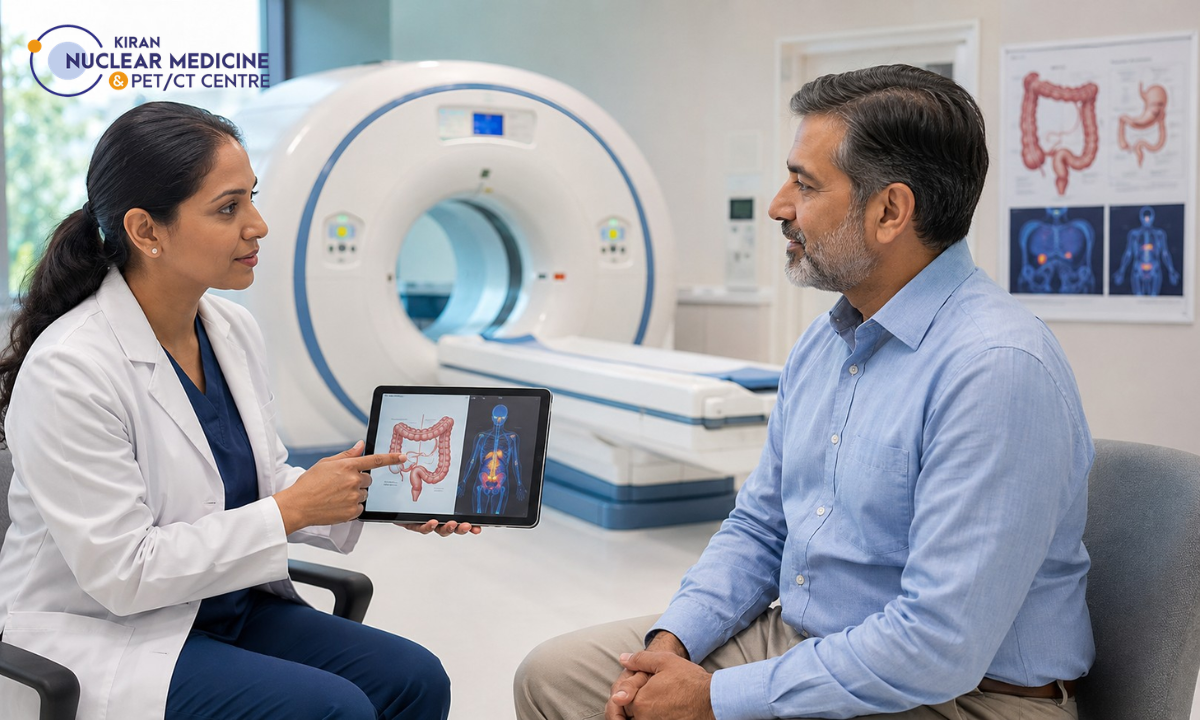
A PET scan for cancer has become a cornerstone of modern oncology, acting as a metabolic radar that detects active disease long before it changes the physical structure of your organs. For many patients, the most pressing question is determining the optimal frequency of these imaging sessions to balance clinical vigilance with peace of mind.
Choosing a specialized PET scan in Bangalore, you ensure that every imaging milestone provides actionable data, helping your clinical team tailor your care plan with unparalleled precision.
Frequency is never a one-size-fits-all approach; it is fundamentally dictated by the unique biology of your tumor and the specific goals of your current treatment phase. Rather than relying on arbitrary intervals, oncologists utilize molecular imaging to capture a snapshot of how your cells are metabolizing energy, allowing for real-time adjustments to your therapy.
We at Kiran PET CT believe that understanding the rhythm of your diagnostic schedule is an essential part of feeling empowered during your treatment journey, ensuring that every scan serves a clear, life-saving purpose.
Medical Disclaimer
The clinical information, diagnostic explanations, and imaging guidelines provided in this guide are intended strictly for educational purposes and do not constitute professional medical advice, a diagnosis, or a replacement for an oncologist’s personalized treatment plan. Cancer care is highly individualized, and diagnostic intervals are determined by a physician based on your specific tumor biology, treatment response, and medical history. Always consult your primary oncologist or a qualified healthcare provider to interpret your scan results and to discuss the appropriate frequency for your diagnostic imaging. Never delay or alter your treatment protocol based on information read in this article.
The Four Pillars of Scan Frequency
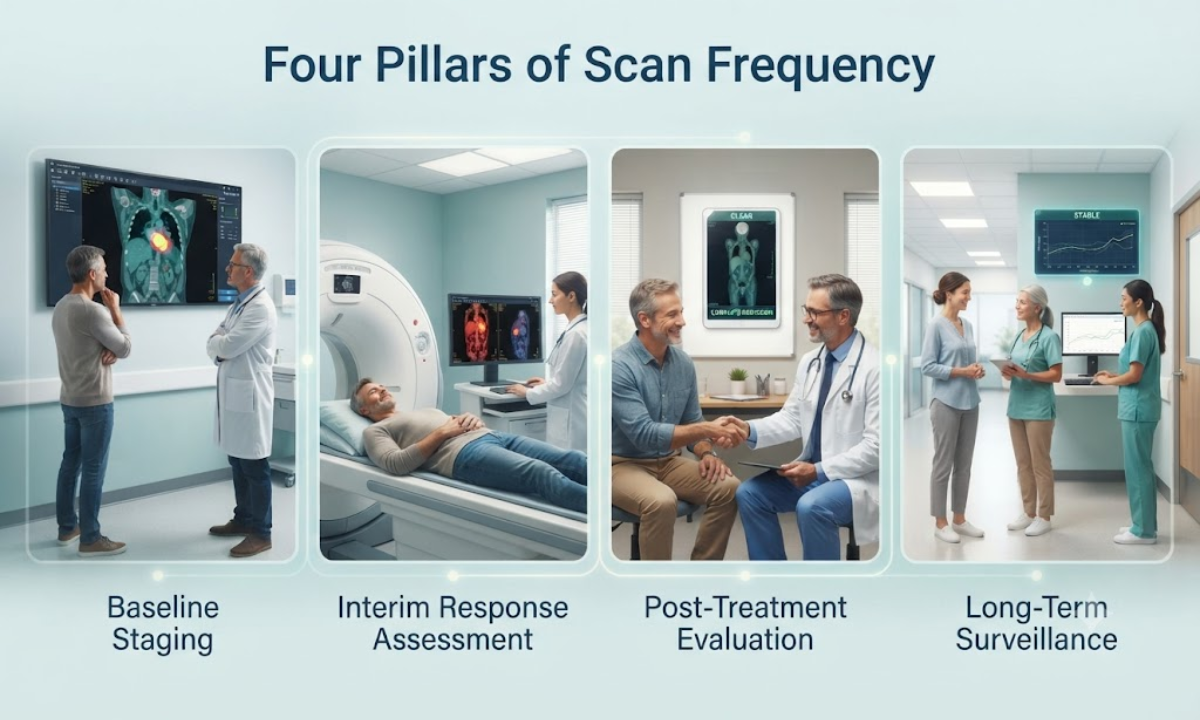
Determining how often you should undergo imaging is a strategic clinical decision, not a standardized routine. Your medical team views your treatment as a journey consisting of distinct milestones, and each phase requires a specific type of metabolic snapshot to guide your next move.
By categorising these milestones into four pillars, you can better understand the logic behind your diagnostic timeline.
1. Baseline Staging: The Initial Map
Before therapy begins, your oncologist needs a comprehensive map of the disease. This initial scan provides a definitive baseline, identifying not only the primary site of the tumor but also any distant, hidden areas of activity.
This stage is crucial because it gives your care team a clear, high-resolution starting point against which all future progress will be measured.
2. Interim Response Assessment Is The Efficacy Check
Midway through a course of chemotherapy or radiation, your doctors need to know if the treatment plan is successfully hitting its target.
This interim scan is one of the most vital decision-making tools in oncology. If the scan shows that the tumor is shrinking or showing decreased metabolic activity, your team has the confidence to continue your current protocol.
If, however, the results suggest the cancer is not responding as expected, your oncologist can intervene immediately, pivoting to a different, more effective treatment strategy before valuable time is lost.
3. Post-Treatment Evaluation for Confirming Clearance
Once a primary course of treatment is completed, a post-treatment scan serves as a confirmation milestone. It provides the necessary evidence to determine if the tumor has been fully eradicated or if residual activity persists. This evaluation is fundamental in deciding whether to move forward with maintenance therapies or if additional aggressive interventions are required to achieve total remission.
4. Long-Term Surveillance to Stay Ahead of the Curve
After you complete your primary treatment, you enter the surveillance phase. During this time, your scans shift from active response monitoring to a proactive safety net.
These periodic check-ups are designed to detect potential disease recurrence in its absolute infancy, often months before physical symptoms or structural changes on standard X-rays would ever be visible.
After mapping your care to these four distinct pillars, your oncology team ensures that your diagnostic schedule remains agile, responding to the real-time needs of your body while sparing you from unnecessary procedures. This structured approach allows you to focus on healing, knowing that your diagnostic plan is as dynamic and precise as the treatment itself. Once your PET scan is complete, following the recommended after PET scan precautions can help ensure a smooth recovery and prepare you for any follow-up evaluations your doctor may recommend.
Why Frequency Varies and Understanding Metabolic Biology
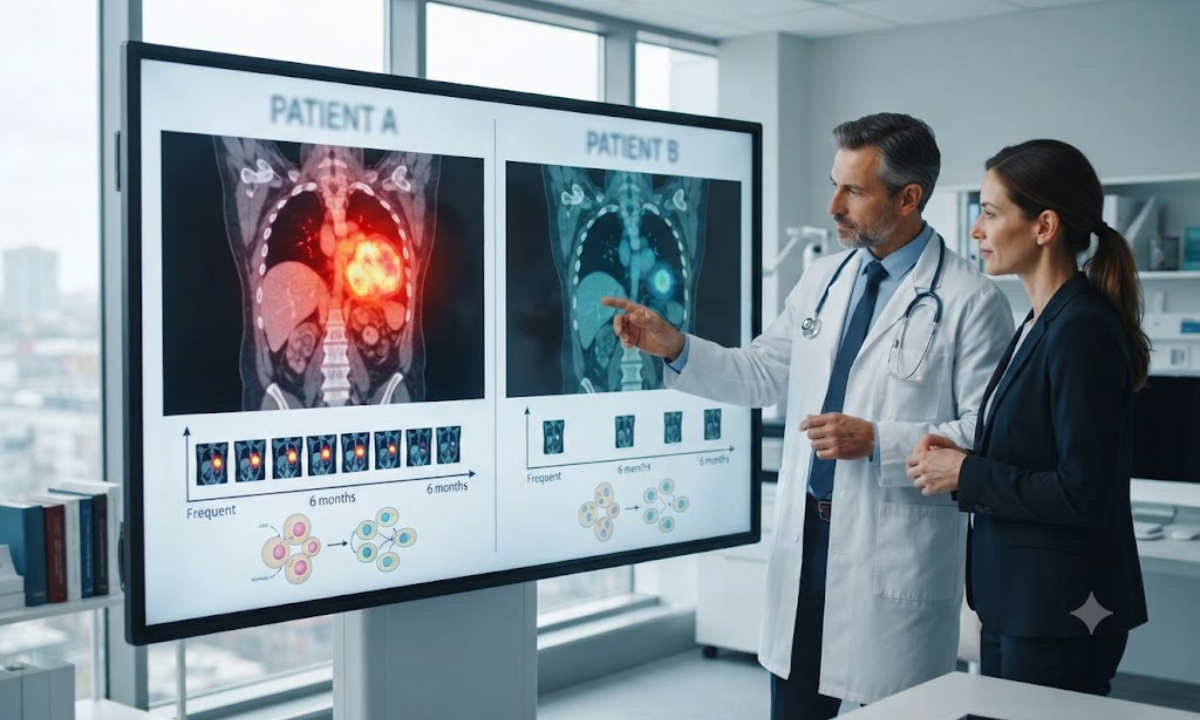
It is a common question: if two individuals are both navigating a cancer journey, why does one require scans every few months while another may go much longer between imaging sessions? The answer lies in the unique metabolic fingerprint of the malignancy. Cancer is not a static condition; it is a dynamic biological process that behaves differently depending on its type, aggressiveness, and how it reacts to your specific therapy.
Your oncology team determines your scan schedule by evaluating the biological tempo of the disease. While the goal is always the same, to provide the clearest possible view of your health, the frequency is adjusted to match the speed at which your specific tumor evolves.
Key Factors Influencing Your Diagnostic Timeline
- Tumor Aggressiveness: Highly aggressive cancers have a rapid cell-turnover rate, requiring tighter monitoring to ensure that treatment is effectively curbing their growth.
- Treatment Phase: During active therapy, scans are often more frequent to assess real-time efficacy. Once you move into a surveillance or remission phase, the intervals typically expand.
- The Goal of Imaging: A scan ordered to PET scan for cancer metastasis requires a different focus and frequency than one used for general surveillance, as the clinical priority shifts from assessing regression to early detection of recurrence.
- Biological Response: Everyone’s body processes treatment differently. Your oncologist will track your PET scan for cancer results to see how quickly your metabolic activity shifts, allowing them to shorten or lengthen intervals based on your personal response.
Comparison of Monitoring Logic
| Monitoring Scenario | Frequency Logic | Primary Clinical Purpose |
|---|---|---|
| Active/Aggressive Disease | Higher frequency (Every 2–3 months) | Catch rapid changes and pivot treatments if necessary. |
| Stable/Maintenance Phase | Moderate frequency (Every 4–6 months) | Monitor for subtle signs of recurrence or late-stage spread. |
| Post-Remission Surveillance | Lower frequency (Once or twice a year) | Provide long-term “early warning” coverage. |
| Diagnostic Uncertainty | As-needed/On-demand | Clarify specific concerns. |
Balancing Vigilance with Safety
- Radiation Stewardship: Modern PET-CT technology is designed to minimize exposure. Your cumulative radiation dose is monitored, and scans are only performed when the clinical benefit of the information gained outweighs the negligible risks of the imaging itself.
- Managing Anxiety: We understand that the scanxiety surrounding follow-up intervals is real. Your schedule is designed to give your doctor the data they need to keep you safe, while spacing appointments to allow you the mental space to focus on your recovery.
The Financial and Practical Context

Understanding the investment involved in your diagnostic care is a vital part of your journey. While the price of a PET scan for cancer is naturally a consideration, it is helpful to view this cost not just as an expense, but as a strategic investment in the precision of your treatment plan.
In India, the cost of a PET-CT scan typically ranges from ₹10,000 to ₹40,000, depending on several factors. Understanding what influences this price can help you and your family plan more effectively:
Factors That Shape the Investment
- Radioactive Tracers: A significant portion of the cost is tied to the specialized radioactive tracers used. Specialized ones, such as PSMA for prostate cancer, are more expensive to produce and have a very short shelf life.
- Facility Infrastructure: The technology powering these scans requires high operational and maintenance costs. Specialized centers that invest in this advanced technology often reflect these high standards in their service.
- Scan Complexity: Whole-body scans are standard, but additional contrast-enhanced sequences or special accommodations like sedation can add to the base price.
Costs often vary between metropolitan hubs and smaller cities, as well as between private diagnostic centers and government-subsidized facilities.
Navigating Financial Planning
- Insurance Coverage: Many health insurance policies cover PET-CT scans when they are deemed medically necessary for cancer staging or treatment monitoring.
- Long-Term Value: While the price tag is significant, precision imaging often saves costs in the long run. By confirming early on whether a treatment is working, you and your oncologist can avoid the cost of continuing a therapy that may not be yielding the desired results.
Never hesitate to ask your diagnostic center for a clear breakdown of what the quote includes, such as radiologist interpretation fees and contrast dye, so you can avoid unexpected line items.
Interpreting the Waiting Game and Managing Post-Scan Anxiety
The period between undergoing your imaging and receiving the finalized report is often the most challenging part of the diagnostic process. This “scanxiety” is a completely natural reaction to the uncertainty of waiting for clarity. Understanding this timeframe helps restore a sense of control during your treatment journey.
Once your scan is complete, our team of board-certified specialists meticulously reviews the metabolic data. This is not a rushed process; it involves cross-referencing your baseline images with the new findings to identify subtle shifts in activity.
- Our Quality Commitment: We prioritize accuracy over speed. Our radiologists take the time required to perform a comprehensive analysis, ensuring that the report delivered to your oncologist is clinically robust.
- Structured Reporting: We include detailed qualitative descriptions and quantitative measurements (SUV values) that allow your oncologist to make precise, evidence-based decisions.
We will always provide you with a clear expectation for when your report will be ready, working to ensure these timelines are met to reduce waiting time.
Why Choose Kiran PET CT? How Kiran PET CT Optimizes Your Scan Schedule
At the heart of our commitment to your health lies the Best PET scan centre in Bangalore, where we combine world-class technology with a patient-first philosophy. We understand that your time is valuable and that your peace of mind depends on receiving clear, actionable results without unnecessary delay.
We have equipped our facility with the GE Discovery IQ Gen 2 PET/CT system, which is India’s first of its kind. This advanced technology allows us to provide a diagnostic experience that is faster, safer, and more accurate than ever before.
- Exceptional Image Clarity: Our technology provides a significant improvement in image quality and quantitative accuracy, helping your oncologist detect even the smallest lesions with confidence.
- Faster Scan Times: Our technology reduces scan duration and radiation exposure, making the process much more comfortable for patients. Motion-correction solutions ensure high-quality images without the need for cumbersome external devices.
- Reduced Radiation: By utilizing low-dose techniques, we ensure that your diagnostic journey is as safe as possible while maintaining the highest industry standards for sensitivity.
- Expert Interpretation: Our scans are monitored and explained by a team of highly qualified specialists with credentials from premier institutions like PGIMER and JIPMER.
Beyond our technology, we take pride in our ergonomically designed facility. We know that a cancer diagnosis can be overwhelming, so we have created a non-stressful, clean, and hygienic environment where every patient receives thorough attention and care.
Conclusion
Choosing the right diagnostic partner is a vital part of your journey toward wellness. A PET-CT scan is far more than a routine test; it is a powerful roadmap that guides your oncologist, informs your treatment decisions, and ultimately helps you regain your health. Understanding why scans are scheduled at specific intervals and trusting in the precision of high-resolution imaging, you move from passive observation to active participation in your care.
We are dedicated to providing that precision with the compassion you deserve. We invite you to partner with us, ensuring that every scan provides the clarity you need to face your treatment journey with confidence.