Targeted radioligand lutetium-177 therapy represents one of the most significant advancements in modern molecular oncology, offering new hope for patients with advanced or metastatic malignancies.
Combining high-affinity targeting molecules with a precise radioactive isotope, this therapeutic approach delivers localized beta radiation directly into tumor cells while sparing surrounding healthy tissue. At Kiran PET CT, recognized for offering the Best PET scan in Bangalore, our specialized nuclear medicine team utilizes state-of-the-art theranostic protocols to guide patients seamlessly from initial consultation through post-treatment monitoring.
The word theranostics blends two foundational pillars of healthcare: therapeutics and diagnostics. In traditional oncology, diagnostic imaging and medical treatment often exist as separate clinical steps.
Theranostics bridge this gap through a unified principle: “See what you treat, and treat what you see.”
The Cellular Science Behind Lutetium-177
Lutetium-177 (177Lu) is a medical radioisotope that emits medium-energy beta particles alongside low-energy gamma rays:
- Targeted Beta Radiation: Emits energetic electrons with a short tissue penetration depth. Once bound to tumor surface receptors, these beta particles induce irreparable double-stranded DNA breaks within cancer cells, causing programmed cell death (apoptosis).
- Concomitant Gamma Emission: Emits low-energy gamma photons that pass safely out of the body. This allows nuclear medicine physicians to perform post-infusion SPECT/CT imaging to visualize exact drug distribution and confirm tumor uptake.
As the destructive radiation travels only a fraction of a millimeter beyond the targeted tumor membrane, healthy surrounding organs such as the bladder, bowel, and bone marrow receive minimal radiation exposure compared to external beam radiotherapy.
What You Will Learn in This Complete Patient Guide
Navigating advanced cancer care can feel overwhelming, but understanding every step of your clinical journey provides clarity and confidence.
Guide Overview:
- How diagnostic PET-CT imaging confirms tumor receptor density before treatment.
- Crucial pre-infusion preparations, hydration goals, and kidney protection protocols.
- What occurs inside specialized day-care isolation suites during infusion.
- Expected cycle timelines, side effect management, and domestic cost structures in India.
Under the medical direction of Dr Kiran Kumar J K (MD – PGIMER) and Dr Manoj Devanathan (MD – JIPMER), our patient-first approach ensures that every individual receives world-class molecular care paired with compassionate support.
Medical Disclaimer
The clinical information, procedural guidelines, and cost estimates presented in this publication are provided strictly for educational and public health awareness purposes. This content does not constitute formal medical advice, clinical diagnosis, or a personalized treatment recommendation. Candidate selection for Lutetium-177 therapy depends on detailed multi-disciplinary evaluation and individual diagnostic scan findings. Always consult a qualified nuclear medicine physician or medical oncologist to discuss your specific medical condition and treatment options. Never delay seeking professional medical care based on the general information provided in this article.
Candidate Selection & Pre-Therapy Diagnostic Scans
Not every tumor responds equally to targeted radionuclide treatment. The cornerstone of effective neuroendocrine cancer therapy is identifying whether a patient’s tumor cells overexpress specific surface receptors that can capture and hold the radiopharmaceutical.
Before initiating Lutetium-177 DOTATATE therapy, nuclear medicine specialists conduct a thorough clinical and diagnostic evaluation to confirm candidate eligibility.
The Role of Diagnostic Ga-68 DOTATATE / DOTANOC PET-CT Scans
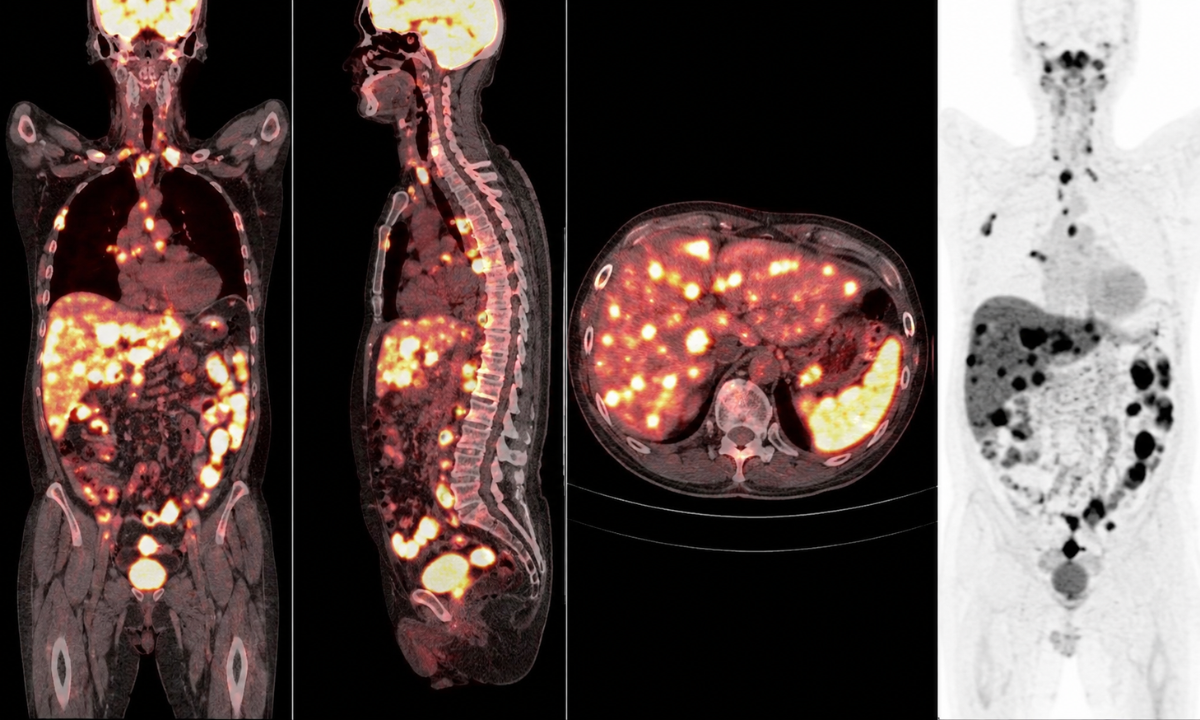
To determine whether tumor lesions express sufficient receptor density, patients undergo a diagnostic Gallium-68 (68Ga) PET-CT scan prior to therapy:
- Somatostatin Receptor (SSTR) Mapping: In gastroenteropancreatic neuroendocrine tumors (GEP-NETs) and bronchial NETs, functional tumor cells overexpress Somatostatin Receptor Subtype 2. A diagnostic 68Ga-DOTATATE or 68Ga-DOTANOC scan acts as a visual map, lighting up every primary and metastatic lesion that possesses these receptors.
- Krenning Score Evaluation: Nuclear medicine physicians assess tumor radiotracer uptake relative to normal organ background (specifically the liver). Candidates suitable for peptide receptor radionuclide therapy (PRRT) typically exhibit tumor uptake equal to or higher than normal liver tissue (Krenning Score 3 or 4).
- Excluding Non-Receptor Expressing Lesions: If a patient has significant metastatic lesions that do not show tracer uptake on PET-CT, those specific tumors will not respond to Lutetium-177, requiring alternative or combination oncological approaches.
Essential Baseline Diagnostic Evaluations
Beyond molecular PET-CT imaging, nuclear medicine physicians perform comprehensive laboratory and systemic evaluations to confirm organ reserve prior to treatment:
| Diagnostic Parameter | Clinical Assessment Threshold | Why It Is Critical for Therapy Safety |
|---|---|---|
| Renal Function (eGFR & Creatinine) | Serum Creatinine ≤ 1.5 mg/dL or eGFR ≥ 50 mL/min. | Lutetium-177 is excreted primarily through the kidneys. Healthy renal clearance prevents prolonged radiopharmaceutical retention. |
| Bone Marrow Reserve (CBC) | Absolute Neutrophil Count (ANC) > 1,500/µL; Platelets > 75,000/µL. | Beta radiation temporarily suppresses bone marrow. Adequate baseline blood counts protect against severe cytopenias. |
| Hepatic Function (ALT/AST/Bilirubin) | Total Bilirubin ≤ 3× upper limit of normal; Serum Albumin. | Ensures the liver can process systemic circulating peptides without metabolic compromise. |
The Dual-Tracer Advantage: In complex or high-grade neuroendocrine tumors, our specialists at Kiran PET CT may recommend a dual-tracer evaluation combining an SSTR-targeted 68Ga-DOTATATE scan with an 18F-FDG PET-CT scan. This identifies any aggressive, non-SSTR expressing tumor subpopulations that might require multimodality treatment.
Patient Preparation & What to Expect Before Infusion
Preparing for your PRRT treatment journey involves specific medication adjustments, dietary planning, and hydration protocols designed to maximize treatment efficacy while protecting vital organs.
Proper patient preparation ensures that somatostatin receptors on tumor cells remain fully accessible to the radiopharmaceutical and reduces unwanted side effects on treatment day.
Crucial Medication Pauses: Somatostatin Analogs
Many patients with neuroendocrine tumors take somatostatin analogs (such as octreotide or lanreotide) to control hormonal symptoms and slow tumor growth. As these medications bind to the same s receptors targeted by Lutetium-177, they must be temporarily paused to prevent receptor blockade:
- Long-Acting Somatostatin Analogs (e.g., Sandostatin LAR, Somatuline Depot): Must be discontinued for at least 4 weeks prior to each Lutetium-177 infusion.
- Short-Acting Somatostatin Analogs (e.g., Subcutaneous Octreotide): Must be paused for at least 24 hours before treatment day.
- Resuming Therapy: Long-acting injections are typically administered 4 to 24 hours after completing the Lutetium-177 infusion.
Renal Protection: The Lysine/Arginine Amino Acid Infusion
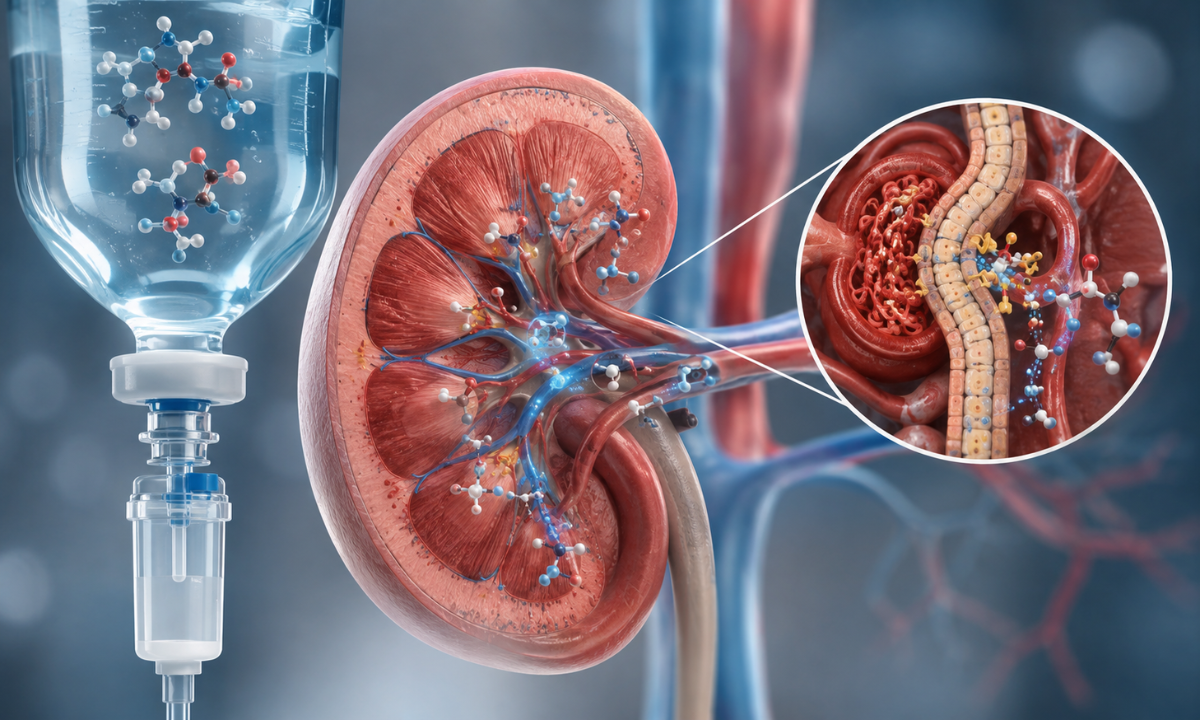
During Lutetium-177 therapy, small peptide molecules filter through the kidneys’ glomeruli and are reabsorbed in the proximal renal tubules. To prevent radiation absorption by renal tissue, a specialized amino acid solution containing L-lysine and L-arginine is administered intravenously:
[Anti-Nausea Pre-Medication] ➔ [Lysine/Arginine Infusion (30-60 min prior)] ➔ [Lutetium-177 Infusion (30-40 min)] ➔ [Continued Amino Acid Infusion (3-4 hrs)]
- Competitive Inhibition: Lysine and arginine overload the renal tubular transport mechanisms, preventing the radioactive peptide from re-entering kidney cells and forcing excess radiotracer into the urine for rapid excretion.
- Timing & Duration: The amino acid infusion begins approximately 30 to 60 minutes before the Lutetium-177 dose and continues for 3 to 4 hours post-infusion.
Pre-Infusion Checklist for Patients
| Preparation Step | Clinical Instruction | Purpose & Benefit |
|---|---|---|
| Systemic Hydration | Drink 1.5 to 2 liters of water daily for 48 hours prior to treatment. | Promotes frequent urination to flush unabsorbed radiotracer from the bladder. |
| Anti-Nausea Prophylaxis | Receive IV antiemetics (e.g., ondansetron) 30 minutes before amino acid infusion. | Concentrated amino acids can cause temporary nausea; antiemetics ensure full comfort. |
| Comfortable Clothing | Wear loose-fitting, comfortable clothing without metallic zippers or buttons. | Simplifies IV line management and enhances comfort during multi-hour day-care stays. |
Patient Care Note at Kiran PET CT: Our dedicated day-care suites are designed for complete tranquility and safety. From quiet private infusion rooms to continuous monitoring by trained nuclear medicine technologists, we ensure you feel relaxed and supported throughout your treatment session.
Inside Treatment Day: Infusion & Radiation Safety
Treatment day for targeted radionuclide therapy is a well-coordinated, calm day-care experience. As this advanced nuclear medicine treatment involves administering a radioactive compound (typically a standard dose of 177Lu), special protocols are followed to ensure maximum patient comfort and total radiation safety for family members and healthcare staff.
Step-by-Step Clinical Workflow on Infusion Day
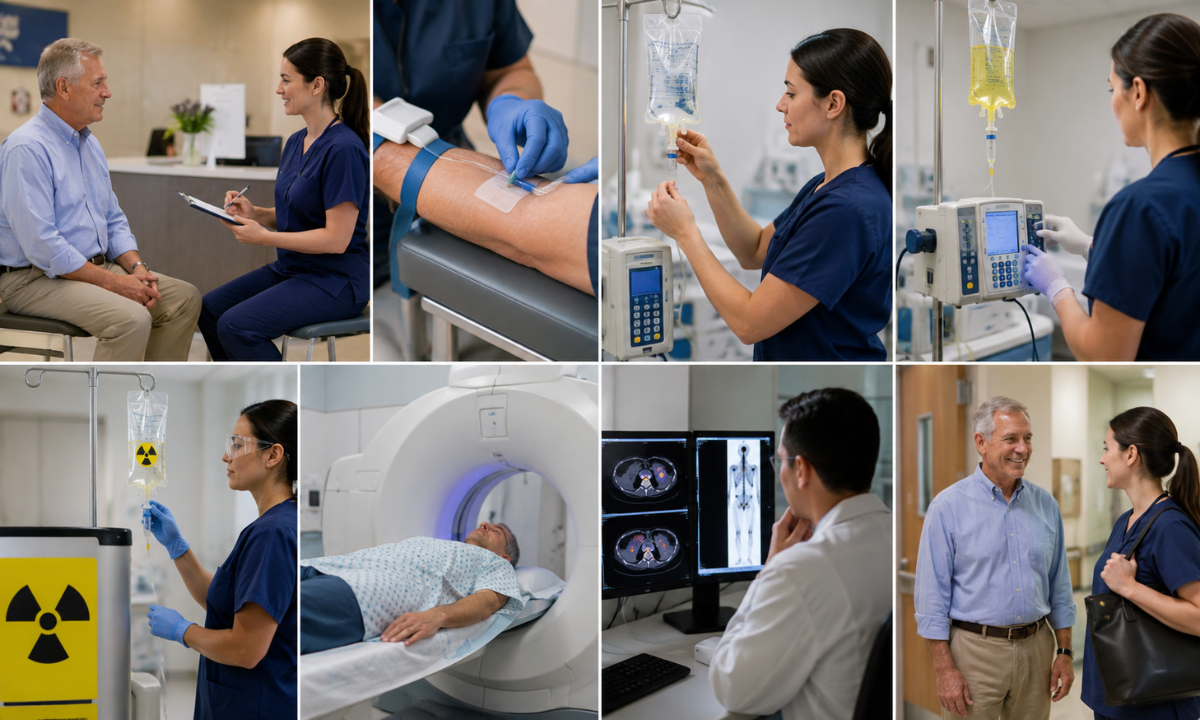
Patients arrive at our specialized day-care suite in the morning and are guided through a structured 5- to 6-hour clinical process:
[Arrival & Admission] ➔ [Dual IV Line Access] ➔ [Pre-Medication & Amino Acid Start] ➔ [Lutetium-177 Infusion (30-40 min)] ➔ [Post-Therapy SPECT/CT] ➔ [Discharge & Safety Card]
- Admission & Baseline Vitals: Patients are admitted to a dedicated, shielded day-care room equipped with an attached private restroom. Baseline blood pressure, pulse, temperature, and oxygen saturation are recorded.
- Dual IV Access Placement: Medical staff establish two separate intravenous lines. One line is dedicated exclusively to the protective amino acid infusion (lysine/arginine), while the second line is reserved for the radiopharmaceutical infusion.
- Antiemetic Pre-Medication: Prophylactic anti-nausea medication (such as IV ondansetron or granisetron) is administered 30 minutes prior to starting the amino acids to ensure total gastrointestinal comfort.
- Amino Acid Co-Infusion: The renal protective solution begins 30 to 60 minutes before the radioisotope to saturate kidney tubules and continues throughout the entire session.
- Lutetium-177 Radiopharmaceutical Infusion: The shielded Lutetium-177 vial is connected to the IV line using an automated pump or gravity-fed infusion system. The infusion takes approximately 30 to 40 minutes. The administration is completely painless, and patients remain awake to read, watch television, or rest.
- Post-Infusion Confirmation Scan (SPECT/CT): As Lutetium-177 emits low-energy gamma rays alongside beta particles, patients undergo a quick, 20-minute whole-body gamma camera scan before leaving. This scan provides visual confirmation that the radiotracer has successfully targeted and localized within the tumor sites.
Radiation Safety Guidelines for Home & Family
Following infusion, small amounts of residual radiation pass out of the body, primarily through urine. Before discharge, a radiation safety officer measures the patient’s external radiation exposure rate to confirm it falls well within safe international release limits.
To protect household members and caregivers from unnecessary secondary exposure, patients follow simple home precautions based on the ALARA (As Low As Reasonably Achievable) radiation protection principle:
| Safety Focus Area | Recommended Duration | Specific Actionable Guideline | Clinical Rationale |
|---|---|---|---|
| Toilet & Bathroom Hygiene | First 3 days | Sit while urinating (for both men and women) and flush twice with the lid closed. | Over 60% of unabsorbed radiotracer exits through urine within 48 hours. Double-flushing prevents residual contamination. |
| Physical Distance & Contact | First 3 to 7 days | Maintain a distance of at least 3 feet (1 meter) from adults and 6 feet (2 meters) from young children and pregnant women. | Distance dramatically drops external radiation dose rates according to the inverse-square law. |
| Sleeping Arrangements | First 3 days | Sleep in a separate bed (at least 6 feet apart) from family members and partners. | Prevents continuous, close-proximity radiation exposure during long nighttime sleep hours. |
| Personal Hygiene & Laundry | First 7 days | Shower daily. Wash clothing, towels, and bedsheets separately in a standard washing machine. | Removes any minute traces of sweat or body fluid from skin and clothing fibers. |
| Travel & Emergency Documentation | Next 3 months | Carry your official Nuclear Medicine Patient Discharge Safety Card at all times. | Highly sensitive radiation detectors at airports or security checkpoints may detect minor trace radiation. |
Peace of Mind During Your Treatment: Most patients complete their therapy sessions smoothly as day-care procedures, returning to the comfort of their home on the very same afternoon without requiring overnight hospital stays.
Cycles, Side Effect Management & Cost in India
A successful Lutetium-177 DOTATATE treatment process involves multiple treatment cycles tailored to a patient’s individual tumor burden, organ reserve, and clinical response. Understanding the full treatment timeline, managing expected side effects, and planning for domestic healthcare expenses ensures a transparent, well-coordinated care journey.
The Standard Multi-Cycle Treatment Timeline
Targeted radionuclide therapy is administered as a series of planned cycles rather than a single massive dose. This staged approach allows healthy tissues, particularly bone marrow and kidneys, time to recover between infusions while maintaining continuous therapeutic pressure on tumor situmour
- Standard Treatment Course: A complete PRRT course typically consists of 4 cycles.
- Cycle Interval: Infusions are spaced 8 to 12 weeks apart (typically every 2 months).
- Interim Monitoring: Mid-way through the course (usually after Cycle 2), a repeat diagnostic PET-CT scan or intermediate blood profile is performed to evaluate early therapeutic response and confirm ongoing safety.
Managing Potential Side Effects & Recovery
As Lutetium-177 delivers radiation directly to tumor cells at a cellular level, systemic side effects are significantly milder than traditional chemotherapy. However, proactive monitoring remains essential:
| Side Effect Type | Clinical Symptoms | Onset & Duration | Management Protocol |
|---|---|---|---|
| Mild Gastrointestinal (Nausea/Loss of Appetite) | Occasional nausea or reduced appetite caused by amino acid co-infusion. | Resolves within 24 to 72 hours post-infusion. | Prevented with prophylactic IV antiemetics and mild oral medications at home. |
| Transient Fatigue | Mild to moderate tiredness as the body processes radiation. | Lasts 3 to 7 days following treatment. | Managed with adequate hydration, rest, and light daily activity. |
| Hematologic Shifts (Low Blood Counts) | Temporary drop in white blood cells, platelets, or hemoglobin. | Nadir (lowest point) typically occurs 4 to 6 weeks post-cycle. | Monitored via Complete Blood Counts (CBC) at weeks 2, 4, and 6 post-infusion. |
| Renal Function Sensitivity | Potential long-term strain on kidney filtration if unmonitored. | Monitored over months and years. | Protected during infusion via lysine/arginine amino acid co-infusion. |
Understanding Lutetium-177 Treatment Cost in India
Evaluating the lutetium 177 treatment cost in India involves considering isotope sourcing (indigenous vs. imported high-purity radioisotopes), specialized nuclear medicine day-care infrastructure, and diagnostic monitoring.
In India, targeted radionuclide therapy is significantly more affordable than in Western countries (where single cycles can exceed $40,000 to $50,000 USD), making premier nuclear medicine centers in Bangalore a global hub for theranostic care:
| Cost Category | Estimated Price Range (INR) | Inclusions & Clinical Scope |
|---|---|---|
| Cost Per Cycle (Single Infusion) | ₹1,80,000 to ₹3,50,000 | Includes radioisotope dose (177Lu), protective amino acids, day-care isolation room, and medical monitoring. |
| Full 4-Cycle Treatment Course | ₹7,50,000 to ₹14,00,000 | Encompasses the complete 4-cycle protocol spaced over 8 to 12 months. |
| Pre- & Post-Therapy Diagnostic Imaging | ₹25,000 to ₹45,000 (per scan) | Diagnostic 68Ga-DOTATATE/PSMA PET-CT scans for candidate evaluation and post-treatment response tracking. |
Factors Influencing Overall Treatment Expenses
- Isotope Source & Isotopic Purity: Domestically produced radioactive isotopes from certified nuclear research centers offer highly economical options, whereas specialized imported radioisotope formulations may carry higher logistics fees.
- Total Number of Cycles: While 4 cycles represent the standard protocol, some patients achieve complete stabilization in fewer cycles or require customized maintenance dosing based on oncological response.
- Preparatory Laboratory Testing: Regular blood evaluations (CBC, KFT, LFT) performed between cycles ensure bone marrow and kidney safety before advancing to subsequent infusions.
Transparent Financial Guidance at Kiran PET CT: We believe in absolute pricing clarity. Our clinical coordination team provides detailed, itemized cost estimates prior to treatment, assists with insurance pre-authorizations, and helps families navigate treatment planning without unexpected financial surprises.
Why Choose Kiran PET CT for Your Theranostic Journey?
Navigating advanced cancer treatment requires more than cutting-edge technology; it demands clinical expertise, diagnostic accuracy, and compassionate, patient-centered care. As a premier Best PET scan centre in Bangalore, Kiran Nuclear Medicine & PET-CT Centre provides a seamless, integrated environment for both diagnostic molecular imaging and targeted radionuclide therapies.
We bridge the gap between early diagnostic detection and personalized molecular treatment, ensuring every patient receives world-class theranostic care under one roof:
- Pioneering Nuclear Medicine Leadership: Led by Dr Kiran Kumar J K (PGIMER) and Dr Manoj Devanathan (MD – JIPMER), our team of senior nuclear medicine physicians brings decades of specialized experience from India’s premier medical institutes.
- Next-Generation Imaging Technology: Our facilities feature advanced GE Discovery IQ Gen 2 PET-CT systems, providing high-resolution lesion detection at low radiotracer doses with superior quantitative accuracy.
- Comprehensive Theranostic Capabilities: From diagnostic Gallium-68 (68Ga) PET-CT receptor mapping to targeted Lutetium-177 (177Lu) and Actinium-225 (225Ac) radionuclide therapies, we offer complete molecular oncology care.
- Dedicated Day-Care Isolation Suites: Our treatment centers are equipped with private, radiation-shielded day-care suites designed for total safety, comfort, and continuous medical monitoring during infusions.
- Same-Day Reporting & Rapid Coordination: We prioritize fast report delivery and rapid physician communication to prevent treatment delays and reduce waiting anxiety for patients and families.
After pairing high-precision nuclear technology with empathetic patient support, our clinical team ensures that your therapeutic journey is transparent, predictable, and tailored to your specific health needs.
Conclusion
Targeted Lutetium-177 therapy represents a paradigm shift in the management of advanced neuroendocrine tumors and metastatic prostate cancers. By delivering localized, high-energy beta radiation directly to tumor cells while sparing healthy tissue, this theranostic approach offers meaningful disease control, symptom relief, and improved quality of life even when conventional therapies have reached their limits.
Understanding each phase of treatment from initial receptor-mapping PET-CT scans to post-infusion radiation safety empowers you and your loved ones to move forward with clarity and confidence. With experienced nuclear medicine guidance, state-of-the-art monitoring, and personalized care, targeted radionuclide therapy opens new doors in modern cancer care.
Contact Kiran PET CT & Book Your Consultation Today
Ready to discuss Lutetium-177 therapy or schedule a diagnostic PET-CT scan? Connect with our specialist nuclear medicine team at either of our convenient Bangalore locations:
- Banashankari Center: KIRAN NUCLEAR MEDICINE AND PET-CT Centre, No. 2227, 9th Main Road, Karesandra, Banashankari Stage II, Bengaluru, Karnataka – 560070 | Phone: +91 70902 70904
- Indiranagar Center: KIRAN NUCLEAR MEDICINE AND PET-CT Centre, No. 221, 13th Cross Road, Indira Nagar 1st Stage, Hoysala Nagar, Indiranagar, Bengaluru, Karnataka – 560038 | Phone: +91 81470 84527 / +91 70902 70905
- Email: kiranpetct@gmail.com
- Website: kiranpetct.com
Whether you require a second opinion on therapy candidacy or need assistance with pre-treatment preparation, our patient support staff is ready to assist you every step of the way.