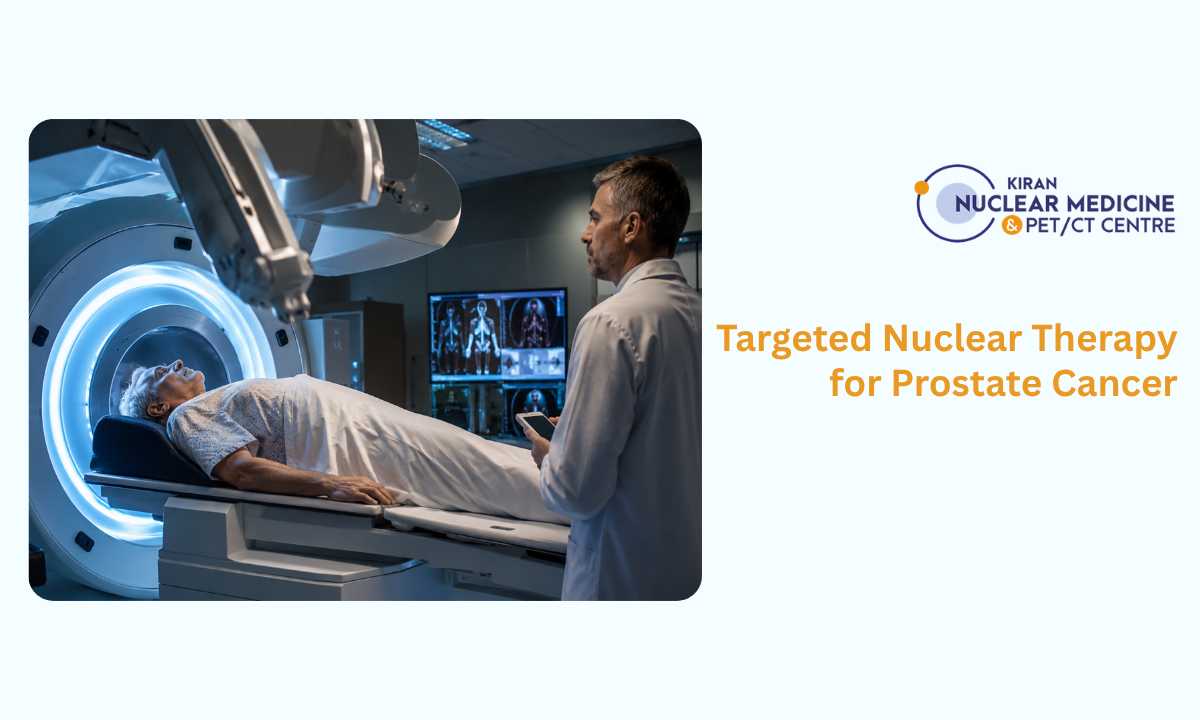
Metastatic prostate cancer requires advanced clinical interventions when standard hormonal treatments no longer suppress disease progression. For patients seeking a comprehensive evaluation, obtaining a PSMA PET Scan in Bangalore at the Best PET Scan Centre in Bangalore is the critical first step in determining eligibility for Lutetium-177 PSMA Therapy.
This specialized form of Nuclear therapy for prostate cancer uses radioactive molecules to target specific proteins on the surface of malignant cells. By delivering precise radiation directly to the tumor, this therapy helps manage advanced disease while preserving surrounding healthy tissue.
Recent clinical advancements have introduced molecularly targeted radionuclides as a primary option for patients with metastatic castration-resistant prostate cancer (mCRPC).
These therapies operate by binding to the Prostate-Specific Membrane Antigen (PSMA), which is highly expressed on the surface of most prostate cancer cells. At Kiran PET CT, we provide the specialized diagnostic and therapeutic infrastructure required to manage these complex oncological cases.
This comprehensive medical guide explores the following essential clinical components:
- The chronological evolution of medical management from systemic prostate cancer treatment hormone protocols to targeted radioligand interventions.
- The exact biological mechanism of radioactive Lutetium-177 in neutralizing malignant cellular structures.
- The diagnostic necessity of molecular imaging to identify specific receptors for the nuclear dose to be effective.
- The clinical outcomes and accessibility of advanced prostate cancer treatment in India.
Utilizing these precise medical interventions, patients with advanced disease can access new therapeutic pathways that prioritize both survival and physiological stability.
Medical Disclaimer
This article is provided strictly for educational purposes and does not constitute formal medical advice, diagnosis, or treatment. Always seek the advice of a qualified healthcare provider with any questions regarding a medical condition. Never disregard professional medical advice or delay in seeking it because of something you have read in this article.
Advances in prostate cancer treatment

The clinical management of metastatic prostate tumors traditionally relies on suppressing systemic androgen levels. Because malignant prostate cells biologically depend on testosterone for cellular proliferation, standard prostate cancer treatment hormone protocols, medically defined as androgen deprivation therapy, serve as the primary first-line intervention.
These specific pharmacological agents physically block the production or cellular receptor binding of testosterone, forcing the malignant cells into a prolonged state of growth arrest.
However, the biological durability of this initial intervention is strictly limited. Over a period of several months or years, the malignant cells inevitably undergo complex genetic mutations. The tumor cells develop the physiological capacity to synthesize their own intracellular androgens or fundamentally alter their androgen receptors to bypass the medication.
This biological adaptation results in a highly aggressive clinical state defined as metastatic castration-resistant prostate cancer. At this specific stage, the malignant tumors actively proliferate and metastasize despite the complete pharmacological suppression of systemic circulating testosterone.
To combat this aggressive disease progression, oncologists utilize a highly specific sequence of therapeutic interventions.
Chronological Progression of Oncological Interventions
| Therapeutic Modality | Biological Mechanism of Action | Clinical Limitations |
|---|---|---|
| Androgen Deprivation Therapy | Suppresses the systemic production of testosterone via the pituitary-gonadal axis. | Inevitably leads to castrate resistance as tumor cells genetically mutate to survive in low-testosterone environments. |
| Novel Anti-Androgens | Blocks the androgen receptor signaling pathway directly at the cellular level. | Tumors eventually develop receptor variants that completely ignore the pharmacological blockade. |
| Systemic Chemotherapy | Utilizes highly toxic agents to disrupt the cellular division of rapidly multiplying cells. | Causes severe systemic collateral damage to healthy tissues, resulting in profound immunosuppression and cumulative physical toxicity. |
| Targeted Nuclear Medicine | Delivers localized radioactive isotopes specifically to surface receptors on malignant cells. | Requires specific diagnostic imaging to confirm the presence of the targeted surface receptors before administration. |
The transition from broad systemic toxicity to exact molecular precision defines the most critical advances in prostate cancer treatment.
When the disease becomes completely refractory to standard hormone suppression and cytotoxic chemotherapy regimens, clinical oncologists require an intervention that physically destroys the malignant cells without inflicting severe collateral damage on the patient’s healthy organ systems.
This specific clinical necessity directly drove the development of targeted nuclear medicine. By shifting the oncological paradigm from broad systemic suppression to localized molecular ablation, medical professionals can now deliver continuous, high-dose radiation directly into the intracellular structures of the resistant tumors.
This highly advanced modality provides a definitive therapeutic option for patients who have exhausted all conventional pharmacological interventions.
Molecular Precision: Lutetium-177 PSMA Therapy

Lutetium-177 PSMA Therapy represents a sophisticated advancement in the field of theranostics, where diagnostic imaging and therapeutic intervention are combined into a single molecular platform.
This specific form of Nuclear therapy for prostate cancer relies on the high expression of Prostate-Specific Membrane Antigen (PSMA) on the surface of malignant prostate cells. PSMA is a transmembrane protein that is expressed at levels up to one thousand times higher in cancerous prostate tissue compared to healthy tissue, providing an ideal molecular target for localized radiation.
To achieve targeted destruction, medical scientists engineer a complex radiopharmaceutical molecule consisting of three distinct functional components.
Molecular Architecture of Lutetium-177 PSMA-617
| Component | Biochemical Identity | Clinical Function |
|---|---|---|
| Targeting Ligand | A small molecule specifically engineered to bind with high affinity to the PSMA receptor. | Acts as the molecular guidance system, ensuring the therapy strictly accumulates within the malignant tumors. |
| Chelator | A chemical cage, typically DOTA, that physically holds the radioactive isotope. | Serves as the stable structural link between the targeting ligand and the radioactive payload. |
| Radioactive Isotope | Lutetium-177. | Provides the localized Beta radiation required to physically damage the DNA of the cancer cells. |
Once the molecule is administered intravenously, the targeting ligand identifies and binds to the PSMA receptors protruding from the surface of the cancer cells.
The cell then internally absorbs the entire molecular complex through a process known as endocytosis. This internal absorption ensures that the radioactive Lutetium-177 is positioned directly within the cellular infrastructure, maximizing the delivery of destructive radiation to the cell nucleus while minimizing exposure to the external environment.
Biological Stages of Cellular Ablation
- Selective Binding: The PSMA-617 ligand achieves high-affinity attachment strictly to the PSMA receptors on the tumor cell membrane.
- Internalization: The malignant cell absorbs the radioactive molecule, trapping the Lutetium-177 isotope directly within the intracellular space.
- Beta Emission: The Lutetium-177 isotope emits short-range Beta particles that travel approximately one to two millimeters within the tissue.
- DNA Fragmentation: The Beta radiation causes severe, irreversible double-strand breaks in the DNA of the malignant cell.
- Apoptosis: The accumulated genetic damage triggers programmed cell death, leading to a measurable reduction in tumor volume and PSA levels.
The precision of this “search and destroy” mechanism allows clinical teams to treat multiple metastatic sites simultaneously, including bone and lymph node metastases that may be difficult to reach with external beam radiation.
Utilizing the localized emission range of Beta particles, Lutetium-177 PSMA Therapy effectively neutralizes resistant cancer cells while sparing critical healthy organs such as the bone marrow and salivary glands from excessive radiation exposure.
This molecular accuracy provides a significant survival benefit for patients with advanced disease who have limited therapeutic alternatives.
PSMA PET Scan
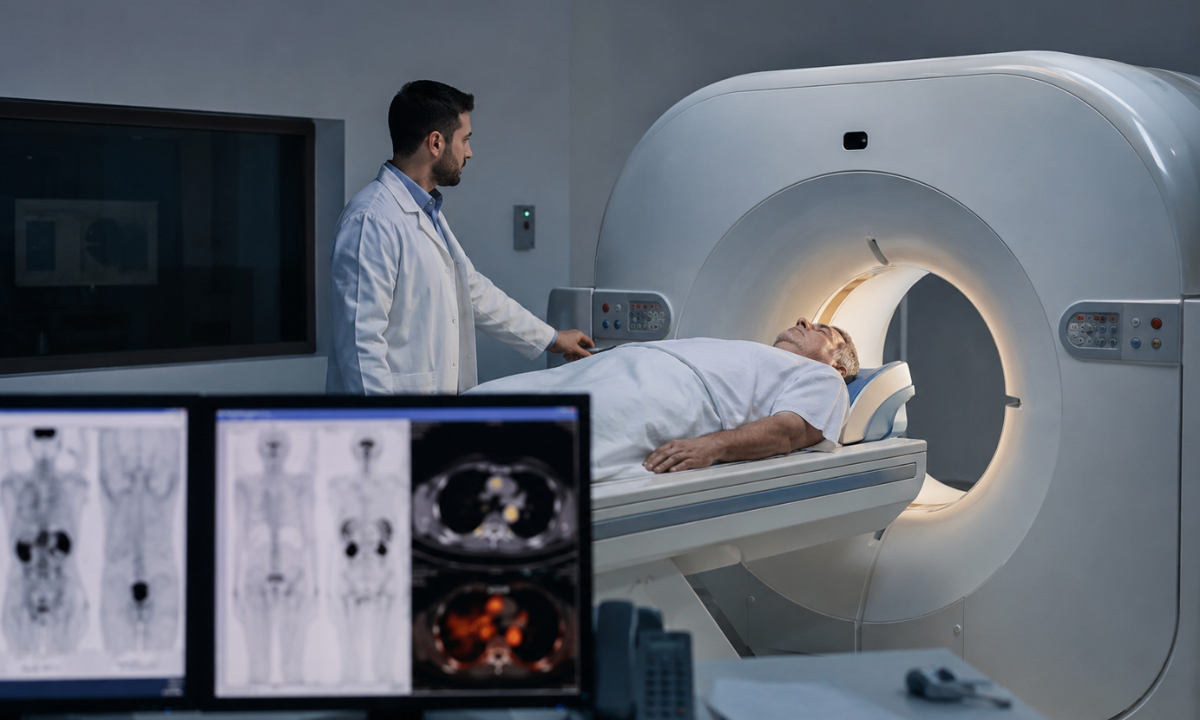
A molecularly targeted therapy strictly requires a molecularly targeted diagnostic companion to ensure clinical efficacy. Securing a PSMA PET Scan in Bangalore is the absolute prerequisite for determining if a patient will respond to Lutetium-177 PSMA Therapy.
This diagnostic process identifies the exact location and intensity of PSMA expression throughout the entire physiological system. Without this critical data, clinicians cannot guarantee that the radioactive isotope will bind effectively to the malignant cells.
The selection of patients for radioligand therapy relies on several specific diagnostic parameters.
Clinical Requirements for Diagnostic Selection
- Confirming high PSMA expression within all metastatic lesions to ensure the therapeutic payload reaches its intended cellular target.
- Identifying the total volume of metastatic disease, including occult bone and visceral involvements that often remain undetected by standard CT or MRI protocols.
- Evaluating the functional status and baseline uptake of healthy organs, specifically the salivary glands and kidneys, to predict potential side effects.
- Detecting “PSMA-negative” disease sites would indicate that the patient requires a different therapeutic modality.
The diagnostic procedure itself utilizes advanced nuclear imaging technology to map the disease.
The Imaging Protocol at a Leading Center
- The administration of a specialized radioactive tracer, typically Gallium-68 PSMA or Fluorine-18 DCFPyL, into the patient’s circulatory system.
- A strictly timed incubation period of approximately sixty minutes to allow the tracer molecules to circulate and bind to the specific membrane antigens.
- Comprehensive whole-body imaging using an integrated PET/CT scanner to provide precise anatomical and functional correlation of every malignant lesion.
- Quantitative analysis of the Standardized Uptake Value (SUV) to determine the exact density of receptors available for treatment binding.
Utilizing the Best PET Scan Centre in Bangalore ensures that the resulting images provide the high-resolution data required for precise treatment planning. If the diagnostic scan reveals that the tumor cells do not express the PSMA protein at sufficient levels, the patient is not a candidate for this specific nuclear intervention.
This rigorous selection process ensures that Nuclear therapy for prostate cancer is reserved for individuals whose molecular profile guarantees the highest probability of a positive clinical response.
Prostate cancer treatment in india and Associated Costs
Securing advanced molecular oncology care for metastatic disease has become significantly more accessible within the domestic medical infrastructure. Accessing prostate cancer treatment in India allows patients to receive world-class nuclear medicine protocols that were previously restricted to premier Western institutions.
The clinical availability of Nuclear therapy for prostate cancer in major medical hubs like Bangalore, Mumbai, and Delhi ensures that patients can initiate life-prolonging interventions without the logistical challenges of international travel.
The primary advantage of pursuing these advanced protocols within India is the substantial reduction in the absolute financial requirement compared to global benchmarks.
While the medical technology and radioactive isotopes utilized are identical to those in the United States and Europe, the prostate cancer treatment cost in India remains significantly more affordable.
Comparative Financial Analysis: Lutetium-177 PSMA Therapy
| Geographic Region | Estimated Cost (Per Cycle / Full Course) | Percentage of Regional Saving |
|---|---|---|
| India | $8,000 to $14,000 USD | Baseline |
| United Kingdom | $26,000 USD (Starting) | Approximately 65% higher |
| United States | $23,000 to $30,000 USD | Approximately 70% higher |
| Thailand | $18,000 USD (Starting) | Approximately 55% higher |
The total financial investment for a complete therapeutic course typically depends on the exact number of cycles required by the patient, which usually ranges from four to six sessions spaced six to eight weeks apart. Clinical centers provide detailed estimates based on several physiological and logistical variables.
Estimated Procedural Cost Breakdown in India (Per Cycle)
| Clinical Component | Estimated Financial Range (INR) | Functional Requirement |
|---|---|---|
| Lutetium-177 Isotope | ₹8,00,000 to ₹12,00,000 | Targeted radioactive payload for cellular ablation. |
| Diagnostic PSMA PET Scan | ₹89,999 to ₹1,24,999 | Mandatory receptor identification and localization. |
| Clinical Hospitalization | ₹1,50,000 to ₹2,50,000 | Managed isolation and radiation safety monitoring. |
| Laboratory Evaluations | ₹15,000 to ₹30,000 | Mandatory renal and hepatic function monitoring between cycles. |
Several external factors can influence the final treatment financials, including the specific hospital’s infrastructure, the clinical experience of the attending nuclear medicine specialist, and the potential need for additional supportive treatments such as bone-protecting agents or blood transfusions.
Providing these advanced therapies at a fraction of the international cost, Indian specialized centers ensure that high-precision cancer care is accessible to a broader demographic of patients requiring urgent metabolic intervention.
Why Choose Kiran PET CT for Advanced Prostate Care?
Selecting a facility for molecular radiotherapy requires a commitment to diagnostic precision and radiation safety. Kiran PET CT is recognized as the Best PET Scan Centre in Bangalore because we provide a specialized clinical environment designed to manage complex oncological cases with absolute accuracy.
Several definitive clinical factors distinguish Kiran PET CT as a premier provider for this procedure:
- Elite Molecular Imaging: Our facility utilizes highly sophisticated PET/CT technology to perform the PSMA PET Scan in Bangalore with absolute high resolution.
- Targeted Dose Calibration: We strictly calibrate every dose of Lutetium-177 PSMA Therapy to ensure the maximum therapeutic impact on malignant cells while minimizing radiation exposure to healthy tissues.
- Comprehensive Safety Protocols: We maintain rigorous isolation and waste management standards to protect the patient and their family members during the initial post-treatment phase.
- Multidisciplinary Expertise: Our team integrates nuclear medicine specialists with clinical oncologists to provide a total systemic management approach for advanced disease.
Our nuclear medicine department operates under the direct supervision of expert clinicians who strictly follow the standards established by the Society of Nuclear Medicine and Molecular Imaging. This clinical oversight ensures that every patient receives a customized treatment plan tailored to their specific molecular profile and metastatic load.
Choosing Kiran PET CT, patients guarantee that their transition to targeted nuclear medicine receives strictly specialized management utilizing the most advanced diagnostic and therapeutic technology available.
Conclusion
The clinical shift toward Nuclear therapy for prostate cancer represents a significant milestone in the management of metastatic castration-resistant disease. By utilizing molecularly targeted radioligands, clinicians can now provide a definitive therapeutic option for patients who have exhausted traditional hormone and chemotherapy protocols. This precision approach prioritizes progression-free survival while maintaining a high quality of physiological stability.
Do not allow the progression of advanced disease to compromise your long-term health. Contact the specialized molecular oncology team at Kiran PET CT today to schedule your comprehensive evaluation, discuss the specific clinical protocols, and take the final step toward achieving permanent molecular control of your prostate health.