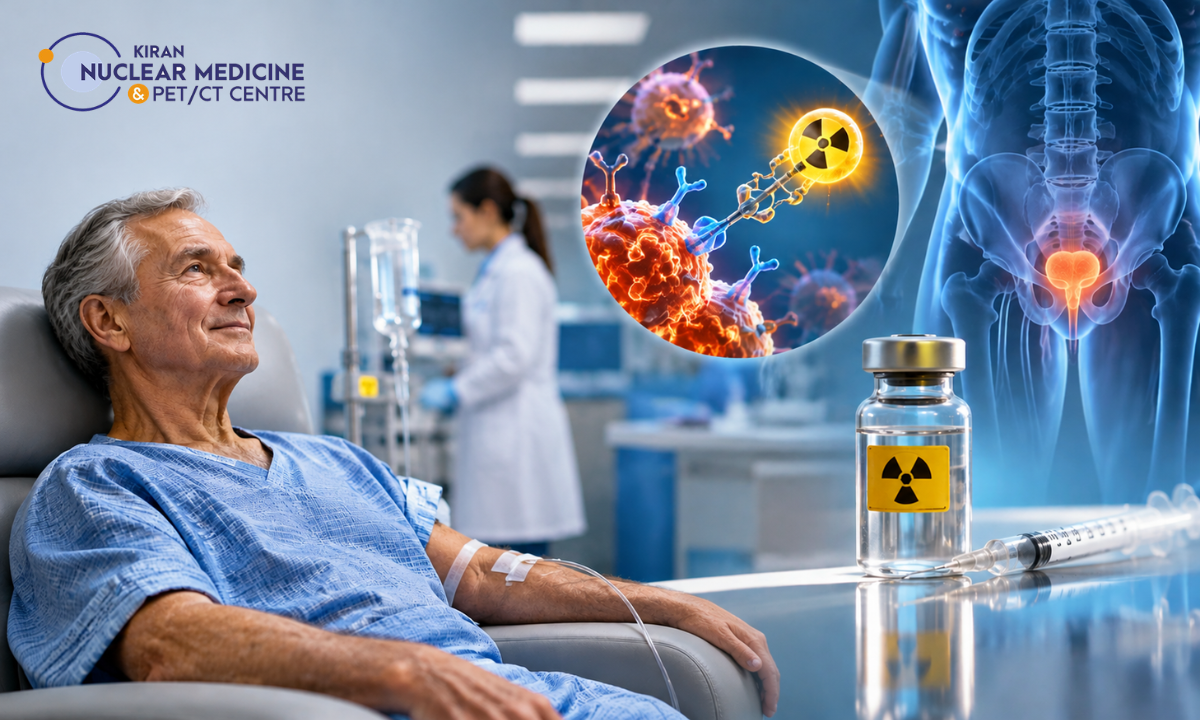
Advanced prostate cancer can be a difficult disease to live with. Even when hormone treatment and chemotherapy work well at first, the cancer may eventually begin to grow again. For patients and families facing this stage, one of the most common questions is simple: what comes next?
One answer that has changed the conversation in recent years is Lutetium-177 PSMA therapy, a targeted radioligand treatment that delivers radiation directly to prostate cancer cells carrying a protein called PSMA. Its evidence base rests largely on a major international study called the VISION trial, published in the New England Journal of Medicine in 2021. In this article, we explain what the trial tested, what it found, who may be considered for this treatment, what its limitations are and how PSMA PET-CT fits into the process. If you are looking for a PET-CT scan in Bangalore, understanding the role of PSMA PET-CT can also help you prepare for discussions with your specialist.
This treatment is not appropriate for every person with prostate cancer, and the information here is general. Decisions always depend on your own medical history, scans and laboratory results.
What Is Lutetium-177 PSMA Therapy?
Lutetium-177 PSMA therapy, sometimes written as Lu-177 PSMA therapy or called PSMA radioligand therapy, is a form of targeted radionuclide therapy. It combines a molecule that seeks out prostate cancer cells with a radioactive isotope that delivers treatment.
What Does PSMA Mean?
PSMA stands for prostate-specific membrane antigen. It is a protein found on the surface of most prostate cancer cells, often in much larger amounts than on normal cells. This makes it a useful molecular target. However, PSMA levels are not identical in every patient or in every tumour deposit within the same patient, which is why imaging is used to check before treatment.
How Does Lutetium-177 PSMA-617 Work?
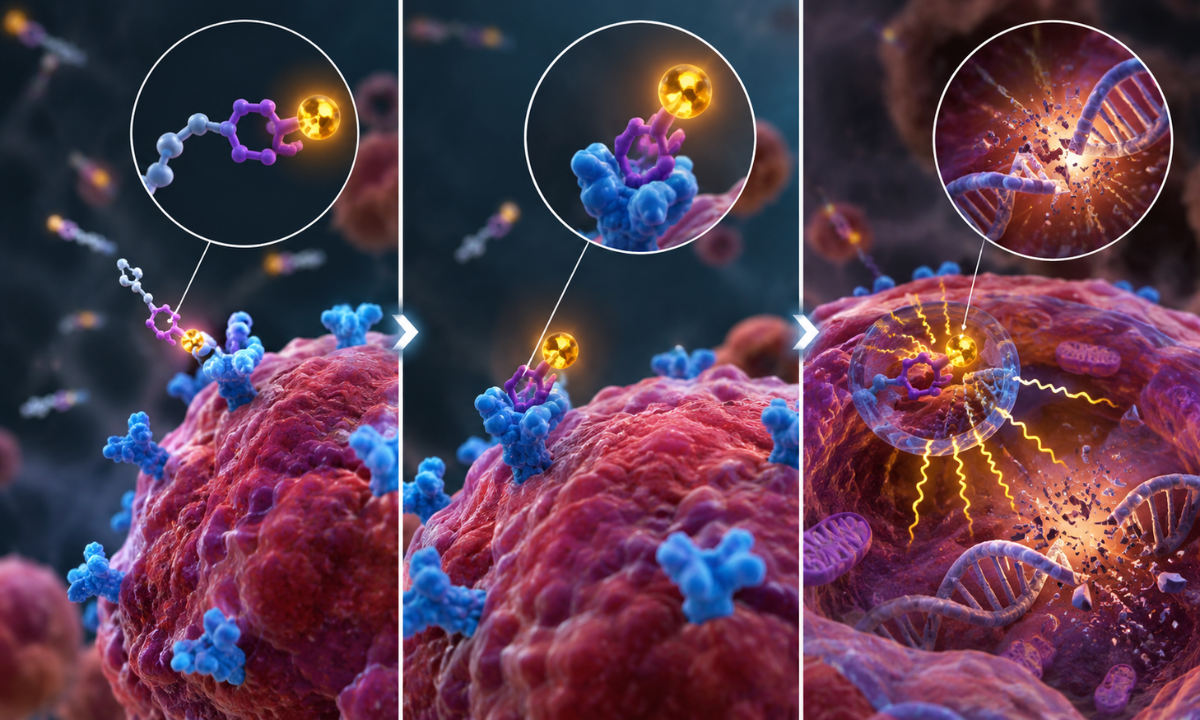
The treatment works in three connected steps:
- A PSMA-targeting molecule (PSMA-617) is injected into the bloodstream.
- It binds to PSMA-expressing cancer cells wherever they are in the body.
- Lutetium-177, the radioactive isotope attached to it, releases beta-particle radiation over a very short distance, damaging the cancer cells it is bound to.
Because the radiation travels only a short distance, most of its effect is concentrated on PSMA-positive tissue. And because the medicine travels through the bloodstream, it can reach cancer in multiple parts of the body, which is important in metastatic disease.
Why Is It Used in Advanced Prostate Cancer?
To understand where this therapy fits, it helps to understand the stage of disease it is used for.
Understanding Metastatic Castration-Resistant Prostate Cancer
Metastatic means the cancer has spread beyond the prostate, commonly to bones and lymph nodes. Prostate cancer usually depends on male hormones, so the first line of treatment is often androgen deprivation therapy. Castration-resistant means the cancer continues to progress even though testosterone has been lowered to very low levels. Together, this stage is called metastatic castration-resistant prostate cancer, or mCRPC.
Why Conventional Treatment May No Longer Be Enough
Many patients with mCRPC have already received treatments such as androgen receptor pathway inhibitors and taxane chemotherapy. When the disease progresses despite these treatments, doctors look for other approaches that attack the cancer in a different way. Advanced targeted nuclear therapy for prostate cancer is one such option, but it is not automatically the next step for everyone. Whether it suits a patient depends on the full clinical picture.
What Was the VISION Trial?
The VISION trial is a landmark phase 3 study that tested whether adding Lutetium-177 PSMA-617 to standard care could improve outcomes compared with standard care alone.
Purpose of the Trial
The researchers wanted to know whether this targeted radioligand, given alongside the best standard treatment, could delay cancer progression and help patients live longer when used in appropriately selected patients with advanced, PSMA-positive mCRPC.
Who Participated?
The study enrolled patients with metastatic castration-resistant prostate cancer who had already been treated with at least one androgen receptor pathway inhibitor and one or two taxane chemotherapy regimens. Importantly, their cancer had to be PSMA-positive on centrally read Ga-68 PSMA-11 PET-CT, defined as uptake greater than liver in at least one metastatic lesion, with no protocol-defined PSMA-negative lesion. Patients also needed an ECOG performance status of 0 to 2, a life expectancy of at least six months, adequate organ and bone marrow function, and castrate testosterone levels maintained throughout. In other words, the study population was highly selected, and it does not represent every person with prostate cancer.
How Was the Trial Designed?

VISION was an international, open-label, randomised phase 3 trial. Patients were randomly assigned, in a 2-to-1 ratio, to receive either Lutetium-177 PSMA-617 plus standard care or standard care alone. Standard care was chosen by the treating physicians and could include hormonal therapies such as abiraterone and enzalutamide, bisphosphonates, radiation therapy, denosumab and glucocorticoids, but excluded chemotherapy, immunotherapy, radium-223 and investigational drugs. Of 1,179 patients screened, 831 were randomised (551 to the Lutetium-177 group and 280 to the control group) across 84 sites in North America and Europe, and median follow-up was 20.9 months. Patient selection was based on Ga-68 PSMA-11 PET-CT.
What Did the VISION Trial Show?
Improvement in Imaging-Based Progression-Free Survival
One of the main goals was to measure imaging-based progression-free survival, which is the time before scans show the cancer has progressed or the patient has died. The trial showed a significant improvement with Lutetium-177 PSMA-617 plus standard care compared with standard care alone. Median imaging-based progression-free survival was 8.7 months versus 3.4 months, with a hazard ratio of 0.40 for progression or death.
Improvement in Overall Survival
The other major goal was overall survival. Median overall survival was about 15.3 months in the group receiving Lutetium-177 PSMA-617 plus standard care, compared with about 11.3 months in the standard care group. The hazard ratio for death was 0.62, which indicates a significant survival advantage in this population.
| Outcome | Standard care | Lutetium-177 PSMA-617 + standard care |
|---|---|---|
| Median overall survival | 11.3 months | 15.3 months |
| Median imaging-based progression-free survival | 3.4 months | 8.7 months |
Secondary endpoints also favoured the Lutetium-177 group. Median time to first symptomatic skeletal event or death was 11.5 months versus 6.8 months (hazard ratio 0.50). Complete responses on imaging were seen in 9.2% versus 0% of patients and partial responses in 41.8% versus 3%, and confirmed PSA declines of 50% or more and 80% or more were more frequent with Lutetium-177 treatment.
What Does This Mean for Patients?
These numbers describe average results in a clinical trial. They suggest that, in carefully selected patients, the treatment can delay cancer progression and extend survival. To understand more about the benefits and considerations of Lutetium-177 PSMA therapy, it is important to consider that outcomes vary from patient to patient. Some patients respond strongly, some respond modestly and some do not respond, so your own response will be monitored closely by your care team.
Why Is PSMA PET-CT Important Before Treatment?
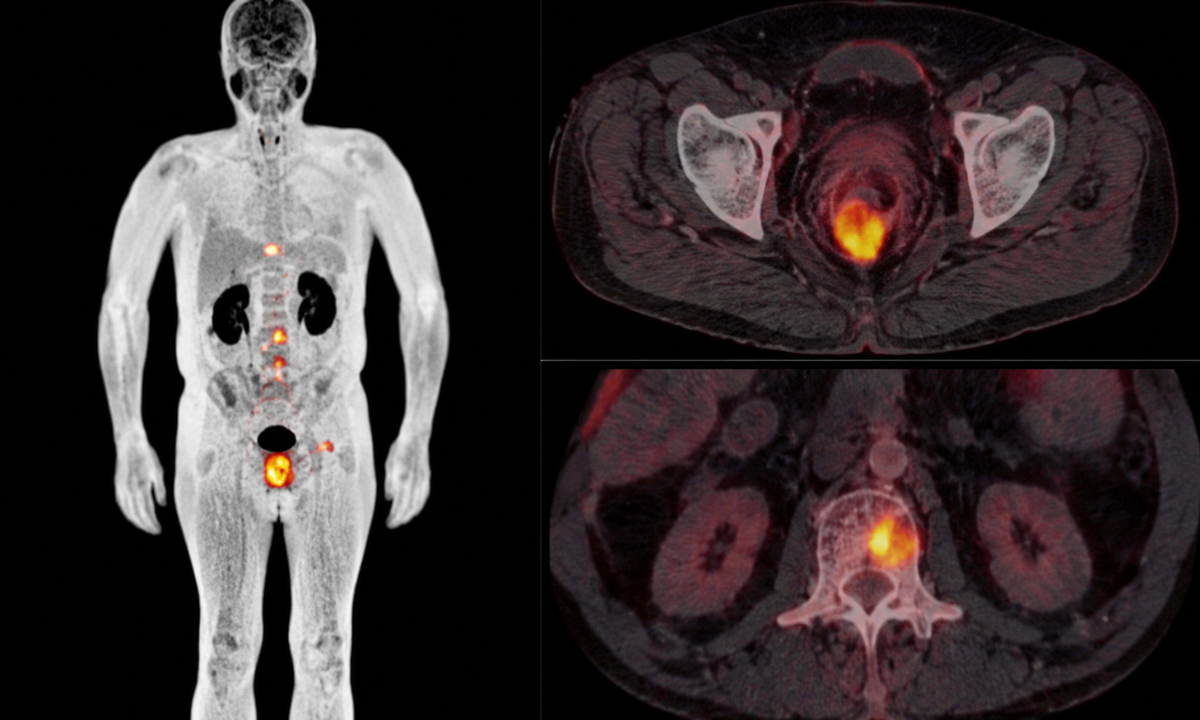
PSMA PET-CT is central to this approach, because the therapy only works where PSMA is present.
PSMA PET-CT Identifies PSMA-Positive Disease
In this scan, a small amount of radioactive tracer that binds to PSMA is injected, and the PET-CT shows where it collects in the body. This allows specialists to see whether cancer deposits show sufficient PSMA uptake. It is a key step in deciding whether PSMA-targeted therapy may be appropriate.
Why a Positive Scan Does Not Guarantee a Response
A positive PSMA scan is important, but it is only one part of patient selection. Tumour biology differs between patients, and PSMA expression can be uneven among lesions. Treatment decisions require clinical assessment, laboratory results and imaging to be considered together.
Why Some Patients May Need Additional Imaging
FDG PET/CT was used alongside PSMA PET in some earlier trials, such as TheraP, and may be used selectively in practice to assess PSMA-negative disease. It was not a routine requirement in VISION.
If you would like to learn more about the scan itself, see our PSMA PET-CT service page.
Who May Be Considered for Lutetium-177 PSMA Therapy?
Suitability is a clinical judgement rather than a simple checklist. Specialists generally consider:
- Advanced or metastatic prostate cancer
- Disease progression despite previous systemic treatment
- Adequate PSMA expression on imaging
- Adequate bone marrow and organ function, assessed through blood counts and kidney and liver tests
- Overall clinical condition and treatment history
Eligibility is determined by the treating oncology and nuclear medicine team after reviewing the complete clinical history, previous treatments, PSMA PET-CT findings and laboratory results.
For more detail, read our article Lutetium-177 PSMA Therapy: How Doctors Assess Eligibility and Prepare Patients.
How Is Lutetium-177 PSMA Therapy Given?
Before Treatment
Preparation usually includes a PSMA PET-CT assessment, blood tests, assessment of kidney and liver function, blood counts, and a review of previous treatment, medications and clinical history.
For a detailed overview, read what to expect during Lutetium-177 therapy, from consultation to follow-up.
During Treatment
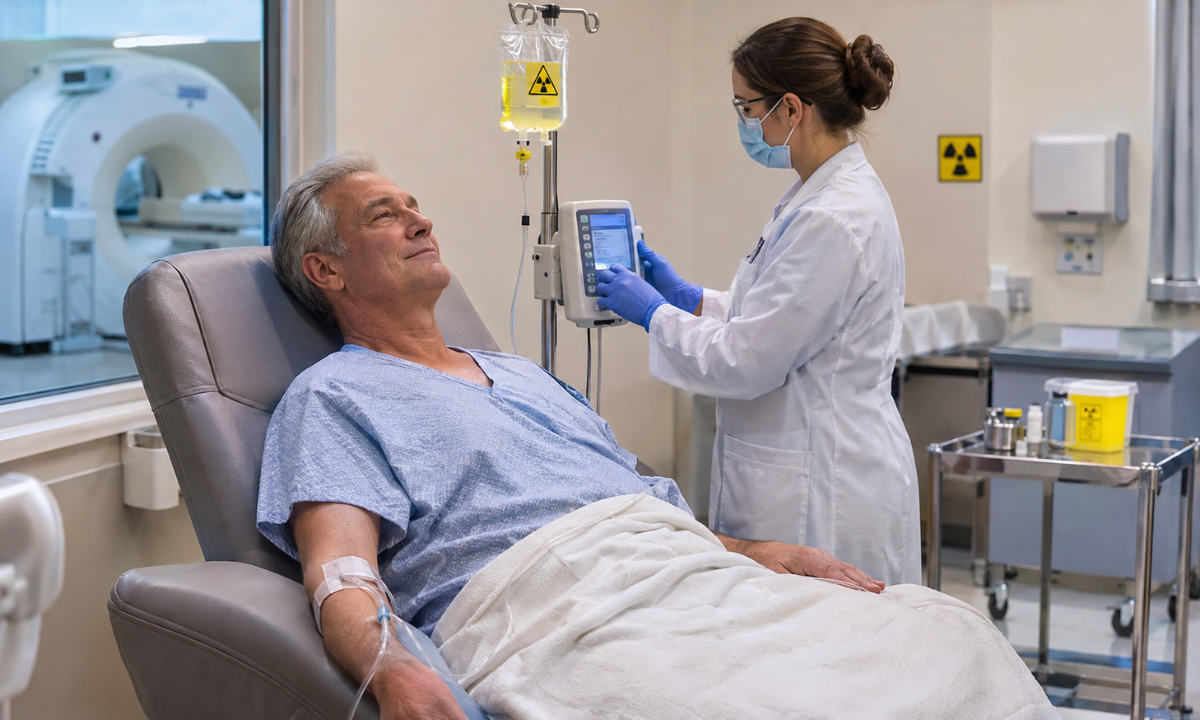
The medicine is given by intravenous administration under radiation-safety protocols. Patients are monitored and may be encouraged to stay well hydrated. In VISION, patients received 7.4 GBq (200 mCi) intravenously every six weeks for four cycles, with up to two additional cycles (six in total) at the physician’s discretion for patients showing a response. In everyday practice, the number of cycles depends on response and tolerance.
After Treatment
You will receive radiation precautions to follow for a period of time, along with advice on hydration and frequent urination as recommended by your team. Follow-up includes blood tests, PSA monitoring and imaging when clinically indicated.
What Are the Possible Side Effects?
Targeted does not mean free of side effects. Possible effects include:
- Dry mouth, due to effects on the salivary glands
- Fatigue
- Nausea
- Reduced appetite
- Changes in blood counts
- Kidney function, which your team will monitor during treatment
- Rare serious events, including pancytopenia, bone marrow failure, subdural haematoma and intracranial haemorrhage
In the VISION trial, grade 3 or higher adverse events occurred in 52.7% of patients receiving Lutetium-177 PSMA-617 compared with 38.0% in the control group, although overall quality of life was not adversely affected. The most common effects were fatigue (43.1%), dry mouth (38.8%) and nausea (35.3%), nearly all mild to moderate, while blood count effects included anaemia (31.8%), thrombocytopenia (17.2%), lymphopenia (14.2%) and leukopenia (12.5%). Adverse events led to dose reduction in 5.7% of patients, treatment interruption in 16.1% and discontinuation in 11.9%, and five adverse events leading to death were considered drug-related by the investigators. This is why blood tests and clinical follow-up are an essential part of treatment, and why you should report new or worsening symptoms to your team promptly.
Lutetium-177 PSMA Therapy vs Conventional Treatment
These treatments are best understood by their roles, rather than as a ranking.
| Treatment approach | Main role |
|---|---|
| Hormone therapy | Suppresses androgen signalling |
| Androgen receptor pathway inhibitors | Blocks androgen signalling |
| Chemotherapy | Systemic cytotoxic treatment |
| External beam radiotherapy | Local or regional radiation |
| Lutetium-177 PSMA therapy | PSMA-targeted systemic radioligand therapy |
These options are not interchangeable. Selection depends on disease stage, previous therapies, tumour characteristics, PSMA expression, overall health and specialist assessment.
What Makes It a Theranostic Treatment?

Theranostics combines diagnosis and therapy using the same biological target. In PSMA therapy, the pathway looks like this:
- Diagnose: PSMA PET-CT identifies PSMA-expressing disease.
- Select: The team determines whether the patient may be suitable.
- Treat: Lutetium-177 PSMA therapy delivers targeted radiation.
- Monitor: Follow-up imaging and laboratory tests assess response and safety.
This is often summed up as seeing what you treat and treating what you see. It is a helpful way to understand the concept, though imaging cannot guarantee that treatment will succeed.
What Are the Limitations of the VISION Trial?
Good medical information explains what a study does not show as well as what it does.
- The study focused on a specific population with advanced mCRPC.
- Participants had already received substantial previous treatment.
- Patients were required to have PSMA-positive disease.
- The trial was open-label and had no placebo, meaning patients and doctors knew which treatment was given.
- The results cannot automatically be applied to every person with prostate cancer.
- Individual outcomes vary.
- Treatment decisions should reflect current clinical guidelines and specialist assessment, which continue to evolve.
Several further caveats apply. Imaging-based progression-free survival was upgraded from a secondary to an alternate primary endpoint through a protocol amendment. Adverse events were recorded only up to 30 days after each dose, which may underestimate toxicity given that Lutetium-177 has a half-life of about seven days, while the longer treatment exposure in the Lutetium-177 group may overstate relative toxicity. The trial was funded by Endocyte, a Novartis company.
Does Lutetium-177 PSMA Therapy Cure Advanced Prostate Cancer?
Generally, this treatment is used to control advanced metastatic disease rather than as a guaranteed cure. The goals of treatment include:
- Delaying progression
- Extending survival
- Reducing tumour burden in responsive disease
- Potentially improving disease-related symptoms
- Maintaining quality of life where possible
Anyone promising to eliminate all cancer cells should be approached with caution.
What Happens After Treatment?
Follow-up usually involves PSA monitoring, blood count and kidney function checks, clinical assessment and follow-up imaging. Whether further cycles are appropriate depends on your response, side effects, laboratory results, disease status and overall clinical condition. Your team will review these together and adjust the plan accordingly.
Lutetium-177 PSMA Therapy at Kiran PET-CT
Kiran PET-CT offers Lutetium-177 PSMA therapy as an integrated theranostics pathway that brings together PSMA PET-CT and targeted therapy. The pathway includes PSMA PET-CT, nuclear medicine consultation, assessment of treatment suitability, Lutetium-177 PSMA therapy, radiation-safety facilities and follow-up monitoring.
Considering Lutetium-177 PSMA therapy? It helps to bring:
- PSMA PET-CT reports
- Biopsy or pathology reports
- PSA history
- Previous treatment records
- Recent blood test reports
- A list of current medications
Our nuclear medicine team can review the available clinical information and advise whether further assessment is appropriate.
Frequently Asked Questions
What is Lutetium-177 PSMA therapy?
It is a targeted radioligand treatment that delivers radiation to PSMA-expressing prostate cancer cells.
What is PSMA radioligand therapy?
It is a treatment in which a PSMA-binding molecule carries a radioactive isotope to cancer cells.
What is the VISION trial?
A phase 3 international trial that tested Lutetium-177 PSMA-617 plus standard care against standard care alone in PSMA-positive mCRPC.
Who was eligible for the VISION trial?
Patients with mCRPC previously treated with an androgen receptor pathway inhibitor and taxane chemotherapy, whose disease was PSMA-positive on Ga-68 PSMA-11 PET-CT.
Did the VISION trial show that the therapy improves survival?
Yes. Median overall survival was about 15.3 months versus 11.3 months in the trial population.
What is metastatic castration-resistant prostate cancer?
Prostate cancer that has spread and continues to progress despite very low testosterone levels.
Why is PSMA PET-CT performed before therapy?
To show whether the cancer expresses enough PSMA for targeted treatment to be considered.
Does a positive PSMA PET scan mean I can definitely receive therapy?
No. Suitability also depends on blood tests, organ function, treatment history and specialist assessment.
Can Lutetium-177 PSMA therapy cure metastatic prostate cancer?
It is generally used to control disease, delay progression and extend survival, not as a guaranteed cure.
How many cycles are needed?
In VISION, patients received four to six cycles. In practice it varies with response and tolerance, so your team will decide as treatment proceeds.
What are the common side effects?
Dry mouth, fatigue, nausea, reduced appetite and changes in blood counts are among the possible effects.
Is the therapy safe?
It is generally given with careful selection and monitoring, but it does carry risks, including serious adverse events in some patients.
How long does a patient stay at the nuclear medicine centre?
This depends on the protocol and radiation-safety requirements, and your team will tell you in advance.
What tests are required before treatment?
PSMA PET-CT, blood counts, kidney and liver tests, and a review of your treatment history.
Can it be used after chemotherapy?
Yes, in appropriately selected patients. VISION included patients previously treated with taxane chemotherapy.
Can patients with bone metastases receive it?
Patients with bone metastases were included in the trial, and suitability is assessed individually.
What happens if some lesions do not show PSMA uptake?
This can affect treatment planning, and your team may use additional imaging to understand the disease better.
How is response monitored?
Through PSA tests, blood tests, clinical assessment and imaging when appropriate.
Where is Lutetium-177 PSMA therapy available in Bangalore?
Kiran PET-CT offers it as part of an integrated PSMA theranostics pathway.
Talk to Our Nuclear Medicine Team
If you or a family member has advanced prostate cancer and would like to understand whether PSMA-targeted therapy could be an option, our nuclear medicine team at Kiran PET-CT is here to help. Book a consultation for PET-CT scans in Bangalore to review your reports and discuss the next steps. kiranpet
Disclaimer: This article is for general information only and is not a substitute for professional medical advice, diagnosis or treatment. Always follow the guidance of your own treating doctors.
Reference: