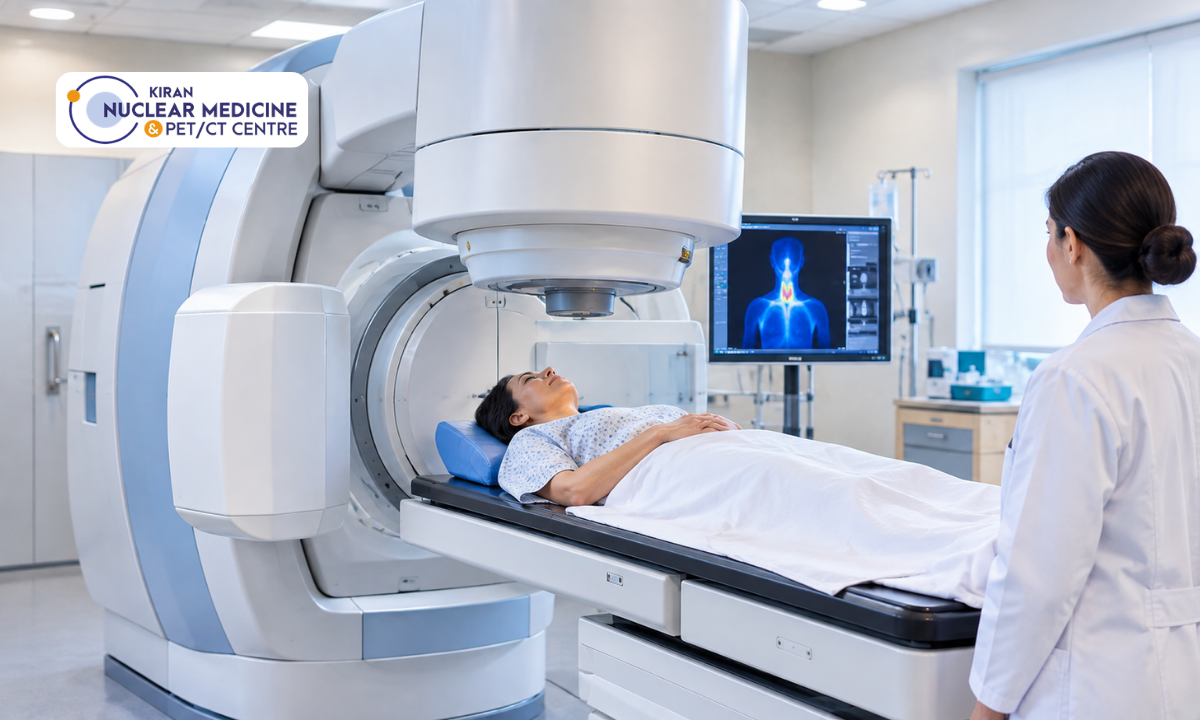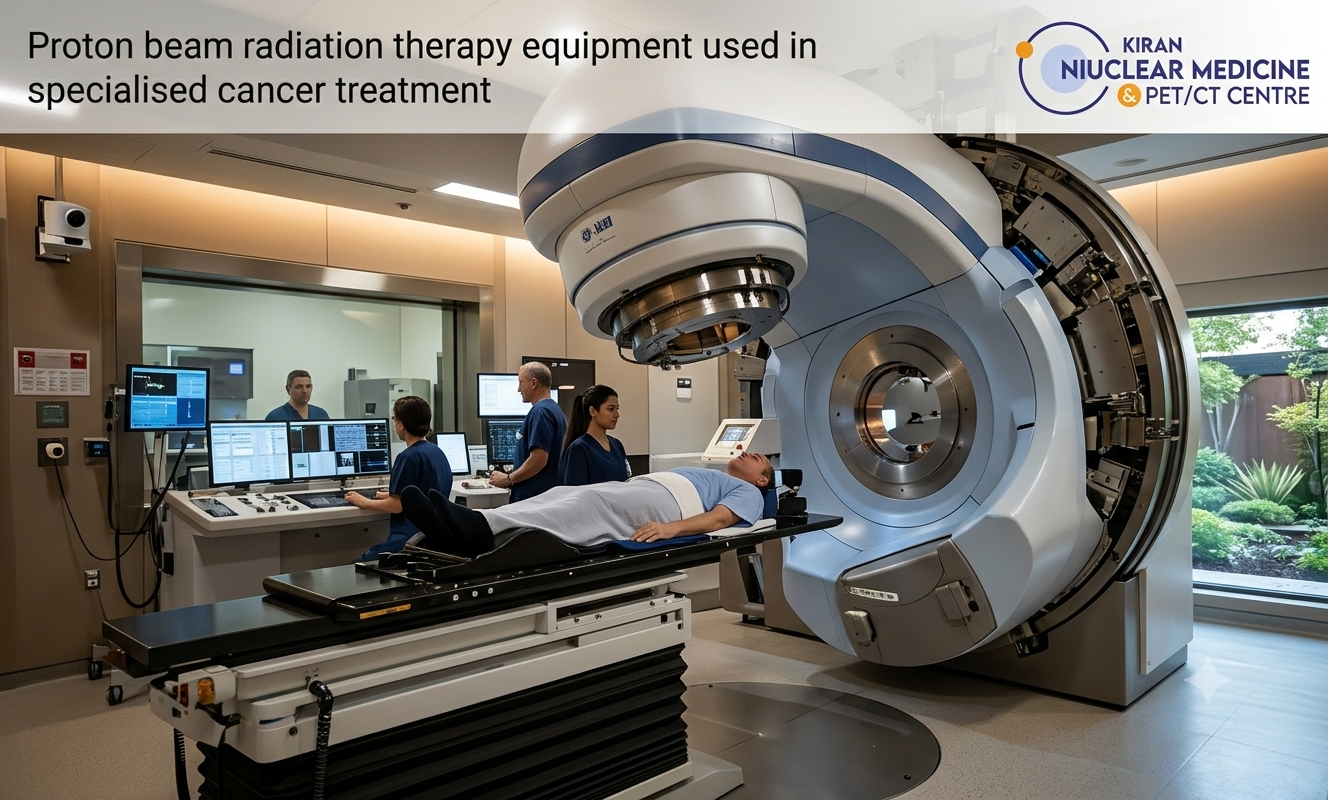
Proton therapy for cancer is a specialised form of external beam radiation therapy that uses protons, rather than the X-rays (photons) used in conventional radiotherapy, to treat tumours. Because protons can be planned to release most of their energy at a specific depth, this treatment may reduce radiation exposure to some of the healthy tissue surrounding a tumour.
That does not make it the right choice for every patient. Whether proton therapy is suitable depends on the type, location and stage of the cancer, previous treatments and the overall treatment plan. This guide explains how the treatment works, which cancers it may be considered for, how it compares with conventional radiation and how PET/CT imaging services can support cancer assessment before and after treatment.
What Is Proton Therapy?
Understanding Proton Beam Radiation Therapy
Proton therapy is a type of radiation treatment delivered from a machine outside the body. Protons are positively charged particles that are accelerated to high energies and directed precisely at the tumour. According to MedlinePlus, it is used to damage cancer cells while aiming to limit harm to nearby healthy tissue.
How Proton Therapy Targets Cancer Cells
Like other forms of radiotherapy, proton therapy damages the DNA inside cancer cells, which stops them from growing and dividing. Healthy cells in the treated area can also be affected, which is why careful planning matters.
What Is the Bragg Peak Effect?
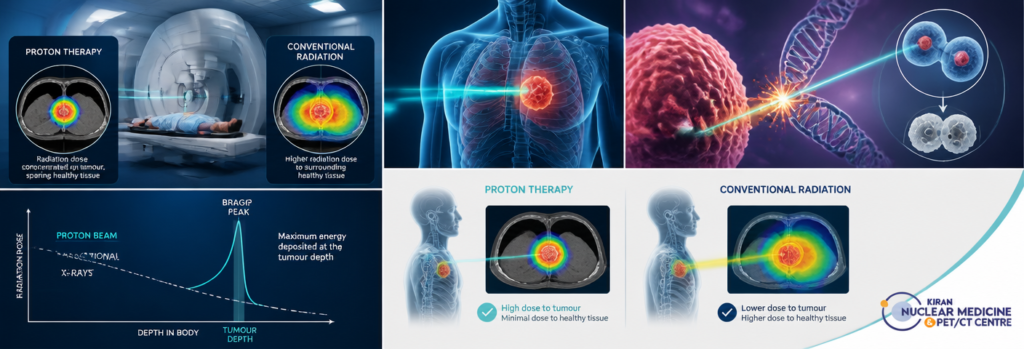
The key physical property of protons is known as the Bragg peak. As protons travel through the body, they release relatively little energy at first and then deposit most of their energy near a planned depth. Under ideal conditions, very little radiation continues beyond that point. In real treatment, doctors must account for differences in tissue density, organ movement and other uncertainties, so planning is highly detailed.
How Proton Therapy Differs from Conventional Radiation
Conventional radiotherapy uses photon beams that pass through the body, delivering some dose to tissue both in front of and beyond the tumour. Modern photon techniques are very precise, but proton beams may offer an advantage in specific situations where reducing dose beyond the tumour is particularly important.
Which Cancers May Be Treated With Proton Therapy?
Proton therapy is considered for selected cancers, not every cancer within these groups. Suitability depends on the tumour’s position, stage, expected dose distribution, available alternatives and specialist assessment.
Brain and Central Nervous System Tumours
Tumours close to the brainstem, optic nerves or other critical structures may be considered, as reducing dose to surrounding brain tissue can be important.
Certain Head and Neck Cancers
In selected head and neck cancers, protons may help reduce dose to structures such as the salivary glands, mouth and swallowing muscles.
Ocular Tumours
Certain eye tumours, including uveal melanoma, may be considered for proton therapy because the beam can be shaped to deliver a high dose to the tumour while helping preserve surrounding eye structures. This is one of the most established uses of the treatment.
Childhood Cancers
Children’s growing tissues are especially sensitive to radiation, so proton therapy is often discussed for paediatric cancers where it may lower the risk of long-term effects.
Selected Spine and Skull Base Tumours
Tumours such as chordomas and chondrosarcomas near the spinal cord or skull base may be assessed for proton treatment because of their proximity to sensitive structures.
Prostate, Breast and Other Solid Tumours in Selected Cases
Proton therapy has been used for prostate, breast, liver, lung and other cancers. However, for many of these tumours, modern photon radiotherapy remains an effective standard option, and proton therapy is considered only when it is expected to provide a meaningful normal-tissue or clinical advantage.
Recurrent Cancers That Have Previously Received Radiation
When a cancer returns in an area already treated with radiation, proton therapy may sometimes be considered to limit further dose to previously irradiated tissue.
What Are the Potential Benefits of Proton Therapy?
Reducing Radiation Exposure to Nearby Healthy Tissues
The main potential benefit is a lower radiation dose to tissue beyond the tumour. In the right situation, this may help reduce some side effects.
Why Precision Matters Near Sensitive Organs
When a tumour sits close to the heart, spinal cord, eyes or brainstem, even small reductions in dose to these organs can be clinically meaningful. TheAmerican Society for Radiation Oncology (ASTRO) model policy frames proton therapy as reasonable where this kind of normal-tissue sparing offers a benefit that photon radiotherapy cannot adequately achieve.
Potential Benefits for Children and Younger Patients
Lowering dose to developing tissues may help reduce the risk of growth problems, hormonal effects and second cancers later in life, although long-term evidence continues to grow.
Considering Long-Term Side Effects
For patients with a good long-term outlook, reducing late effects of radiation is an important consideration in choosing between treatment options.
When Proton Therapy May Offer Little Additional Benefit
For many cancers, modern photon radiotherapy already achieves excellent results with acceptable side effects. In these cases, proton therapy may not offer a meaningful advantage, and the extra cost, travel and waiting time may not be justified.
Proton Therapy vs Conventional Radiation Therapy
The table below summarises the main differences. Neither approach is universally better; each is chosen according to the individual case.
| Factor | Proton Therapy | Conventional Radiotherapy |
| Radiation type | Protons (charged particles) | Photons (high-energy X-rays) |
| Energy deposit | Most energy released near a planned depth | Energy released along the beam path through the body |
| Dose beyond the tumour | Usually much lower beyond the tumour, though planning must account for uncertainties | Some exit dose beyond the tumour |
| Tumours near critical organs | May be advantageous in selected cases | Highly precise modern techniques also available |
| Planning and delivery | Sensitive to tissue changes and movement; requires careful planning | Well established, with extensive clinical experience |
| Availability and cost | Fewer specialised centres; often higher cost and may require travel | Widely available; generally lower cost |
It is also worth noting that both are forms of external beam radiation, which is different from systemic treatments such as targeted radioligand therapy for prostate cancer, where a radioactive medicine travels through the bloodstream to reach cancer cells.
How Do Doctors Determine Whether Proton Therapy Is Suitable?
Reviewing the Cancer Diagnosis and Biopsy Reports
The process starts with confirming the cancer type and its biological features through biopsy and pathology reports.
Assessing Tumour Location and Stage
Imaging helps determine exactly where the tumour is, how large it is and whether it has spread, all of which affect the choice of treatment.
Reviewing Previous Surgery and Radiation Treatment
Any earlier surgery or radiation influences what is safe and effective now, particularly if the same area has already received radiation.
Comparing Proton and Photon Treatment Plans
In many cases, specialists create and compare both proton and photon plans to see whether protons would meaningfully reduce dose to healthy organs.
The Role of a Multidisciplinary Cancer Team
The final recommendation is usually made by a team that may include radiation oncologists, medical oncologists, surgeons, radiologists and nuclear medicine physicians.
What Happens During the Proton Therapy Procedure?
Initial Consultation and Medical Assessment
The radiation oncologist reviews the diagnosis, scans and medical history, and explains the potential benefits, risks and alternatives.
CT Simulation and Treatment Planning
A planning CT scan is taken in the treatment position. Other scans, such as MRI or PET/CT, may be combined with it to help define the treatment area.
Positioning and Immobilisation
Custom masks, moulds or supports help the patient stay in exactly the same position for every session.
Proton Beam Delivery
The patient lies still while the beam is delivered. The treatment itself is painless, and the number of sessions depends on the diagnosis and prescribed plan.
Monitoring and Follow-Up After Treatment
Regular reviews during and after treatment help the team manage side effects and check how the cancer is responding.
What Are the Side Effects of Proton Therapy?
Fatigue and Skin Changes
Tiredness and skin redness or irritation in the treated area are common with many forms of radiotherapy, including proton therapy.
Side Effects Based on the Treated Body Area
Most other side effects depend on the area treated. For example, treatment to the head and neck may cause a sore mouth or dryness, while pelvic treatment may affect the bladder or bowel.
Possible Short-Term and Long-Term Effects
Some effects appear during treatment and settle afterwards, while others may develop months or years later. Proton therapy can still affect healthy tissue, so it is not free of side effects.
When Patients Should Contact Their Treatment Team
Patients should contact their team promptly if they develop new, worsening or concerning symptoms during or after treatment.
What Is the Role of PET/CT Imaging in Cancer Treatment Planning?
Accurate imaging supports good treatment decisions, whatever form of treatment is chosen. You can explore more about cancer imaging and nuclear medicine on our blog.
How PET/CT Helps Assess the Extent of Cancer
PET/CT combines metabolic information from a PET scan with detailed anatomy from CT. For many cancer types, it can help show where active disease is present and whether it has spread.
Combining PET/CT Findings With CT and MRI
PET/CT results are often reviewed alongside CT and MRI. Each scan provides different information, and together they give the treating team a fuller picture.
How Imaging May Help Doctors Identify Treatment Targets
In some cases, PET/CT findings may help radiation oncologists define the areas that need treatment. Imaging contributes to planning but does not by itself decide whether proton therapy is suitable.
PET/CT Scans During Follow-Up and Response Assessment
After treatment, PET/CT may be used to assess response or check for recurrence, depending on the cancer type. The need for and timing of each scan is decided by the treating team.
How Much Does Proton Therapy Cost, and Where Is It Available?
Factors That Influence the Cost of Treatment
Cost depends on the cancer type, number of sessions, complexity of planning, the treating centre and any additional tests or treatments.
Why Treatment Costs Differ Between Patients
Because every treatment plan is individual, two patients at the same centre may receive very different estimates. Always request a current, personalised estimate from the treating centre.
Questions to Ask About Coverage and Travel
Ask the treating centre about the total cost, what the estimate includes, insurance coverage and accommodation if you need to travel for several weeks.
How to Seek a Specialist Consultation in India
Proton therapy is available at a small number of specialised centres in India, and patients may need to travel for assessment and treatment. Your oncologist can advise whether a referral to a radiation oncology team offering proton therapy is appropriate.
Conclusion
Proton therapy for cancer is a precise form of external beam radiation that may reduce dose to healthy tissue in selected situations, such as tumours near critical organs, certain eye tumours and many childhood cancers. It is not automatically better than conventional radiotherapy, and for many patients modern photon treatment remains an effective and appropriate choice. The decision should always be made by the oncology team, based on the diagnosis, expected benefits, risks and available alternatives.
Accurate imaging can be an important part of cancer assessment and follow-up. Contact Kiran PETCT, at our Banashankari or Indira Nagar centre in Bangalore, to enquire about relevant PET/CT imaging services and discuss your imaging requirements with the team.
Frequently Asked Questions
Is proton therapy better than conventional radiotherapy?
Not in every case. Proton therapy may reduce radiation dose to healthy tissue in selected situations, such as tumours near critical organs or in children. For many cancers, modern conventional radiotherapy is equally appropriate. The best option depends on the individual diagnosis and treatment plan.
Is proton therapy suitable for every cancer patient?
No. It is considered for selected cancers based on tumour type, location, stage, previous treatment and overall health. A radiation oncologist will assess whether it offers a meaningful advantage over other treatment options in your particular case.
Is proton therapy painful?
The treatment itself is painless, and patients do not feel the beam. Some discomfort may come from staying still in a fixed position or from side effects that develop over the course of treatment, which the team will help manage.
How many proton therapy sessions are needed?
The number of sessions varies widely depending on the cancer type, the dose prescribed and the overall treatment plan. Some patients need only a few sessions, while others receive treatment over several weeks. Your radiation oncologist will explain your schedule.
Can PET/CT scans help doctors plan cancer treatment?
Yes, for many cancer types. PET/CT can help show the extent of active disease, which may support treatment planning alongside CT and MRI. It is also used during follow-up for some cancers. Your treating team will decide whether a PET/CT scan is needed.
Can proton therapy be used after previous radiation?
In some cases, yes. When cancer returns in an area that has already received radiation, proton therapy may be considered to limit further dose to previously treated tissue. This decision requires careful specialist assessment of the risks and benefits.
Does proton therapy cause side effects?
Yes. Common effects include tiredness and skin changes in the treated area, and other effects depend on the part of the body treated. Proton therapy may reduce some side effects in selected cases, but it does not remove the risk entirely.