Following the successful administration of thyroid isolation treatment, patients enter a critical phase of physiological transition.
The primary objective shifts from achieving targeted cellular ablation to ensuring safe outpatient recovery and systemic metabolic stabilization. As the patient’s body temporarily retains the administered isotope, strict adherence to specialized discharge protocols is a legal and biological requirement.
Choosing a premier diagnostic facility, such as the Best PET Scan Centre in Bangalore, ensures patients receive rigorous, highly specific guidance for navigating this recovery period.
The reintegration process requires a highly controlled, phased approach to resuming daily activities, professional responsibilities, and travel. Patients must systematically manage two distinct clinical priorities simultaneously: minimizing radiation exposure to the public demographic and actively monitoring their metabolic transition to ensure long-term hormonal stability.
This guide details the precise clinical parameters and regulatory timelines required to safely navigate life immediately following targeted radionuclide therapy.
Medical Disclaimer
The information provided in this clinical guide is strictly for educational purposes and does not constitute professional medical advice, diagnosis, or treatment. Always seek the direct guidance of a qualified nuclear medicine physician or endocrinologist regarding specific radiation safety protocols, isolation timelines, and hormone replacement dosages. Never disregard professional medical advice or delay seeking clinical evaluation based on the contents of this publication.
Key Points at a Glance
- Radiation Safety: The mandated timelines for physical isolation and the specific distance parameters required for public reintegration.
- Professional Return: Clinical guidelines for resuming workplace activities, with specific considerations for shared environments.
- Travel Logistics: Navigating public transportation regulations and managing airport radiation security monitors.
- Metabolic Management: The transition from pre-treatment preparation to post-treatment hormonal stabilization protocols.
The Transition Phase and Understanding Radiation Decay
Following the administration of Radioactive iodine therapy, the human body retains a fraction of the unabsorbed Iodine-131 isotope. While the targeted malignant or hyperactive thyroid cells absorb the required therapeutic dose, the systemic circulation temporarily carries the residual radiopharmaceutical. Understanding the exact mechanisms of how the body eliminates this residual radiation is fundamental to comprehending the required isolation timelines.
The reduction of systemic radiation occurs through two distinct, concurrent scientific processes: physical radioactive decay and biological clearance.
The Dual Mechanisms of Isotope Elimination
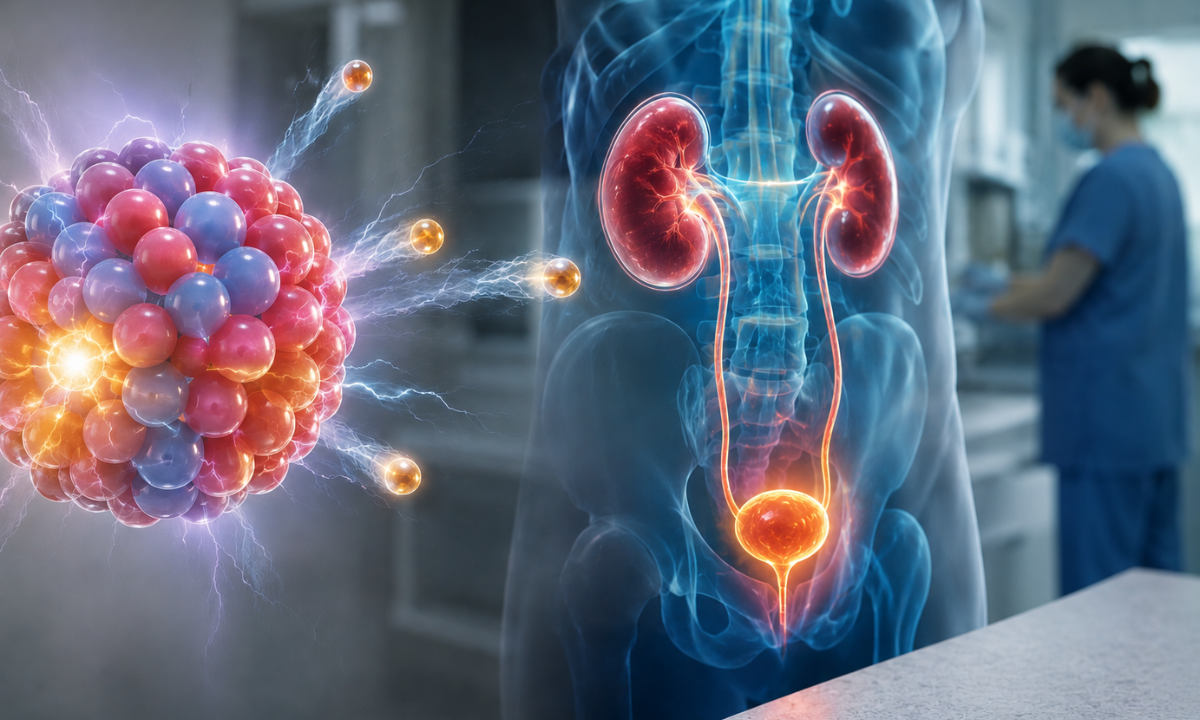
Clinical specialists calculate patient discharge and public reintegration timelines based on the combined effect of these two processes, referred to clinically as the effective half-life.
- Physical Radioactive Decay: Iodine-131 possesses a strict physical half-life of exactly 8.02 days. This is an immutable physical constant. Every eight days, the total amount of ionizing radiation emitted by the isotope spontaneously reduces by fifty percent, regardless of any physiological intervention.
- Biological Excretion: Simultaneously, the patient’s biological systems actively filter and expel the unabsorbed isotope. The renal system processes the vast majority of this clearance, excreting the isotope primarily through urine during the initial forty-eight hours post-treatment.
Secondary, minor excretion pathways include salivary gland function, perspiration, and gastrointestinal elimination.
Physiological Variables Impacting Clearance

While the physical decay rate remains mathematically constant, the biological clearance rate fluctuates based on individual patient physiology. The clinical team monitors several physiological variables to ensure optimal elimination:
- Renal Function: Optimal glomerular filtration rates within the kidneys significantly accelerate the elimination of the unbound isotope from the bloodstream.
- Systemic Hydration: Elevated and consistent fluid intake directly forces continuous renal processing. This conscious patient action minimizes the biological half-life of the radiopharmaceutical and protects the bladder mucosa from concentrated radiation exposure.
- Gastrointestinal Motility: Regular bowel movements prevent the unintended reabsorption of the isotope through the intestinal mucosa, facilitating rapid physiological clearance.
Actively managing systemic hydration and understanding the physical constants of isotope decay, patients navigate the transition phase with high clinical predictability. This dual process ensures their systemic radiation levels steadily decline to meet the safe, regulatory baselines mandated for public reintegration.
Workplace Reintegration and Clinical Safety Timelines
Resuming professional responsibilities following targeted radionuclide therapy requires a rigorous assessment of the specific occupational environment.
As ionizing radiation exposure operates according to the inverse square law, the physical distance maintained between the patient and their colleagues dictates the overall safety of the workplace. The clinical team calculates exact return dates based on the specific administered activity of the isotope and the nature of the patient’s daily physical interactions.
To ensure absolute regulatory compliance and protect public health, clinical specialists utilize standardized timelines for occupational reintegration.
Regulatory Guidelines for Occupational Reintegration
The following table outlines the standard clinical protocols for returning to various professional environments. These timelines represent the minimum required days of strict isolation following the administration of the radiopharmaceutical.
| Occupational Environment Category | Physical Proximity Parameters | Mandatory Isolation Period |
|---|---|---|
| Isolated Office Workspaces | Private offices or cubicles allowing a strict minimum distance of 2.0 meters (6 feet) from all adult colleagues. | 3 to 5 Days Post-Treatment |
| Standard Retail or Corporate Environments | Open floor plans involve transient, brief interactions with adult colleagues or customers lasting less than one hour per day. | 5 to 7 Days Post-Treatment |
| High-Risk Demographic Sectors | Healthcare facilities, primary education centers, daycares, or any environment requiring proximity to pregnant individuals or young children. | 14 to 21 Days Post-Treatment |
| 14 to 21 Days Post-Treatment | Commercial transportation operators, assembly line work, or shared continuous desks, where distancing is physically impossible. | 7 to 10 Days Post-Treatment |
Spatial and Behavioral Protocols in the Workplace
Upon the authorized return to a professional setting, patients must continue to adhere to specific behavioral protocols to minimize residual exposure to their peers.
- The Distance Imperative: Patients must consciously maintain a physical radius of approximately 2.0 meters from all colleagues during the first week of their return. Prolonged conversations in enclosed spaces, such as small conference rooms or elevators, must be strictly avoided.
- Sanitation of Shared Infrastructure: While the primary risk is airborne radiation emission, minor surface contamination is possible through sweat or saliva. Patients must thoroughly wash their hands before utilizing shared office equipment, including communal printers, breakroom appliances, or shared computer terminals.
- Hydration and Excretion Management: The requirement for elevated fluid intake continues well into the first week of workplace reintegration. Patients must ensure frequent use of restroom facilities, flushing toilets twice to ensure total mechanical clearance of any radiopharmaceutical residue from the plumbing system.
Clinical Directive for High-Risk Occupations Patients employed in pediatric care, maternity wards, or early childhood education are legally required to strictly adhere to the maximum isolation timelines. The developing thyroid glands of fetuses and young children are highly susceptible to minute fractions of radiation. Immediate disclosure of the treatment to occupational health departments is highly recommended to arrange temporary remote work or safe internal reassignment.
Strictly mapping these clinical timelines to their specific professional environment, patients ensure a seamless and biologically safe return to their occupational duties.
Travel Logistics: Navigating Public Transportation and Airports
Transitioning from the clinical environment to a primary residence or navigating professional travel requires meticulous logistical planning. As Iodine-131 emits gamma radiation, which easily penetrates standard physical barriers, patients must actively manage their spatial positioning within confined transportation networks. Furthermore, global security infrastructure is highly sensitized to this specific isotope.
To prevent inadvertent public exposure and avoid severe legal delays at security checkpoints, patients must strictly execute the following transit protocols.
Surface Transportation: Managing Confined Proximity
Whether utilizing private transport or municipal transit systems, the primary clinical objective is to limit the duration of exposure for any single individual sharing the enclosed space.
- Private Vehicles (Patient as Passenger): The patient must occupy the rear seating area on the diagonal opposite the driver to maximize physical distance. Continuous travel exceeding two hours with the same driver requires a mandatory fifteen-minute physical separation break outside the vehicle.
- Public Transit (Buses and Trains): Patients must select seating that maintains a minimum one meter radius from adjacent passengers. If the transit system is crowded and physical distancing is impossible, the patient must strictly limit their continuous travel time to under two hours.
- Commercial Ride Sharing (Taxis and App-Based Transit): Utilizing these services during the first three days post-discharge is clinically discouraged. If necessary, the diagonal rear seating protocol applies, and patients must explicitly avoid initiating small talk to prevent localized aerosolized droplet transmission of the isotope.
Aviation Infrastructure and Security Interception
Modern international and domestic airports employ highly sensitive Radiation Portal Monitors (RPMs) managed by national security agencies. These detection systems are engineered to identify microscopic traces of illicit nuclear material.
The gamma emission from a therapeutic dose of Iodine-131 will definitively trigger these alarms, occasionally up to ninety days following the initial administration.
To navigate this radiological detection infrastructure without facing detainment or extensive interrogation, patients must possess verified medical clearance.
The Mandatory Radiological Travel Document (Checklist)
Before discharge, the administering nuclear medicine physician will provide a highly specific legal document authorizing public travel. Patients must carry the original physical copy of this document on their person (not in checked luggage) for a minimum of three months.
To be considered legally valid by transportation security administrations, the document must explicitly contain the following verified data points:
- The patient’s full legal name matches their government-issued passport.
- The exact radiopharmaceutical administered (specifically denoted as Iodine-131).
- The exact administered activity (dosage) is recorded in millicuries (mCi) or megabecquerels (MBq).
- The exact date and time of the clinical administration.
- The physical signature and direct emergency contact number of the administering nuclear medicine specialist.
- The official institutional letterhead of the treating facility.
Commercial Lodging Protocols During Transit
If a patient’s travel itinerary requires an overnight stay at a hotel or commercial lodging facility during their designated isolation period, specific environmental protocols are legally mandated to protect the hospitality staff.
- Solo Occupancy: The patient must book a private room and cannot share the sleeping quarters with any other individual, regardless of their relationship.
- Housekeeping Suspension: The patient must place a “Do Not Disturb” indicator on the door for the entire duration of the stay. Daily room cleaning services are strictly prohibited to prevent staff exposure to contaminated linens or bathroom surfaces.
Upon checkout, the patient must double flush all biological waste and ensure all personal trash, specifically tissues or items containing saliva, are securely sealed in a plastic bag before disposal.
Nutritional and Metabolic Stabilization
Following the successful ablation of thyroid tissue, the patient experiences a profound physiological metabolic shift. The clinical focus immediately transitions from managing radiation safety to achieving total endocrine stabilization.
This phase requires a highly synchronized approach involving the precise reintroduction of synthetic hormone replacement therapy and specific nutritional adjustments to support systemic recovery.
To guarantee maximum cellular uptake of the radiopharmaceutical, clinical protocols deliberately elevate TSH levels for radioactive iodine treatment by temporarily suspending the patient’s synthetic thyroid hormone medication before admission. Consequently, the patient is discharged in a state of induced hypothyroidism, requiring immediate and calculated medical reversal.
The Endocrine Resumption Trajectory
Restoring metabolic baseline requires rigorous continuous blood monitoring. The clinical team tracks the exact concentration of Thyroid Stimulating Hormone (TSH) and free Thyroxine (T4) to titrate the medication dosage perfectly.
The following clinical matrix outlines the standard physiological trajectory for restoring hormone balance:
| Metabolic Status | Clinical Action & Physiological Target | |
|---|---|---|
| Phase I: Immediate Post-Treatment (Days 1 to 3) | Induced Hypothyroidism | Re-initiation of Levothyroxine (synthetic T4) exactly as prescribed by the endocrinologist. No immediate physiological changes are observed due to the drug’s long half-life. |
| Phase II: The Saturation Period (Weeks 1 to 5) | Transient Metabolic Fluctuation | The systemic circulation slowly builds a stable reserve of synthetic T4. Patients frequently experience residual fatigue and temperature dysregulation during this molecular accumulation. |
| Phase III: Diagnostic Verification (Week 6) | Approaching Stabilization | First mandatory post-treatment blood draw. The physician evaluates the blood serum to confirm if the dosage is adequate to suppress or normalize the pituitary output. |
| Phase IV: Long-Term Maintenance (Months 3+) | Complete Physiological Baseline | Achieving and permanently maintaining normal TSH levels after radioactive iodine treatment. The exact numerical target varies strictly based on the patient’s specific oncological pathology and initial risk stratification. |
Pharmacological Absorption Protocols
The efficacy of the prescribed Levothyroxine is highly dependent on gastrointestinal absorption. Patients must strictly adhere to the following daily administration rules to prevent biochemical interference:
- Absolute Fasting State: The medication must be ingested with a full glass of water exactly sixty minutes prior to consuming any food, caloric beverages, or coffee.
- Mineral Separation: Routine dietary supplements, specifically calcium carbonate and ferrous sulfate (iron), actively bind to Levothyroxine in the digestive tract. Patients must enforce a strict four-hour separation between taking their thyroid medication and ingesting these specific minerals.
Nutritional Reintegration: The Post-Ablation Diet
Before therapy, patients undergo a stringent Low Iodine Diet (LID) to starve the thyroid cells. Forty-eight hours following the radioactive administration, this restriction is completely lifted. Patients must then transition to a supportive thyroid hormone diet designed to facilitate systemic healing and support cellular metabolism.
The Post-Treatment Nutritional Matrix
| Nutritional Category | Dietary Integration | Specific Clinical Rationale |
|---|---|---|
| Iodine Reintroduction | Iodized salt, marine seafood, and pasteurized dairy products. | Restores standard systemic iodine reservoirs depleted during the pre-treatment fasting phase. |
| Selenium Optimization | Brazil nuts, sunflower seeds, and wild-caught fish. | Selenium is a critical biological cofactor required by the liver to efficiently convert inactive synthetic T4 into active T3 for cellular energy utilization. |
| Goitrogen Management | Broccoli, cauliflower, cabbage, and soy products. | While highly nutritious, raw cruciferous vegetables contain compounds that can mildly interfere with hormone synthesis. Patients are advised to thoroughly cook these vegetables to neutralize the goitrogenic enzymes. |
| High-Fibre Carbohydrates | Whole grains, legumes, and root vegetables. | Hypothyroidism frequently induces severe gastrointestinal motility delays (constipation). High-fibre intake counteracts this physiological slowing while the synthetic hormones take effect. |
Strictly monitoring blood serum levels and strategically managing nutritional intake, patients systematically eliminate post-treatment fatigue and successfully restore their long-term metabolic health.
Why Choose Kiran PET CT for Molecular Therapies
Executing targeted radionuclide therapies and managing the subsequent outpatient recovery requires an institution equipped with advanced dosimetry capabilities and rigorous radiation safety protocols. Kiran PET CT operates as a premier diagnostic and therapeutic center, providing the necessary clinical infrastructure for safe and effective molecular interventions in Bangalore.
The institution guarantees clinical excellence through several highly specific operational advantages:
- Comprehensive Theranostics: The facility provides a true unified clinical environment. Patients receive precise diagnostic staging via advanced PET/CT and seamlessly transition to targeted therapeutic interventions, such as Radioactive Iodine or Lutetium-177 therapies, under a single institutional roof.
- Advanced Diagnostic Infrastructure: Equipped with the next-generation GE-DISCOVERY IQ GEN 2 PET/CT system, the center provides sub-millimeter anatomical mapping and true metabolic discovery, ensuring the therapeutic isotope is targeted with absolute precision.
- Specialized Clinical Leadership: The administration of radioactive isotopes is strictly governed by a highly credentialed board of nuclear medicine specialists and radiologists, directed by Dr Kiran Kumar J K and Dr Manoj Devanathan. This ensures all discharge protocols and isolation timelines are calculated with absolute accuracy.
The institution is engineered to provide highly accurate, same-day diagnostic reports. This rapid turnaround significantly reduces the waiting period for critical medical decision-making and accelerates the initiation of necessary post-treatment hormone therapies.
Conclusion
Navigating the outpatient landscape following thyroid isolation treatment requires a deliberate, highly disciplined approach to radiation safety and metabolic monitoring. By strictly adhering to the mandated physical isolation timelines, managing public transit logistics, and complying with endocrine stabilization protocols, patients effectively protect public health while securing their own long-term recovery.
The transition from active cellular ablation to physiological normalization is highly predictable when guided by expert clinical oversight. Patients requiring advanced molecular imaging or targeted radionuclide therapy should consult the nuclear medicine specialists at Kiran PET CT to establish a precise, individualized treatment and recovery pathway.