Patients requiring advanced molecular imaging frequently seek a PSMA PET Scan in Bangalore to evaluate malignant progression. When diagnostic results indicate the necessity for targeted radionuclide intervention, specialists may recommend treatments such as Lutetium-177 PSMA Therapy for specific oncological presentations.
Those who are undergoing thyroid ablation, securing treatment at the Best PET Scan Centre in Bangalore ensures access to precision clinical protocols. Understanding the specific physiological recovery timeline after nuclear treatment is an absolute prerequisite for ensuring medical safety and maximizing therapeutic efficacy.
The administration of radioactive iodine represents a highly sophisticated clinical intervention for managing hyperthyroidism and differentiated thyroid carcinoma. Unlike standard pharmacological approaches, nuclear medicine utilizes radioactive isotopes to deliver targeted ionizing radiation directly to hyperactive or malignant cellular structures.
This precise physiological targeting maximizes cellular eradication while simultaneously minimizing the biological impact on adjacent healthy tissues. Establishing a definitive understanding of the post-treatment biological processes ensures patients can navigate their recovery safely and effectively.
Medical Disclaimer
The information provided in this clinical guide is strictly for educational purposes and does not constitute professional medical advice, diagnosis, or treatment. Always seek the direct guidance of a qualified nuclear medicine physician, oncologist, or endocrinologist regarding specific medical conditions and treatment protocols. Never disregard professional medical advice or delay seeking clinical evaluation based on the contents of this publication.
Key Points at a Glance
- Utilizing radioactive iodine to systematically ablate abnormal thyroid tissue.
- Understanding the biological half-life and systemic elimination of the administered isotope.
- Implementing mandatory radiation precautions to protect family members and the general public.
- Highlighting the critical role of continuous hydration in facilitating rapid isotopic clearance from the renal system.
The Mechanics of Radioactive Iodine
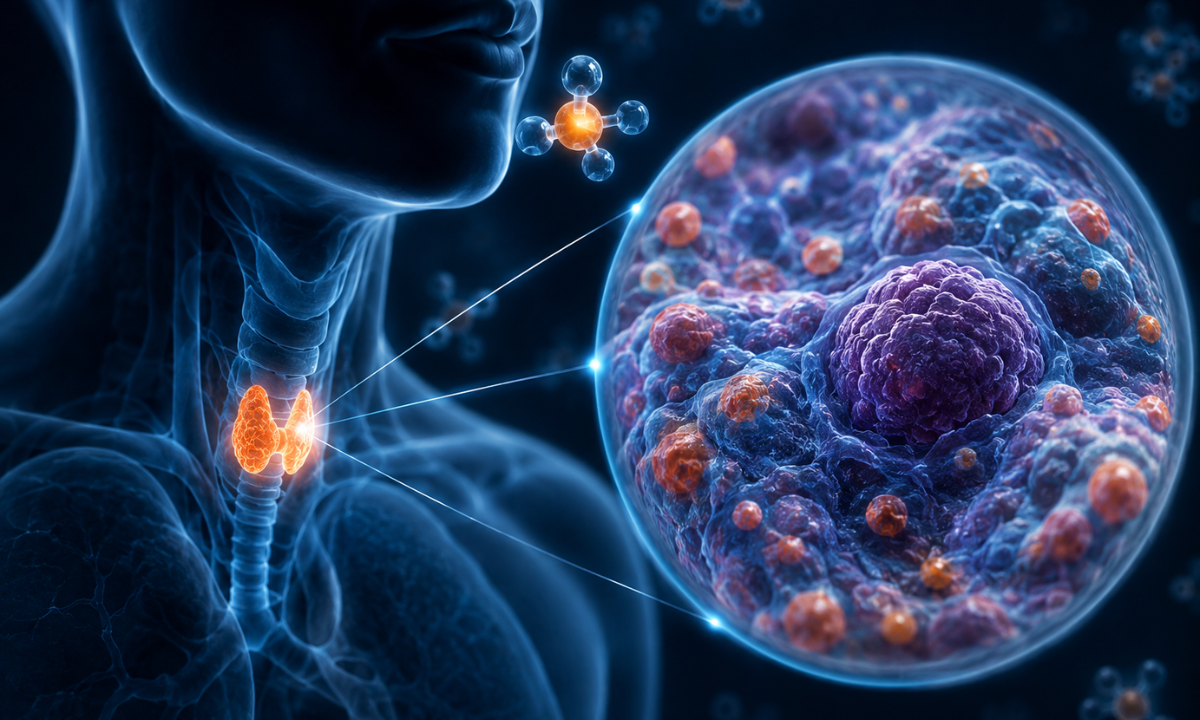
Understanding the precise biological mechanism of Thyroid treatment with radioactive iodine requires a thorough examination of cellular transport systems and radioisotope decay.
The human thyroid gland possesses a highly specific physiological characteristic. It is the primary anatomical structure capable of actively absorbing and concentrating circulating iodine from the bloodstream, a function strictly required for the synthesis of essential thyroid hormones.
Nuclear medicine exploits this exclusive metabolic pathway through the administration of the radioactive isotope Iodine-131.
When administered orally, this radiopharmaceutical enters the systemic circulation and is rapidly sequestered by the thyroid tissue via specialized transmembrane proteins known as sodium-iodide symporters. Because malignant differentiated thyroid cells and hyperactive thyroid tissues retain this inherent absorptive capability, they actively concentrate the radioactive isotope directly within their intracellular matrix.
The Dual Emission Profile of Iodine-131
Once localized within the target cellular tissue, Iodine-131 undergoes spontaneous radioactive decay. This biophysical decay process emits two distinct forms of ionizing radiation, with each form serving an entirely different clinical function.
| Radiation Type | Physical Characteristic | Clinical Function and Biological Impact |
|---|---|---|
| Beta Radiation (Particles) | Travels a highly restricted maximum distance of approximately 1 to 2 millimeters within human tissue. | This is the primary therapeutic component. The extremely short tissue penetration ensures the radiation dose remains strictly confined within the targeted thyroid volume. The beta particles induce severe DNA double-strand breaks within the concentrated cells, triggering cellular apoptosis and targeted tissue necrosis. |
| Gamma Radiation (Photons) | Highly penetrating emissions that easily pass through human tissue and exit the body. | This component provides no therapeutic ablation. However, the existing gamma rays allow nuclear medicine physicians to utilize a gamma camera or SPECT/CT scanner to visually map the precise anatomical distribution of the isotope. This diagnostic imaging confirms the clinical success of the targeted cellular uptake. |
The Step-by-Step Pathway to Cellular Ablation
The actual eradication of the hyperactive or malignant tissue occurs through a highly localized and continuous biophysical sequence:
- Intracellular Accumulation: The sodium-iodide symporters actively pull the radioactive isotope directly into the follicular cells of the thyroid gland or the metastatic thyroid carcinoma cells.
- Targeted Ionization: The continuously emitted beta particles strip electrons from adjacent intracellular molecules, generating highly reactive free radicals precisely within the targeted tissue.
- Genetic Degradation: These localized free radicals aggressively compromise the cellular DNA. This creates catastrophic structural failures that the malignant or hyperactive cells are biologically incapable of repairing.
- Progressive Volume Reduction: Over the subsequent weeks following administration, the lethally irradiated cells undergo programmed cellular death. This physiological process results in the progressive shrinkage and functional neutralization of the targeted thyroid mass.
Successfully utilizing this highly specific cellular targeting mechanism, clinical specialists achieve precise physiological ablation while simultaneously minimizing radiation exposure to surrounding healthy anatomical structures in the cervical region.
The Initial 72 Hours Post-Treatment
The immediate recovery timeline after nuclear treatment is defined by the acute biophysical interaction between the administered isotope and the patient’s physiological systems. Following the oral administration of Iodine-131, the initial 72 hours represent the period of peak systemic radioactivity.
During this highly critical window, the radiopharmaceutical is actively circulating through the bloodstream, localizing within the targeted thyroid tissue, and being systematically filtered for excretion by the renal system.
Understanding the precise clinical expectations during this acute phase is essential for optimal medical management and patient comfort.
Immediate Physiological Responses
As the radioactive isotope induces targeted cellular ablation, patients may experience specific, predictable physiological reactions. These are standard biological responses to localized ionizing radiation and typically resolve without severe clinical intervention.
- Radiation Thyroiditis: Patients frequently report localized tenderness, mild swelling, or a distinct sensation of pressure in the anterior cervical region. This is a direct inflammatory response caused by the progressive destruction of the targeted thyroid cells.
- Transient Sialadenitis: The salivary glands possess specific transmembrane proteins identical to those in the thyroid gland. Consequently, they absorb a minor fraction of the radioactive isotope. This can induce temporary salivary gland inflammation, resulting in localized discomfort and a temporary alteration in gustatory perception.
- Gastrointestinal Distress: A minor percentage of the ingested isotope interacts with the gastric mucosa before complete systemic absorption, occasionally inducing acute, transient nausea strictly within the first 24 hours.
- Hormonal Fluctuation: The rapid destruction of hyperactive or malignant thyroid tissue can release pre-synthesized thyroid hormones directly into the bloodstream. This physiological event may cause a temporary exacerbation of baseline symptoms, including an elevated heart rate or acute diaphoresis.
Isotope Clearance and Effective Half-Life
Clinical management during the initial 72 hours relies heavily on the metric of effective half-life. While the absolute physical half-life of Iodine-131 is approximately eight days, the human body actively excretes the unbound isotope, significantly reducing the duration of systemic radiation.
To understand the rapid systemic clearance during the acute phase, clinical oncologists monitor the primary pathways of physiological elimination:
| Excretion Pathway | Clinical Significance | Peak Activity Window |
|---|---|---|
| Renal Excretion (Urine) | Represents the primary mechanism for eliminating circulating, unbound radioactive iodine. This pathway accounts for over 80 percent of the total systemic isotopic clearance. | The initial 48 hours post-administration. |
| Gastrointestinal Excretion (Feces) | Serves as a secondary elimination pathway for the unabsorbed fraction of the oral radiopharmaceutical. | 24 to 72 hours post-administration. |
| Exocrine Secretion (Saliva and Sweat) | Accounts for a highly marginal percentage of total clearance but fundamentally dictates specific external hygiene and isolation protocols. | The initial 72 hours post-administration. |
As the vast majority of the unbound isotope is eliminated via the renal system within the first three days, this precise acute phase requires absolute adherence to standardized clinical protocols.
The nuclear medicine team utilizes this specific clearance timeline to establish the exact parameters for patient isolation, environmental safety, and subsequent diagnostic monitoring.
Mandatory Radiation Precautions

As Iodine-131 emits penetrating gamma radiation and is actively excreted through bodily fluids, the patient becomes a temporary, localized source of ionizing radiation.
To completely prevent secondary radiation exposure to family members and the general public, clinical oncologists mandate strict adherence to specific safety protocols. Implementing these Radiation precautions is a fundamental medical and ethical requirement during the acute recovery phase.
The required duration for these protocols depends entirely on the specific administered dose and the patient’s individual physiological clearance rate. The nuclear medicine team provides highly specific timelines upon discharge, categorizing safety measures into spatial isolation, fluid management, and demographic protection.
Spatial and Proximity Protocols
The fundamental biophysical principle of radiation safety relies on maximizing physical distance and minimizing total exposure time.
- Isolation Requirements: Patients must maintain a minimum physical distance of six feet (approximately two meters) from all other individuals for the initial three to five days post-treatment.
- Sleeping Arrangements: Co-sleeping is strictly prohibited. Patients must sleep in a completely isolated bedroom.
- Public Confinement: Attendance at public gatherings, utilization of public transportation, and returning to a shared professional workspace must be temporarily suspended until the clinical team provides explicit clearance based on residual radioactivity levels.
Biological Contamination Management
As previously established, the renal, gastrointestinal, and exocrine systems excrete the vast majority of the unbound radioactive isotope. Consequently, preventing fluid cross-contamination within the household is a critical clinical priority.
| Protocol Category | Specific Clinical Directive | Rationale for Precaution |
|---|---|---|
| Restroom Hygiene | Utilize a strictly dedicated, isolated restroom if available. Patients must sit during urination to prevent localized splashing and must flush the toilet two consecutive times with the lid completely closed. | To definitively contain radioactive bodily fluids and prevent the microscopic contamination of shared bathroom surfaces. |
| Dietary Utensils | Utilize strictly separate, dedicated dining utensils, plates, and glassware. Alternatively, disposable dining materials may be utilized and discarded in a dedicated, isolated waste receptacle. | To completely prevent the transfer of radioactive isotopes excreted through localized salivary secretions. |
| Personal Laundry | Wash all patient clothing, bed linens, and towels entirely separately from the household laundry. Run the washing machine on a full, hot water cycle. | To remove radioactive isotopes excreted through cutaneous sweat glands and prevent the cross-contamination of family garments. |
Specific demographics possess a vastly heightened biological sensitivity to ionizing radiation due to their rapid rates of cellular division.
- Pediatric Avoidance: Complete physical isolation from infants and young children is absolutely mandatory. Direct physical contact, including holding or hugging, is strictly prohibited during the active clearance phase.
- Pregnancy Precautions: Pregnant women must not reside in the same physical environment as the patient during the initial isolation period. The developing fetus is highly susceptible to severe structural complications resulting from external gamma radiation exposure.
Patients can ensure the absolute physical safety of their immediate contacts while their internal physiological systems process the necessary clinical intervention.
The Role of Proper Hydration
Following the administration of radioactive iodine, the human body initiates an immediate physiological response to eliminate the unabsorbed fraction of the isotope.
As established in the acute recovery phase, the renal system is responsible for processing over 80 percent of this systemic clearance. Consequently, maintaining proper hydration is not merely a supportive measure; it is a fundamental clinical requirement that directly dictates the safety and efficiency of the recovery timeline after nuclear treatment.
The proactive management of fluid intake serves multiple critical biological functions during the initial stages of targeted cellular ablation. By intentionally increasing fluid consumption, patients actively manipulate their metabolic excretion rates to protect surrounding healthy anatomical structures.
The Biological Mechanics of Fluid Optimization
- Accelerated Renal Filtration: Continuous and elevated fluid intake maximizes the glomerular filtration rate within the kidneys.
This rapid physiological processing ensures the unbound radioactive isotope is continuously extracted from the bloodstream and deposited into the bladder for physical excretion.
- Minimizing Bladder Mucosa Exposure: The urinary bladder functions as a temporary anatomical reservoir for the radioactive urine.
Infrequent urination allows the concentrated isotope to irradiate the localized bladder mucosa over extended intervals. High fluid consumption forces frequent voiding, which drastically reduces the total cumulative radiation dose absorbed by the internal bladder wall.
- Salivary Gland Protection: Adequate systemic hydration maintains a continuous, active salivary flow.
This specific physiological action prevents the radioactive isotope from stagnating within the parotid and submandibular glands, thereby significantly reducing the clinical risk of acute radiation-induced sialadenitis.
Standardized Clinical Directive for Fluid Intake
Patients are strictly directed to consume a minimum of three to four liters of clear fluids daily during the initial 72 hours post-treatment. This fluid intake must be distributed consistently throughout the waking hours to ensure a continuous, uninterrupted physiological filtration mechanism.
To achieve optimal clearance, patients should prioritize purified water and clear, non-caffeinated liquids. Caffeinated beverages and heavily processed diuretic liquids must be strictly limited, as these substances can induce unintended cellular dehydration and actively counteract the required physiological flushing process.
Strictly adhering to these hydration protocols, patients take active control over their internal radiation clearance, ensuring a safe and rapid progression through the acute recovery phase.
Why Choose Kiran PET CT for Advanced Molecular Therapies
Selecting the appropriate clinical facility for nuclear medicine interventions is critical for ensuring optimal physiological outcomes and precise diagnostic monitoring.
- State-of-the-Art Imaging Technology: The facility utilizes the advanced GE-DISCOVERY IQ GEN 2 PET/CT system, ensuring high-resolution metabolic mapping and sub-millimeter diagnostic precision.
- Specialized Clinical Expertise: The institution is directed by highly credentialed nuclear medicine physicians, providing global standard oncological and diagnostic care.
- Comprehensive Theranostics: Beyond diagnostic imaging, the center provides end-to-end therapeutic nuclear medicine interventions, ensuring seamless continuity of clinical care from initial staging to targeted ablation.
- Rapid Result Acquisition: The clinical workflow is explicitly optimized to deliver accurate, reconstructed 3D diagnostic reports within rapid turnaround times, facilitating immediate medical decision-making for the referring oncology team.
Kiran PET CT operates as a premier molecular imaging and Theranostics facility in Bangalore, dedicated to precision oncology and specialized radionuclide therapies.
Conclusion
The administration of radioactive iodine remains a highly effective clinical modality for achieving targeted cellular ablation in complex thyroid pathologies. By strictly adhering to the mandated radiation precautions and proactively managing systemic hydration, patients can navigate the acute recovery phase safely and efficiently, protecting both themselves and the public demographic.
The ultimate clinical success of this molecular intervention relies heavily on continuous medical monitoring. Patients must maintain all scheduled follow-up appointments and subsequent diagnostic imaging sessions to verify complete physiological clearance and confirm the total eradication of the targeted tissue.
To explore advanced molecular imaging protocols or specialized nuclear therapies, consult directly with the clinical experts at Kiran PET CT to establish a personalized medical pathway.