As a doctor at Kiran PET, I often meet patients who are confused about how advanced imaging tests help identify hidden medical conditions inside the body. One of the most useful tools we rely on for inflammation detection is a PET scan.
When patients come for a PET scan in Bangalore, they usually want clarity on how this scan works, why it is recommended and what it can reveal about their health. Inflammation can occur anywhere in the body, and a PET scan provides insights that traditional tests sometimes miss.
Understanding What Inflammation Means
To appreciate how a PET scan works, it’s important to understand what inflammation means. In simple terms, inflammation is the body’s natural response to injury, infection or irritation. It helps the body heal, but when inflammation becomes chronic or severe, it can lead to complications.
Different parts of the body experience inflammation differently:
- Inflammation symptoms may include swelling, redness, heat, pain or loss of function.
- Inflammation in body organs often goes unnoticed until it becomes severe.
- Some patients experience organ-specific issues like inflammation in the liver, inflammation of the lungs or inflammation in the stomach, each with different clinical signs.
Understanding the nature of inflammation helps us choose the right diagnostic approach.
Why Inflammation Occurs: Medical Perspective
Many patients ask why inflammation occurs. The reasons may include infections, immune disorders, injuries, toxins or chronic diseases. When tissues are damaged or irritated, immune cells rush to the site, producing heat and metabolic changes. These metabolic changes are exactly what PET scans detect.
How Inflammation Occurs and How It Can Be Detected
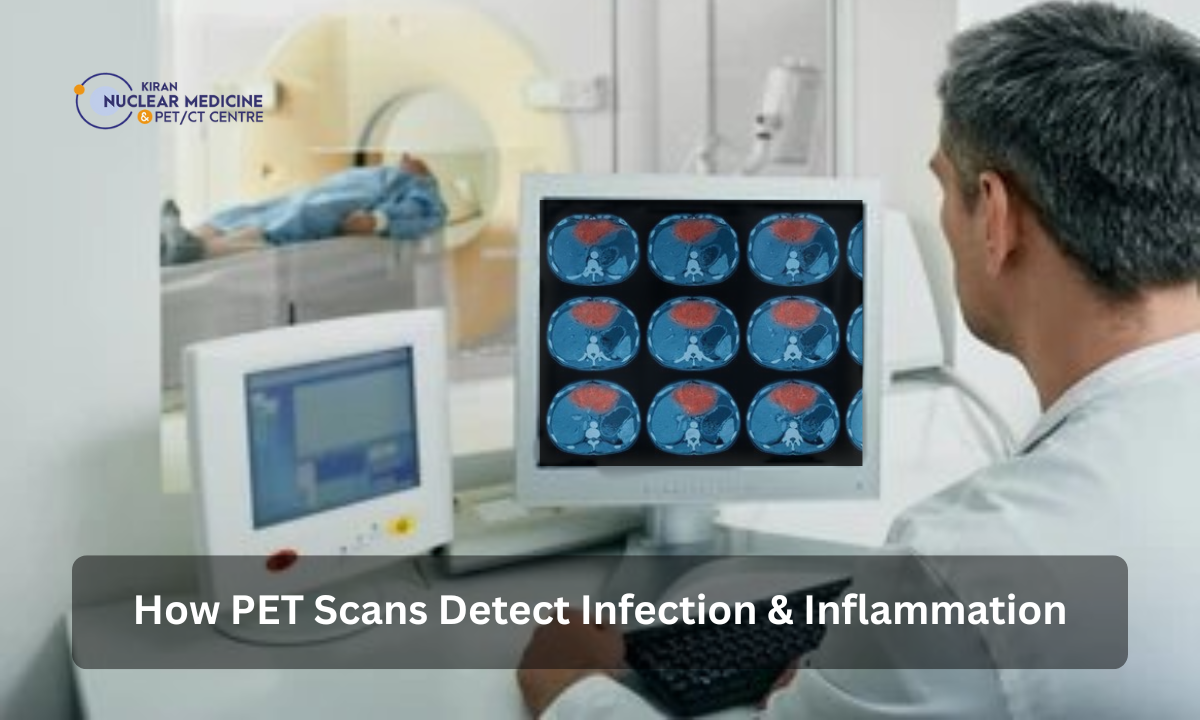
To understand how inflammation occurs, imagine the body increasing blood flow and immune activity in a region. These active cells consume more glucose. PET scans use a radioactive tracer (commonly a glucose-like molecule) that gets absorbed more in areas where cells are highly active.
This process allows PET imaging to highlight abnormal metabolic activity, making it excellent for inflammation detection even in early stages.
PET Scan: A Powerful Tool for Detecting Infections and Inflammation
PET scans have become crucial in detecting infectious and inflammatory conditions. They help identify:
- Early inflammatory changes
- Hidden infections deep inside the body
- Areas where inflammation persists chronically
- Organ-specific inflammatory activity
This makes PET highly valuable for diagnosing lung infections, joint inflammation, abdominal conditions and systemic inflammatory diseases.
Inflammation Symptoms and When a PET Scan is Needed
Patients with unexplained inflammation symptoms such as fever, fatigue, swelling, breathlessness or abdominal pain may require a PET scan when other tests fail to identify the cause.
Some conditions where PET imaging is extremely helpful include:
- Autoimmune disorders
- Lung infections or inflammation in the lungs
- Chronic liver issues, such as liver inflammation
- Gastric or bowel conditions causing inflammation stomach
- Systemic infections that spread throughout the body
PET helps determine the severity and exact location of inflammation.
Organ-Specific Inflammation and How PET Detects It
1. Inflammation Liver
The liver may show altered metabolic activity due to infection, fatty liver disease or autoimmune conditions. PET helps spot abnormal areas needing further evaluation.
2. Inflammation in Lungs
Lung inflammation is common in infections, tuberculosis and interstitial diseases. PET scans highlight inflamed lung regions with high metabolic activity.
3. Inflammation Stomach or Abdomen
Digestive issues, infections or inflammatory bowel disorders often appear clearly on PET imaging when the affected tissues show increased uptake.
4. Widespread Inflammation in the Body
Some patients develop systemic inflammation. PET scans help identify all affected regions, ensuring accurate diagnosis and treatment planning.
How PET Scan Detects Infections
Infections increase metabolic activity due to immune cell concentration. The PET radiotracer accumulates in these high-activity zones, allowing us to pinpoint infection sites. This is especially useful when infections are hidden deep in the body or involve multiple organs.
Benefits of PET Imaging in Inflammation Cases
- Detects inflammation earlier than many other scans
- Shows metabolic activity, not just structural changes
- Helps differentiate between infection, inflammation and tumor activity
- Guides treatment planning
- Monitors response to therapy
- Provides full-body imaging in a single scan
For complex cases, PET gives clarity when other diagnostic tools fail.
Final Thoughts
Understanding inflammation detection is essential for early diagnosis and effective treatment. As a doctor at Kiran PET, I have seen how PET imaging transforms patient care, especially when inflammation or infection is difficult to locate.
Whether a patient has inflammation symptoms or widespread inflammation in the body, a PET scan provides a detailed and accurate metabolic map of the affected regions.
For anyone seeking advanced diagnostic clarity, a PET Scan in Bangalore is one of the most reliable ways to understand why inflammation occurs, how inflammation occurs and how it is affecting the body.
PET imaging is non-invasive, highly accurate and extremely beneficial for guiding further medical care. It remains one of the most powerful tools we use to detect hidden infections, monitor chronic inflammation and support comprehensive treatment decisions.
FAQs
1. How Does Inflammation Show On a PET Scan?
Inflamed tissues have higher metabolic activity. The PET tracer accumulates in these areas, making them appear brighter or more active on the scan.
2. What Is the Mechanism of Action of a PET Scan?
A PET scan uses a radiotracer that mimics glucose. Active or inflamed cells absorb more of this tracer, revealing areas of abnormal metabolic activity.
3. Which Scan Is Best for Inflammation?
PET scans are highly effective because they detect metabolic changes before structural changes appear. They are particularly useful in complex inflammatory conditions.
4. Does Inflammation Show On a Scan
Yes. Depending on the severity and organ involved, inflammation shows clearly on PET scans due to increased tracer uptake, indicating heightened immune activity.