Some neuroendocrine tumours carry receptors on their surface called somatostatin receptors. These receptors can be targeted by specially designed radioactive medicines, which is the basis of Lutetium-177 DOTATATE therapy. Before this treatment is considered, doctors need to know whether a patient’s tumours actually express these receptors, and that is where PET/CT for Lutetium-177 DOTATATE therapy plays a central role.
A somatostatin receptor PET/CT scan uses a closely related diagnostic tracer to show where receptor-positive disease is located and how strongly it takes up the tracer. These findings help the treating team decide whether targeted therapy may be appropriate. However, imaging is only one part of the assessment. A favourable scan does not by itself guarantee eligibility or a particular response to treatment. This guide explains how the scan works, what doctors look for and what happens next. You can learn more about our PET/CT scan in Bangalore services.
What Is Lutetium-177 DOTATATE Therapy?
Understanding Neuroendocrine Tumours (NETs)
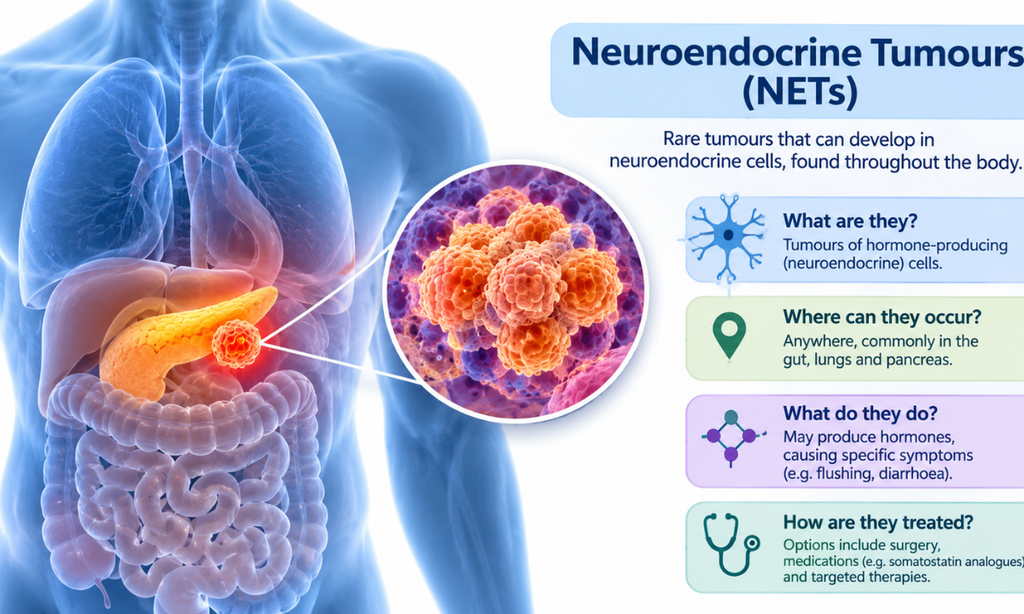
Neuroendocrine tumours develop from specialised cells that share features of nerve and hormone-producing cells. They can arise in many parts of the body, most commonly the small intestine, pancreas, stomach, rectum and lungs. Their behaviour varies widely: some grow very slowly over many years, while others are more aggressive. Doctors describe this using the tumour’s grade, often based on a marker called Ki-67, along with its stage and location.
How Lu-177 DOTATATE Targets Somatostatin Receptors
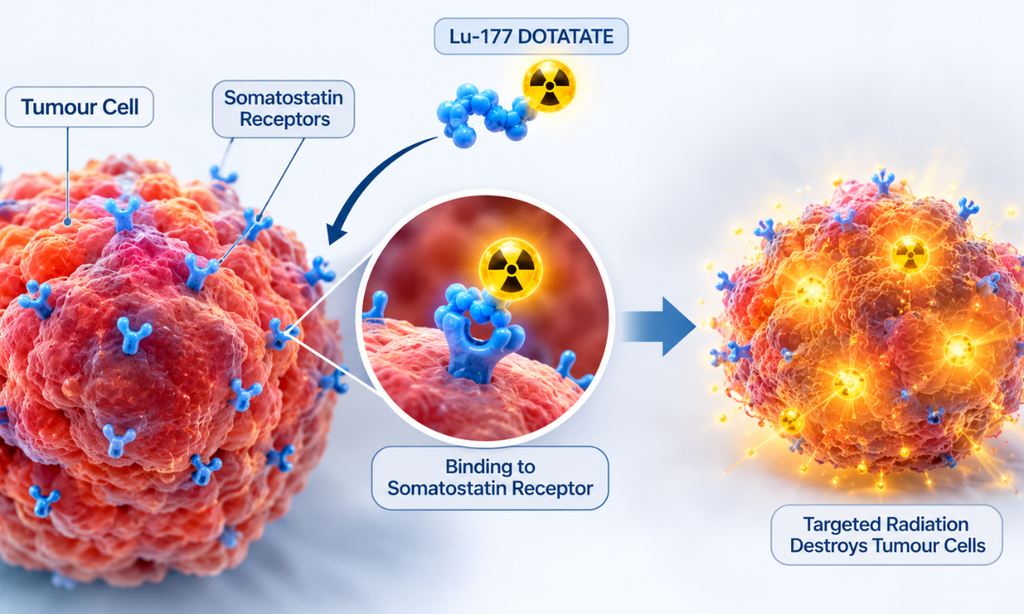
Lu-177 DOTATATE combines two parts: a molecule that closely resembles the hormone somatostatin, and a radioactive isotope called Lutetium-177. When given through a drip, the molecule seeks out and binds to somatostatin receptors on tumour cells. The attached Lutetium-177 then releases radiation over a very short distance, damaging the tumour cells while limiting exposure to surrounding tissue.
What Is Peptide Receptor Radionuclide Therapy (PRRT)?
This approach is known as peptide receptor radionuclide therapy, or PRRT. It is a form of targeted radionuclide treatment used for appropriately selected patients with somatostatin receptor-positive neuroendocrine tumours. It is also a clear example of how theranostics combines diagnosis and treatment: a diagnostic scan first confirms the target, and a matching therapy then treats it.
What Is the Role of PET/CT Before Lu-177 DOTATATE Therapy?
How Somatostatin Receptor PET Imaging Works
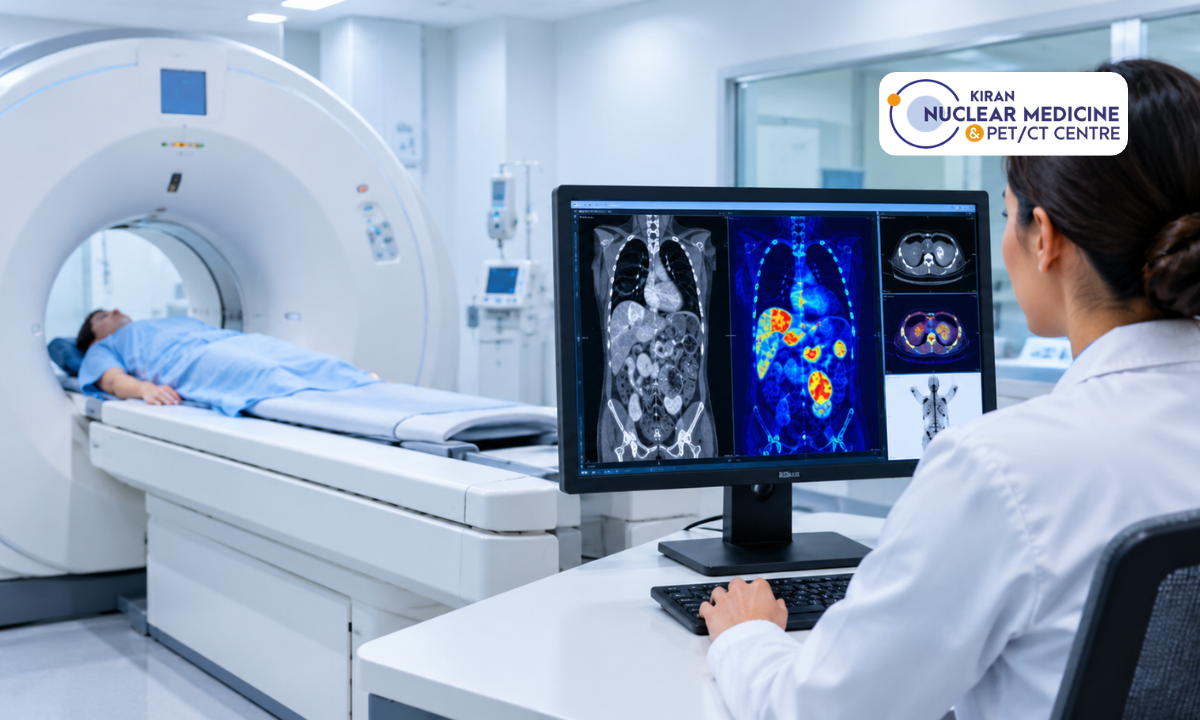
For the scan, a small amount of a diagnostic radiotracer is injected into a vein. This tracer binds to somatostatin receptors in the same way as the therapeutic medicine. The PET scanner detects where the tracer collects, while the CT component shows the precise anatomical location of each area. Together, they create a detailed map of receptor-positive disease throughout the body.
Understanding Ga-68 DOTATOC and Other DOTA-Based Tracers
Several related tracers are used for somatostatin receptor imaging, including Ga-68 DOTATOC, Ga-68 DOTATATE and Ga-68 DOTANOC. They differ slightly in how they bind to the various receptor subtypes, but all serve the same broad purpose. The choice of tracer depends on availability, local protocols and the clinical question, and is decided by the referring and imaging teams rather than by any single fixed rule.
Why Receptor Expression Matters for Treatment Planning
Lu-177 DOTATATE can only work if it can reach and bind to the tumour cells. If the PET/CT scan shows strong tracer uptake in the tumours, this suggests the therapy is likely to reach them as well. If uptake is weak or absent in significant areas of disease, the treatment may be less effective there, and the team may consider other options.
How Doctors Assess Whether a Patient May Be Suitable for PRRT

PET/CT Findings and Tumour Receptor Expression
Specialists look at how intensely the tumours take up the tracer, often comparing this with normal organs such as the liver. They also check whether all known sites of disease show sufficient uptake, or whether some areas do not.
Disease Extent and Previous Treatment
The team considers how widespread the disease is, whether it has been progressing, and which treatments the patient has already received, such as surgery, somatostatin analogue injections, targeted medicines or chemotherapy. PRRT is usually considered within a broader treatment plan rather than in isolation.
Kidney Function, Blood Counts and General Health
Because the treatment is cleared through the kidneys and can affect the bone marrow, blood tests to check kidney function and blood counts are an essential part of the assessment. The patient’s general health and ability to manage treatment are also taken into account.
Why a PET/CT Scan Alone Cannot Confirm Eligibility
The final decision combines imaging with pathology reports, tumour grade, laboratory results, medical history and the patient’s own preferences. This is why suitability is decided by a specialist team, usually including nuclear medicine physicians and oncologists, rather than by the scan report alone.
What Happens Before, During and After the PET/CT Scan?
Preparing for a Somatostatin Receptor PET/CT
Your imaging centre will give you specific instructions. Tell the team about all your medicines, particularly somatostatin analogue injections such as octreotide or lanreotide, as the timing of these may need to be planned around the scan. Bring previous scan reports and images, pathology reports and a summary of your treatment history.
What Happens on the Day of Imaging
The tracer is given through a small injection into a vein. After a waiting period to allow the tracer to distribute through the body, you lie on the scanner bed while the images are taken. The scan itself is painless, and the team will explain the timings for your appointment.
How Doctors Interpret the Results
A nuclear medicine specialist reviews the images carefully, assessing where the tracer has collected and how strongly. The findings are interpreted alongside your clinical information and any previous scans.
What Happens After the Scan?
A report is prepared and sent to your referring doctor, who will discuss the results with you and plan the next steps. Unless advised otherwise, most people can return to their usual activities after the scan.
What Are the Benefits and Limitations of PET/CT in Treatment Planning?
Identifying Target-Expressing Disease
Somatostatin receptor PET/CT provides information about tumour biology that conventional CT or MRI cannot show on their own. It can reveal small areas of receptor-positive disease and help confirm whether the treatment target is present.
Supporting Personalised Treatment Decisions
By showing where the target is present and how strongly, PET/CT helps the multidisciplinary team tailor treatment to the individual patient rather than applying the same approach to everyone.
Understanding False Positives, False Negatives and Imaging Limitations
Some normal tissues and non-cancerous conditions, such as inflammation, can also take up the tracer. Conversely, some tumours, particularly higher-grade ones, may express few receptors and appear less clearly. In selected cases, doctors may recommend an additional scan such as FDG PET/CT to look for disease that does not express somatostatin receptors. This is why results are always interpreted in clinical context.
What Happens If Lu-177 DOTATATE Therapy Is Recommended?
Specialist Review and Treatment Planning
If the assessment supports treatment, the nuclear medicine and oncology teams will discuss the expected benefits, possible side effects and alternatives with you before you decide. Detailed information is available on our Lutetium-177 DOTATATE therapy page.
Treatment Sessions and Monitoring
Treatment is usually given as a series of intravenous infusions spaced several weeks apart, often alongside an amino acid infusion to help protect the kidneys. Blood tests are repeated between cycles to monitor kidney function and blood counts. The NETTER-1 trial reported improved progression-free survival with Lu-177 DOTATATE in patients with advanced midgut neuroendocrine tumours, which helped establish its role in carefully selected patients.
Follow-Up and Response Assessment
Follow-up may include clinical reviews, blood tests and further imaging, sometimes including a repeat somatostatin receptor PET/CT, to see how the disease has responded. For a step-by-step account of the treatment journey, read what to expect during Lutetium-177 therapy.
Conclusion
Somatostatin receptor PET/CT is a central part of deciding whether Lutetium-177 DOTATATE therapy may be suitable. It shows whether tumours express the receptors the treatment targets and how widely the disease has spread. On its own, though, the scan does not determine eligibility. That decision depends on a complete clinical assessment, including tumour grade, previous treatment, kidney function, blood counts and overall health.
If your specialist has recommended a somatostatin receptor PET/CT, or you would like to understand more about the imaging involved in PRRT assessment, contact Kiran PETCT at our Banashankari or Indira Nagar centre in Bangalore to discuss your imaging requirements.
Frequently Asked Questions
Is a DOTATOC PET/CT scan the same as a DOTATATE PET/CT scan?
They are closely related but not identical. Both use Ga-68 linked to a somatostatin-like molecule, and both are used to image somatostatin receptor-positive tumours. They differ slightly in how they bind to receptor subtypes. Your doctors will choose the tracer based on availability and clinical need.
Does a positive PET/CT scan mean I am eligible for Lu-177 DOTATATE therapy?
Not automatically. Adequate tracer uptake is an important requirement, but eligibility also depends on tumour grade, disease extent, previous treatments, kidney function, blood counts and general health. A specialist team makes the final decision.
Is PET/CT used to monitor neuroendocrine tumours after treatment?
It can be. Somatostatin receptor PET/CT and other imaging may be used during follow-up to assess how the disease has responded and to detect any changes. The type and timing of follow-up scans depend on your treating team’s plan.
What reports should I bring for a PRRT consultation?
Bring your recent PET/CT and other scan reports with images, pathology and biopsy reports including tumour grade, recent blood test results, a list of current medicines and a summary of previous treatments. Complete records help the team assess suitability accurately.
Who decides whether Lu-177 DOTATATE therapy is appropriate?
The decision is usually made by a multidisciplinary team that includes nuclear medicine physicians and oncologists, often with input from surgeons and other specialists. They review your imaging, reports and overall health, then discuss the options with you.
References