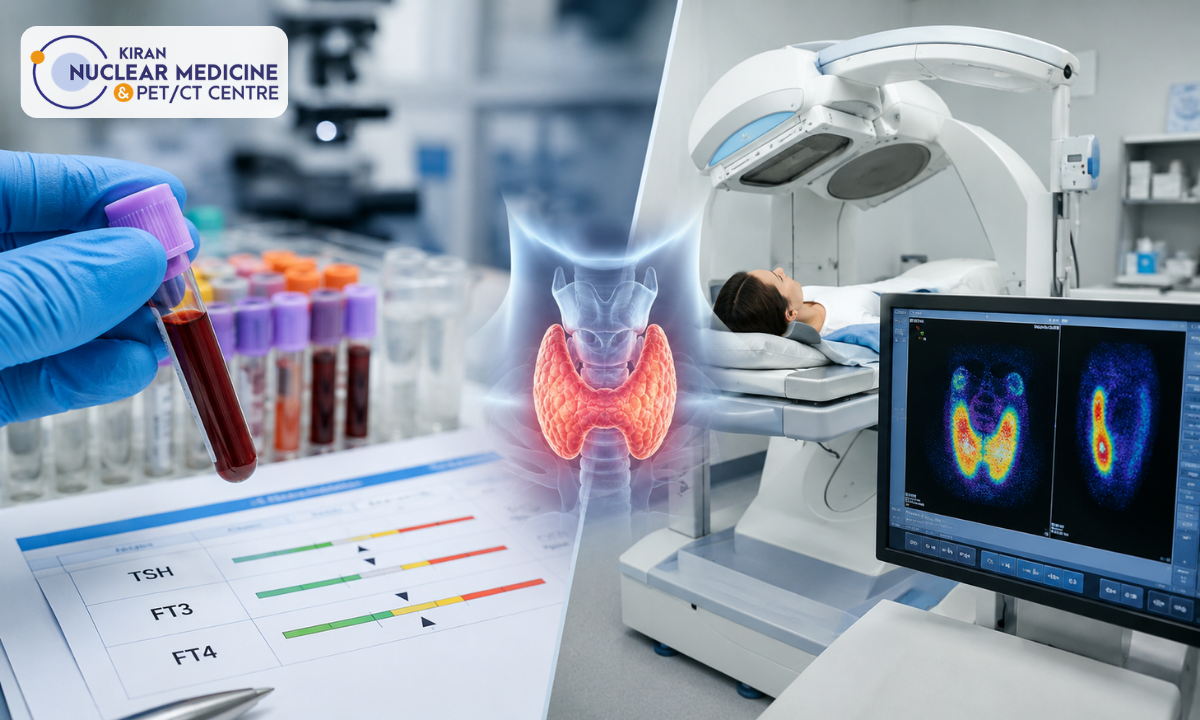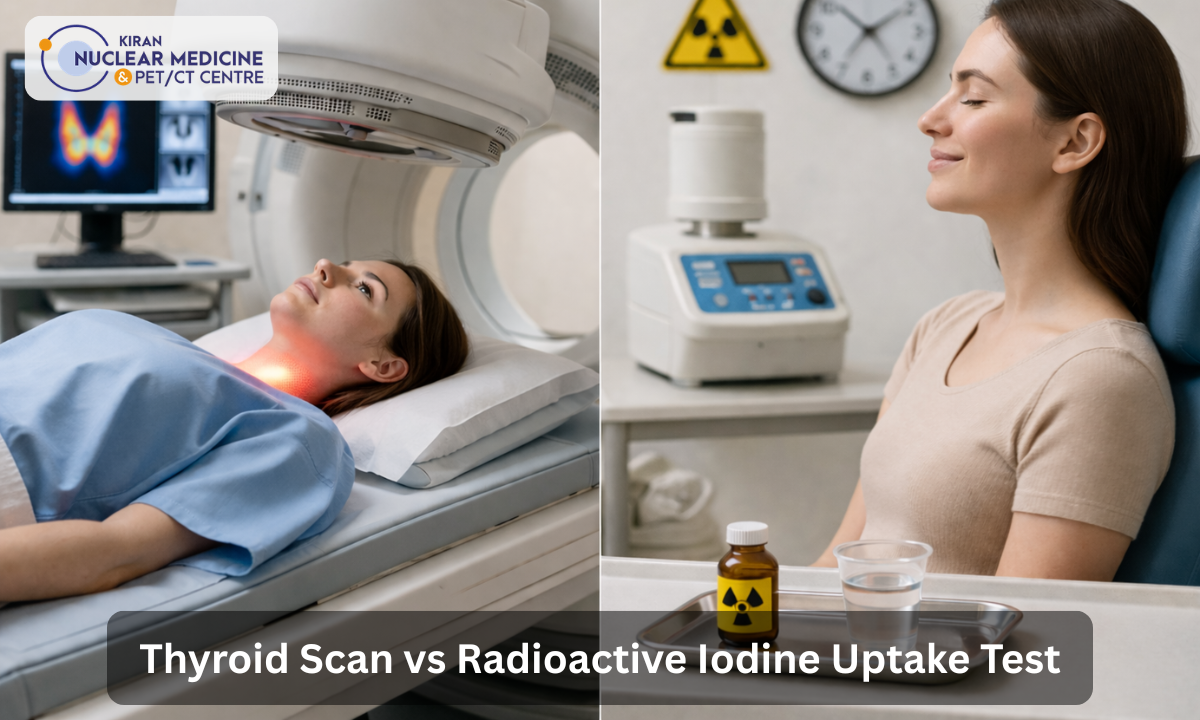
Patients seeking a comprehensive Thyroid scan in Bangalore often require diagnostics that go beyond standard blood tests. As a premier PET scan in Bangalore, Kiran PET CT provides advanced nuclear medicine imaging to evaluate complex endocrine disorders.
When routine laboratory results indicate an abnormal level of thyroid-stimulating hormone, physicians frequently refer patients for a specialized PET scan centre in Bangalore or a targeted functional assessment.
The most definitive functional evaluation for an overactive thyroid gland is the radioactive iodine uptake test.
This specific diagnostic procedure measures the exact rate at which the thyroid gland absorbs iodine from the bloodstream. As the thyroid strictly requires iodine to synthesize the hormones thyroxine (T4) and triiodothyronine (T3), tracking this cellular absorption provides a precise functional baseline.
Unlike standard ultrasound imaging that simply displays the physical size or anatomical shape of the gland, this nuclear medicine test reveals the actual metabolic activity occurring within the tissue.
After analyzing these functional metrics, endocrinologists can accurately diagnose the underlying cause of hyperthyroidism, differentiate between various forms of thyroiditis, and formulate a highly targeted clinical treatment protocol.
In this clinical guide, we will cover exactly what a radioactive iodine uptake test entails, the specific medical conditions that require this diagnostic tool, the step-by-step procedure patients will experience at the clinic, the safety profile of the radioactive tracer, and a detailed breakdown of how to interpret the final uptake percentage results.
What Is Radioactive Iodine Uptake?
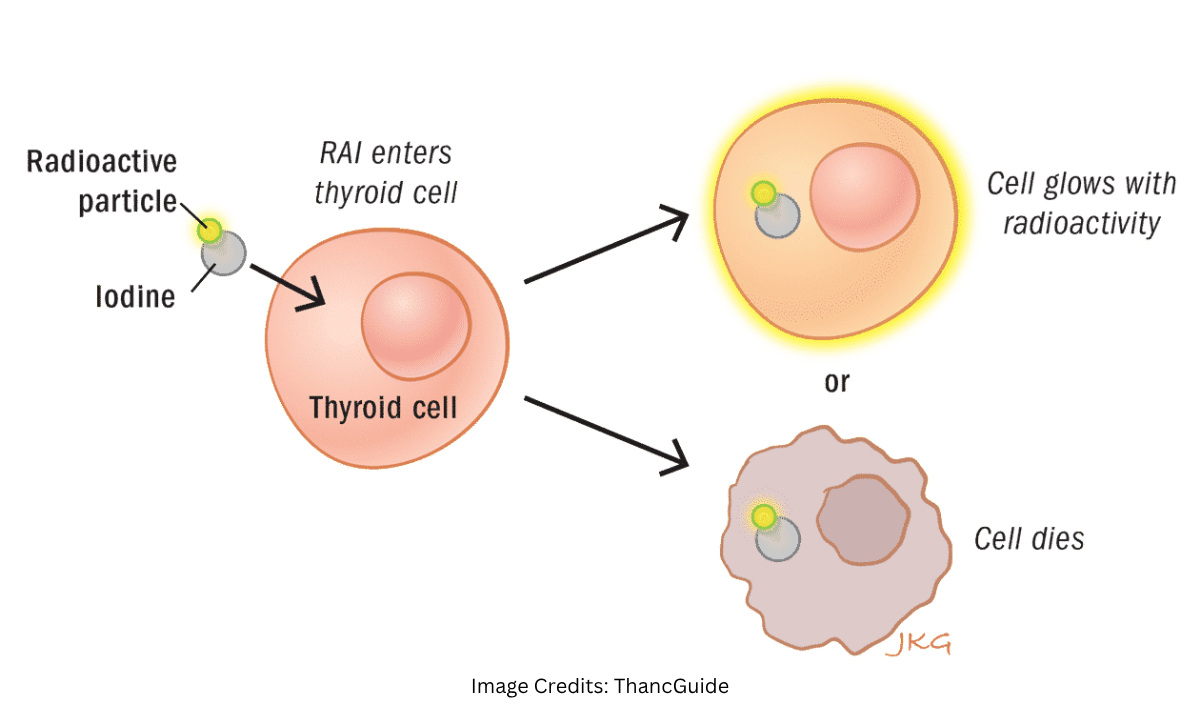
To answer the fundamental question of what radioactive iodine uptake is, one must examine the specific physiological function of the thyroid gland.
Located in the anterior neck, this endocrine organ is the only tissue in the human body that actively extracts and concentrates dietary iodine from the circulating bloodstream. The thyroid strictly requires this essential trace element to synthesize thyroxine and triiodothyronine, the primary hormones responsible for regulating overall cellular metabolism, heart rate, and body temperature.
A physician will order this specialized evaluation to accurately quantify this exact metabolic process.
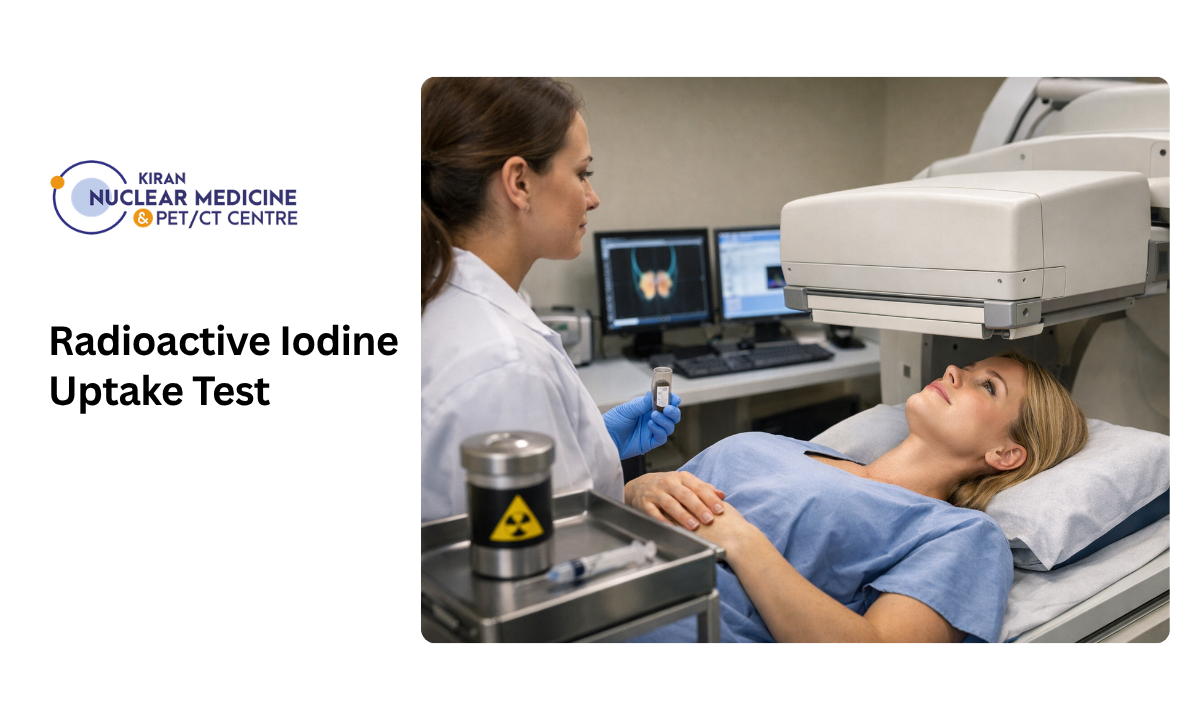
When addressing the radioactive iodine uptake test, it is strictly defined as a targeted nuclear medicine procedure that utilizes a radiopharmaceutical tracer to measure the precise percentage of iodine the thyroid gland absorbs over a designated period.
The patient ingests a microscopically small dose of a radioactive iodine isotope, typically Iodine-123, in liquid or capsule form.
As the thyroid tissue processes this radiotracer exactly like standard dietary iodine, a specialized external gamma probe can detect the emitted gamma rays to calculate the precise physiological rate of cellular absorption.
When Do You Need This Scan?
Physicians prescribe a radioactive iodine uptake scan for the thyroid when routine laboratory panels indicate hyperthyroidism, a condition characterized by elevated thyroxine levels and severely suppressed thyroid-stimulating hormone.
While blood tests confirm that the body possesses too much thyroid hormone, they cannot identify the anatomical or cellular source of the overproduction.
Understanding exactly when to use the radioactive iodine uptake test is critical for determining the precise etiology of this hormonal excess, which directly dictates the subsequent medical or surgical treatment plan.
Endocrinologists utilize this specific functional test to differentiate between several distinct physiological disorders that present with identical outward symptoms but require vastly different clinical interventions.
Primary Clinical Indications for the Uptake Test
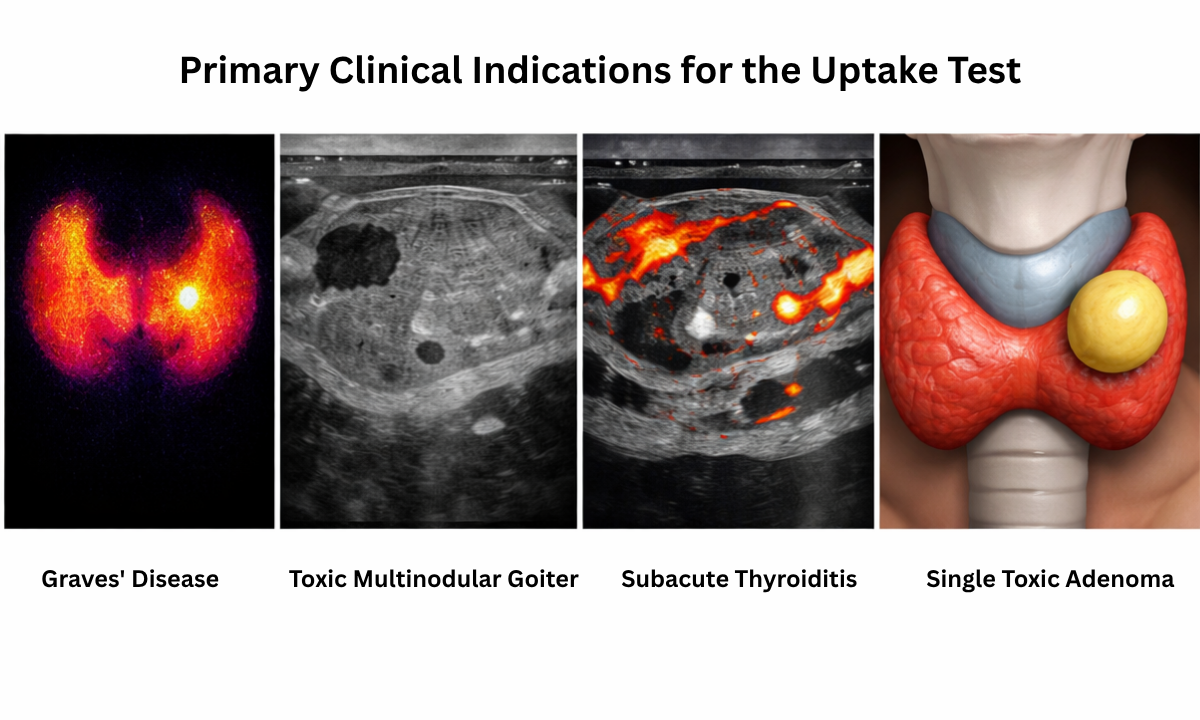
| Thyroid Disorder | Pathological Mechanism | Diagnostic Uptake Indication |
|---|---|---|
| Graves’ Disease | An autoimmune condition where circulating antibodies stimulate the entire thyroid gland to rapidly overproduce hormones. | The test will reveal a uniformly high percentage of iodine uptake across the entire anatomical structure of the gland. |
| Toxic Multinodular Goiter | The thyroid develops multiple autonomous nodules that independently synthesize and secrete excess hormones regardless of pituitary signaling. | The uptake percentage will be elevated, but the absorption will appear physically uneven and patchy across the gland tissue. |
| Subacute Thyroiditis | A severe viral or autoimmune inflammation that causes the gland to leak its stored, preformed hormones directly into the bloodstream. | Despite the high hormone levels in the blood, the actual iodine uptake will be extremely low because the damaged cellular tissue has temporarily stopped synthesizing new hormones. |
| Single Toxic Adenoma | A solitary, hyperfunctioning benign tumor within the thyroid tissue that continuously produces excess thyroxine. | The uptake will be highly concentrated in one specific focal area, while the surrounding healthy tissue exhibits significantly suppressed iodine absorption. |
By precisely categorizing the functional behavior of the thyroid tissue, physicians eliminate diagnostic ambiguity. This ensures the patient receives the correct targeted therapy, whether that involves antithyroid medications, radioactive iodine ablation, or surgical excision.
What to Expect at the Clinic?
The radioactive iodine uptake test requires strict patient adherence to preparatory guidelines to ensure absolute diagnostic accuracy.
Extraneous dietary iodine can competitively block the radioactive tracer from entering the thyroid gland, which produces artificially low uptake results.
The procedure itself spans a period of two days and requires multiple visits to the nuclear medicine department for precise physiological measurements.
The Clinical Timeline for the Uptake Procedure
- Dietary and Medication Preparation: For a period of one to two weeks before the procedure, patients must consume a strict low-iodine diet.
This protocol requires the complete cessation of iodized salt, kelp, seafood, dairy products, and commercial multivitamins containing iodine.
The prescribing endocrinologist will also order the temporary discontinuation of antithyroid medications and thyroid hormone replacements to prevent pharmacological interference.
- Radiotracer Administration: On the initial day of the clinical test, the patient arrives at the facility to ingest the designated radioactive iodine isotope.
The technologist administers the exact diagnostic dose orally in the form of a small capsule or a clear liquid solution.
The patient must maintain a fasting state for an additional one to two hours following ingestion to ensure complete gastrointestinal absorption into the systemic circulation.
- The Initial Measurement: The patient returns to the clinic approximately four to six hours after the initial administration.
The technologist instructs the patient to sit stationary in a specialized diagnostic chair. A non-invasive gamma scintillation probe is positioned directly over the anterior region of the neck to detect and quantify the gamma rays emitted by the iodine accumulating within the thyroid follicles.
- The Final Measurement: The patient returns to the medical facility exactly twenty-four hours following the initial tracer ingestion.
The technologist performs a second, identical reading using the external gamma probe to calculate the total functional uptake percentage over a complete biological cycle.
Once the final twenty-four-hour measurement is complete, the clinical technologist compiles the functional data for the interpreting physician.
The patient can immediately resume their normal diet and restart any previously paused medications unless specifically instructed otherwise by their endocrinologist. The physical procedure is entirely painless, and the patient experiences no residual physiological effects from the scanning probe.
Addressing the Anxiety: Is the Test Safe?
Patients frequently inquire whether ingesting a radioactive isotope poses severe physiological risks. When assessing whether the radioactive iodine uptake test is safe, clinical radiologists point to decades of established pharmacological data.
The quantity of radiation administered during this specific diagnostic procedure is microscopic and strictly calibrated for functional imaging, not for cellular destruction or therapeutic ablation.
Nuclear medicine technologists primarily utilize the isotope Iodine-123 for this evaluation because it possesses a remarkably short radioactive half-life of approximately thirteen hours.
This specific physiological characteristic ensures that the emitted radiation rapidly dissipates from the patient. Furthermore, the human renal system efficiently filters and eliminates the residual tracer through urine within forty eight hours following the initial ingestion.
While the procedure maintains an excellent safety profile for the general population, endocrinologists enforce strict contraindications for specific patient demographics.
Clinical Contraindications and Precautions
- Pregnancy: Physicians strictly prohibit the administration of radioactive iodine to pregnant individuals. The fetal thyroid gland begins accumulating iodine early in gestation, and any exposure to radioactive isotopes presents a severe risk to fetal development.
- Lactation: Nursing mothers must temporarily suspend breastfeeding following the tracer ingestion. The radiologist will calculate the exact duration of this required cessation, typically spanning several days, to prevent the transmission of the radioactive isotope to the infant through breast milk.
- Allergic Reactions: The diagnostic oral dose of radioactive iodine is exceptionally small and contains no complex chemical dyes. Therefore, it very rarely triggers a systemic allergic response, even in patients who possess documented hypersensitivities to iodine-rich seafood or intravenous CT contrast materials.
By adhering to these strict clinical guidelines, medical professionals ensure the diagnostic benefits of the uptake test far outweigh the minimal radiological exposure.
Following the procedure, patients do not require isolation and pose zero radiation risk to their family members or the general public.
Understanding Your Results
The final diagnostic report provides the interpreting endocrinologist with specific percentage values representing the total iodine absorbed by the thyroid gland at the four-hour and twenty-four-hour marks.
To understand the clinical implications of these results, the physician compares the patient’s specific functional absorption rate against established normal physiological ranges.
Normal uptake values generally range from five to fifteen percent at the four-hour measurement and ten to thirty percent at the twenty-four-hour measurement. Deviations from these standard baselines indicate distinct underlying pathologies within the endocrine system.
Clinical Interpretation of Uptake Percentages
| Uptake Result | Clinical Interpretation | Potential Pathological Causes |
|---|---|---|
| High Uptake | The thyroid tissue is hyperactive and rapidly synthesizing an excessive amount of thyroxine. | Graves’ disease, toxic multinodular goiter, or an autonomously functioning toxic adenoma. |
| Low Uptake | The cellular tissue is inflamed, damaged, or its metabolic function is completely suppressed. | Subacute thyroiditis, silent thyroiditis, excessive dietary iodine intake, or interference from exogenous thyroid medication. |
| Uneven Uptake | The radiotracer absorption is not uniform, indicating structural or functional abnormalities isolated to specific regions of the gland. | Functioning toxic nodules concentrating the iodine, or nonfunctioning nodules that fail to absorb the tracer entirely. |
The interpreting radiologist synthesizes these percentage values with the anatomical images generated during the scanning phase.
This comprehensive data packet allows the referring physician to formulate a highly precise diagnosis and initiate the appropriate therapeutic intervention for the patient without relying on clinical guesswork.
Conclusion
Navigating complex thyroid disorders requires precise functional diagnostic data.
The radioactive iodine uptake test remains the gold standard for evaluating the metabolic activity of the thyroid gland and determining the exact etiology of thyrotoxicosis. By quantifying the cellular absorption of iodine, endocrinologists can confidently transition patients from the diagnostic phase to targeted, highly effective medical or surgical treatment protocols.
At Kiran PET CT, we provide unparalleled nuclear medicine and functional imaging services to patients across the region.
Under the expert clinical guidance of our Founder and Director, Dr. Kiran Kumar JK, and Medical Director, Dr. Manoj Devanathan, our team utilizes advanced technology to deliver fast, highly accurate diagnostic results. Whether your physician has recommended a dedicated functional thyroid evaluation or a comprehensive whole body scan, our state-of-the-art facilities in Banashankari and Indira Nagar are fully equipped to meet your clinical needs.
Contact us to book your appointment at our facilities in Bangalore at Banashankari, Indiranagar branches today and ensure your thyroid health is managed with clinical excellence.