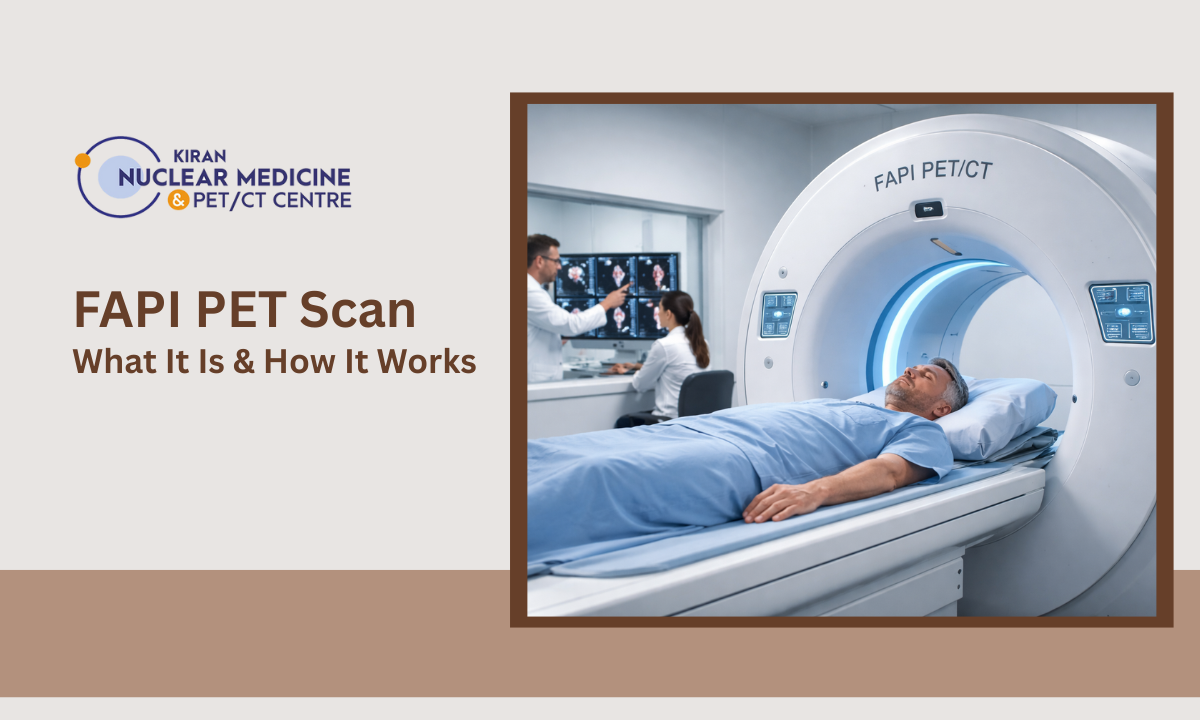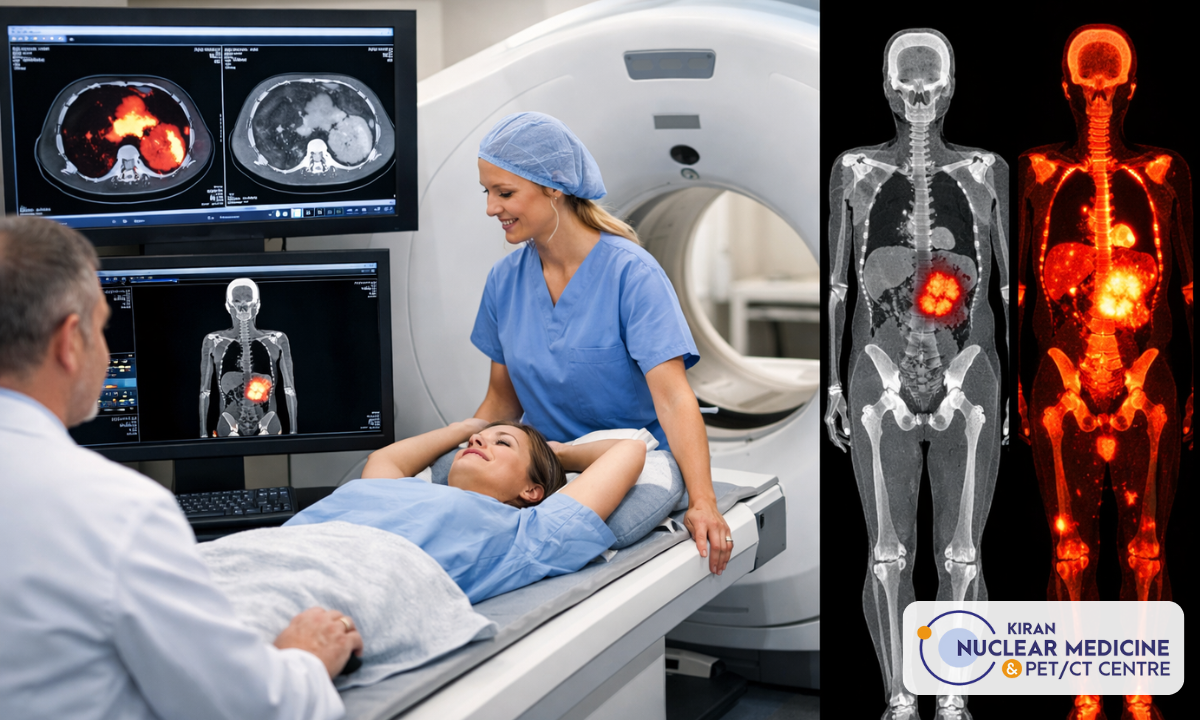
As a medical professional at Kiran PET CT, where we constantly work with advanced diagnostics, I can attest to the fact that nuclear medicine technology has brought about a radical change in cancer detection and treatment.
One of the most promising innovations in this field is the FAPI PET Scan, a revolutionary technology that is significantly enhancing the precision and detail of tumor images.
With this write-up, I desire to offer my clinical experience, based on insights about the FAPI PET Scan mechanism, its applications, and the reasons behind its growing popularity as an advanced nuclear medicine method for cancer. This particularly holds for those patients who require an accurate diagnosis and staging.
Importance of Tumor Imaging in Cancer Care
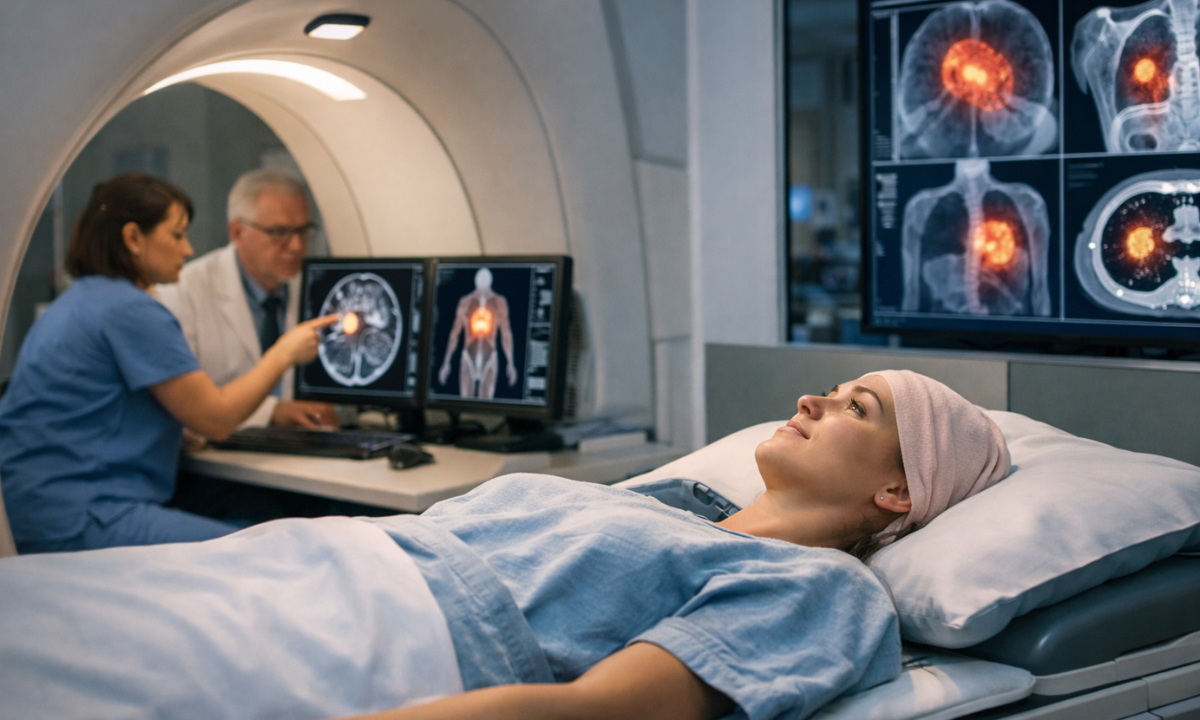
Tumor imaging is the basis on which all other aspects of cancer care depend, such as diagnosis, staging, treatment planning, and follow-up. It provides us with an opportunity, as doctors, to identify the changes in the normal tissue inside the body and also to confirm whether a tumor is cancerous or not.
While conventional imaging methods like CT and MRI mostly reveal structural changes, cancer development usually takes place at the cellular and molecular levels. This is why nuclear medicine holds enormous potential. It not only displays the anatomical features but also reveals the biological processes, thus enabling us to locate tumors at an earlier stage with greater accuracy.
What We Can Learn About FAPI PET Scan
Basically, it is a scan that finds active fibroblast protein activators (FAP). Fibroblast activating protein (FAP) is a kind of protein that is present on the surface of tumor cells and can be used for targeting these cells (tumor targeting).
FAPI PET Scan enabled direct imaging of tumor cells in vivo and created tumor images of the highest contrast. On the other hand, standard PET scans depend on glucose uptake, so they mostly look at tumor cells only. FAPI PET Scan molecular imaging specifically observes the tumor stroma, yielding a much sharper contrast with clearer tumor boundaries.
From my clinical experience, this results in:
- Better visibility of lesions
- Lower noise in the background
- Enhanced identification of tiny or very early tumors
It is extremely helpful for complicated cancers, where it is easy to miss additional subtle diseases by regular scans.
Reliability of FAPI PET in Tumor Detection
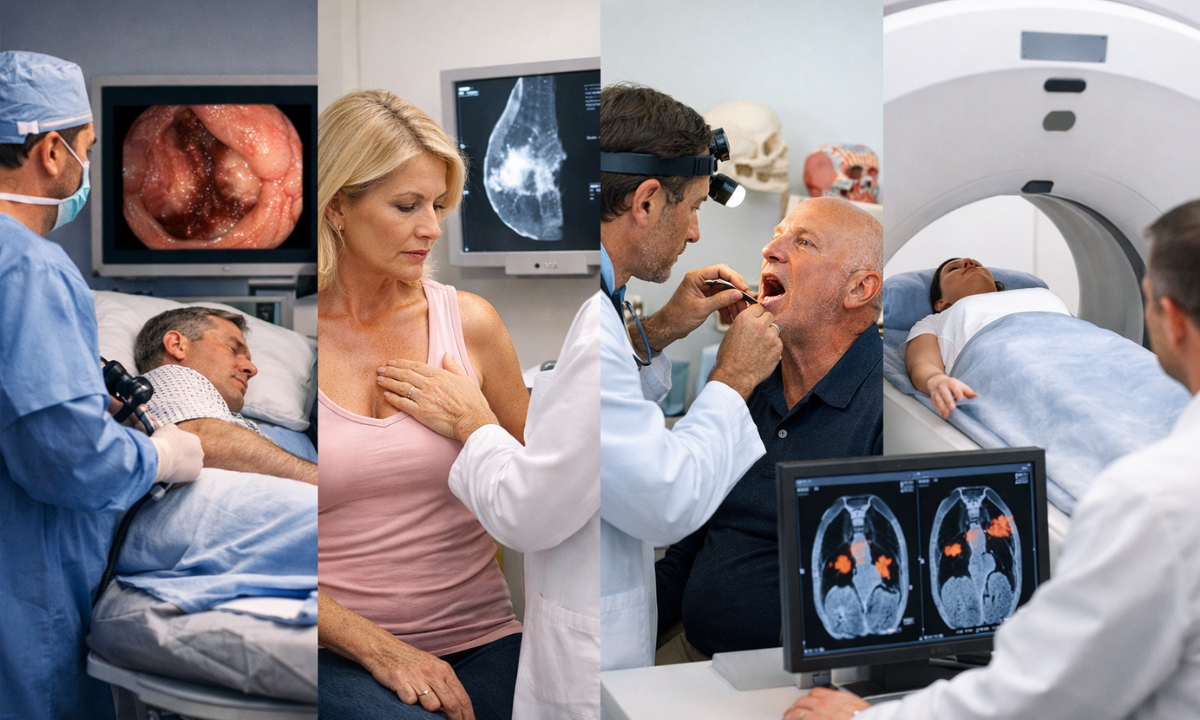
The accuracy is paramount to us when we suggest any diagnostic method. The FAPI PET Scan has been proven to maintain very high sensitivity and specificity levels across numerous tumor types.
In cancer types such as:
- GI malignancies
- Breast cancers
- Head and neck
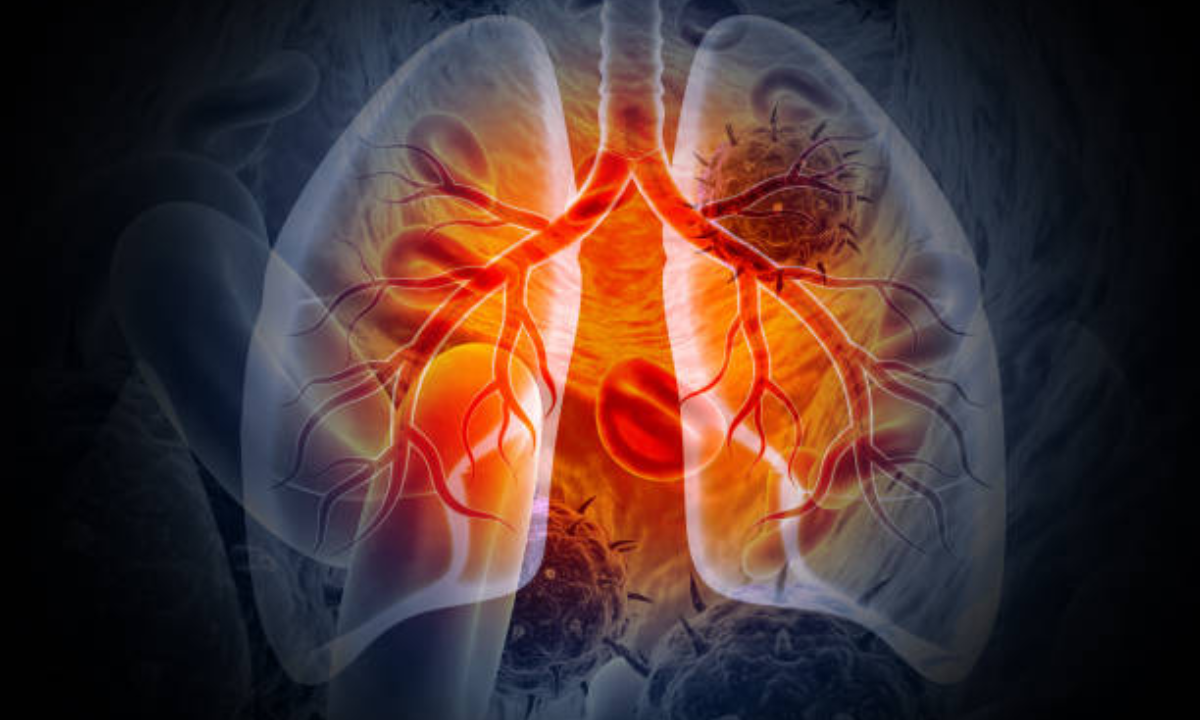
- Lung cancer diagnosis
FAPI PET Scan facilitates very good tumor, to, background contrast. In some lung cancer cases, which I have treated, the results obtained with FAPI imaging disclose lesions that are questionable or rather faint on FDG PET scans. This is particularly true for cases where there is inflammation or infection because FDG uptake then tends to be misleading.
Clinical Uses of FAPI PET Scan
1. Early Cancer Detection
FAPI PET Scan can detect tumors not only by metabolic activity but also by tumor microenvironment, hence can identify tumors at an even earlier stage.
2. Accurate Staging
The correct staging is the most important factor in deciding whether the patient should be operated on or treated with chemotherapy, radiation, or their combination. FAPI PET Scan facilitates the detection of lymph node involvement and distant metastases.
3. Treatment Planning
If radiation oncologists get a very clear separation of tumor margins, they can accurately plan targeted therapy and, at the same time, spare the healthy tissue.
4. Monitoring Treatment Response
Conventional PET results are often difficult to interpret due to post-treatment inflammation. FAPI PET Scan thus gives a more accurate visualization of residual or recurrent tumor.
Role of Nuclear Medicine in Cancer Care
Today, nuclear medicine is a synthesis of imaging and molecular biology. Using advanced techniques such as PET CT, we can simultaneously view the structure and function of a single organ. FAPI PET Scan is the next step in this evolution.
Being a physician, I am aware of many benefits nuclear medicine can offer, such as:
- It helps reduce diagnostic uncertainty.
- It enables personalized cancer treatment.
- It results in better long-term outcomes.
And this is exactly the reason why nuclear medicine for cancer is no longer an option but a necessity.
FAPI PET CT Scan in Bangalore: A Growing Demand
Due to rising awareness and the availability of facilities, a larger number of patients are now opting for FAPI PET CT scan in Bangalore, especially if their cancer cases are complicated or not clear. On our premises, we mainly come across cases referred from:
- Second opinions
- Restaging after treatment
- Clarifying equivocal findings on other scans
Likewise, the demand for FAPI PET scan in Bangalore has increased as patients want advanced and reliable diagnostics to be available near them, so that they do not have to go far.
Comparison with Conventional PET Scans
FDG PET scans are still great, but they have a few limitations:
- Tumors where glucose metabolism is low
- Infections or inflammations
This is where the FAPI PET Scan is really great. It gets rid of most of these problems because it targets cancer, associated fibroblasts, and thus it can be an option that is both complementary and sometimes superior depending on the clinical situation.
Safety and Patient Comfort
From a patient’s point of view, safety is a major concern. FAPI PET Scan entail:
- Lower radiation dose in many cases
- Shorter imaging times
- Little or no discomfort
Most patients handle the procedure quite well, and adverse reactions are almost nonexistent.
Final Thoughts
I am a medical practitioner at KIRAN PET and of the opinion that the FAPI PET Scan is the way forward in the field of tumor imaging. Its precision, flexibility and the capability to depict cancer biologically rather than just anatomically make it a very effective diagnostic tool.
Patients and attending physicians who are in search of advanced imaging methods, specifically those contemplating a PET scan in Bangalore, should consider FAPI PET Scan as a major advancement in the field of targeted cancer therapy.
FAQs
1. What is tumor imaging?
Tumor imaging refers to medical techniques used to visualize tumors inside the body, helping doctors detect, locate, and monitor cancer.
2. What type of imaging shows tumors?
Tumors can be seen using CT scans, MRI, ultrasound, and nuclear medicine imaging, such as PET scans, including advanced options like FAPI PET Scan.
3. What are the three main types of diagnostic imaging?
The three main types are structural imaging (CT, MRI), functional imaging (PET, SPECT), and hybrid imaging (PET-CT).
4. Is a CT scan or an MRI better for cancer?
Both have roles. CT is excellent for overall anatomy, while MRI provides superior soft tissue detail. However, neither shows tumor biology as PET scans do.
5. What is an imaging test?
An imaging test is a medical procedure that creates visual representations of the inside of the body to help diagnose and manage disease.